

Nasi Lemak (Malaysian Coconut Rice)
Nasi lemak is Malaysia's national dish — fragrant coconut rice cooked with pandan, ringed by a spicy-sweet sambal, crisp fried anchovies, roasted peanuts, cucumber, and a boiled egg. Each element plays a role: creamy rice, fiery sambal, salty crunch, cooling cucumber. Traditionally wrapped in banana leaf and eaten for breakfast at roadside stalls, it's a whole plate of contrasts built around one bowl of rich, aromatic rice.
Ingredients
- 400 grice
- 250 mlcoconut milk
- 2 pcspandan leaves
- 80 gdried anchovies
- 60 gpeanuts
- 10 pcsdried chiles
- 5 pcsshallots
- 1 tspshrimp paste
- 2 tbsptamarind
- 1 pcscucumber
- to tastegarlic cloves, for the sambal
- as neededneutral oil: a thin layer for the anchovies, then a generous layer for frying the sambal
- to tastesugar, for the sambal
- to tastesalt, for the rice and sambal
- 2 pcseggs, hard-boiled
Method
- Rinse the rice until the water runs clear, then drain. Combine with the coconut milk, an equal amount of water, a pinch of salt, and the knotted pandan leaves.
- Bring to a boil, then cover, lower the heat, and cook gently 15 minutes. Rest off the heat, covered, 5–10 minutes, then fluff with a fork and discard the pandan.
- Soak the dried chiles in hot water until soft. Blend them with the shallots, garlic, and shrimp paste into a smooth sambal paste.
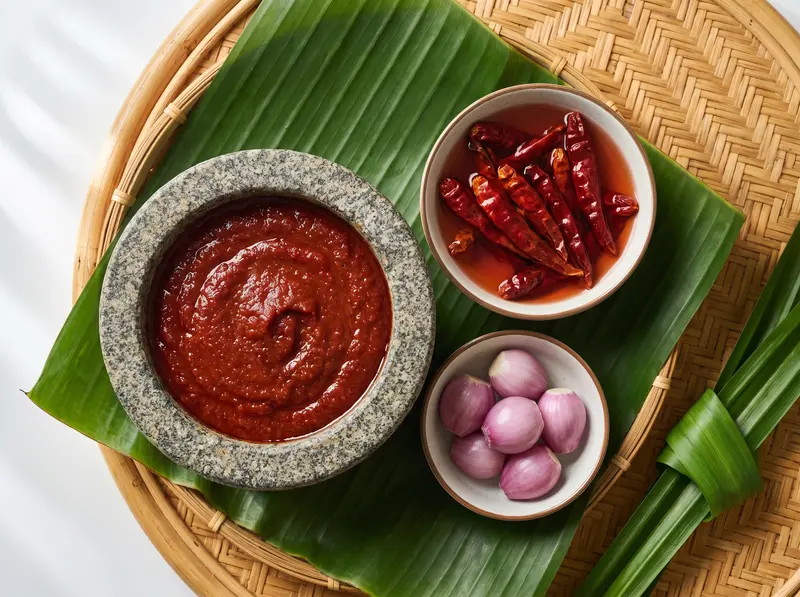
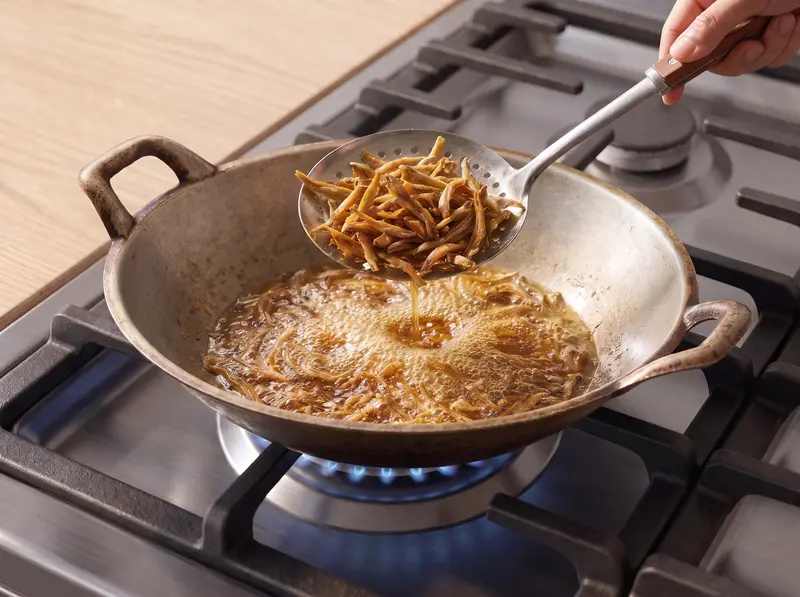
- Fry the dried anchovies in a little oil until crisp and golden, then set aside on paper. Toast the peanuts in the same pan until golden.
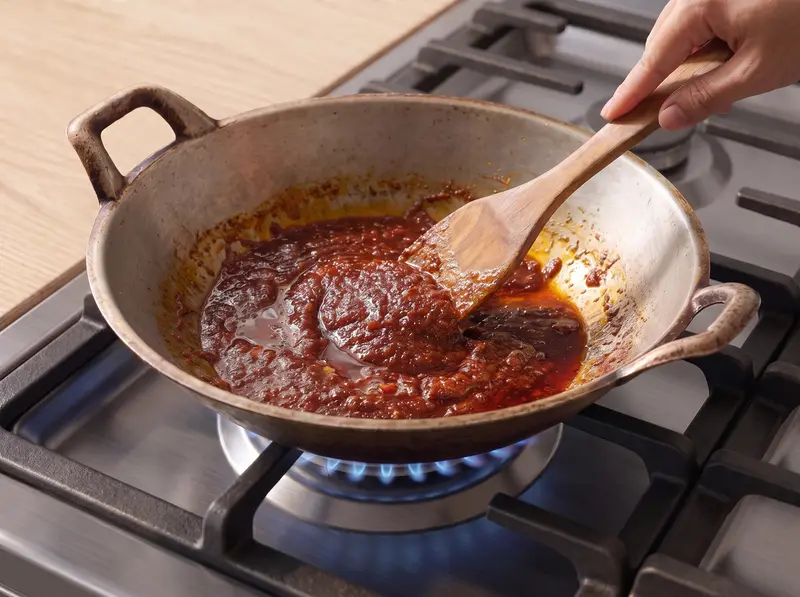
- Fry the sambal paste in oil over medium heat, stirring, until the oil separates and it darkens, about 10 minutes. Stir in the tamarind, a little sugar, and salt, and simmer to a thick, glossy jam.
- Fold half the fried anchovies into the sambal for the classic sambal ikan bilis; keep the rest crisp for garnish.
- Hard-boil the 2 eggs until the yolks are fully set, then peel and halve them. Mound the coconut rice on each plate and arrange the sambal, anchovies, peanuts, cucumber slices, and half an egg around it. Serve warm.
FAQ
'Lemak' means rich or creamy in Malay, and it refers to cooking the rice in coconut milk rather than water, which gives it a soft, glossy texture and a gentle sweetness. Pandan leaves add the signature vanilla-grassy aroma. Full-fat coconut milk is strongly recommended — light versions dilute both the richness and the fragrance that define the dish. Some cooks add a few slices of ginger or a smashed lemongrass stalk to the rice for extra perfume.
Sambal is the spicy chili relish at the heart of nasi lemak, made by blending soaked dried chilies with shallots, garlic, and shrimp paste, then frying it slowly with tamarind, sugar, and salt until dark and glossy. It's meant to be spicy-sweet and savoury, not just hot — you control the heat by the type and amount of chili. Frying until the oil separates is the key step; that's what transforms it from raw and harsh into deep and mellow.
Belacan is a firm, fermented shrimp paste that gives the sambal its deep, savoury, umami backbone. A small amount is toasted or fried and goes a long way. You can leave it out for a vegetarian sambal, and the dish still works, but it will taste noticeably less complex and 'rounded'. If you eat fish, it's worth seeking out in Asian groceries — a little block keeps for a very long time in the fridge.
The traditional five are sambal, crispy fried anchovies (ikan bilis), roasted peanuts, cucumber slices, and hard-boiled egg, all arranged around the coconut rice. Beyond that, nasi lemak is often served with add-ons: fried chicken (ayam goreng), beef rendang, sambal shrimp (sambal udang), squid sambal, or fried fish. These turn it from a breakfast into a full meal. Mix and match, but keep the core five for it to be true nasi lemak.
Yes, which is why it's such a popular make-ahead dish. The sambal can be cooked days in advance and actually improves as it sits; keep it in the fridge and warm gently to serve. Fried anchovies and roasted peanuts stay crisp for a week in an airtight container. Only the coconut rice is best made fresh and served warm. Boil the eggs and slice the cucumber just before assembling, and you have a quick plate from mostly prepped parts.
Rate this
Recipes by email
One letter a week: a recipe picked for your taste, plus whatever is new on the site. Unsubscribe in one click.
Welcome gift: Sergei's cookbook (e-book).
By subscribing you agree to the privacy policy.
Tell us what you like to cook (30 seconds) →Keep browsing
More dishes from the Malaysian archive — picked by overlap with what you're cooking now.


Join the conversation
Comments
No comments yet — be the first!