
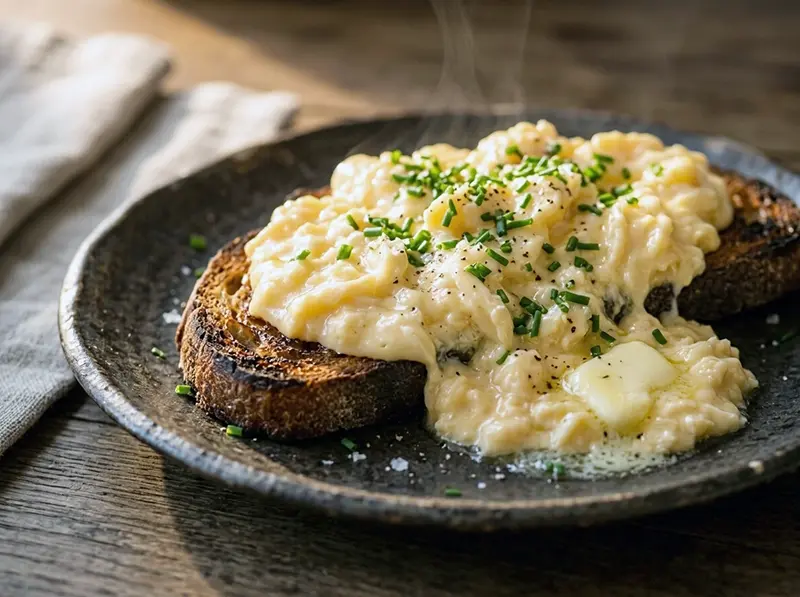
Perfect Scrambled Eggs (Soft & Creamy Method)
Eggs cracked into a cold pan with butter, cooked slowly using on-off heat with constant stirring, and finished with a spoonful of cold crème fraîche. This French method produces smaller, silkier curds — the texture is closer to a loose custard than the fluffy American diner style. It takes patience, but the result is eggs that taste like eggs, not rubber.
Ingredients
- 4 large eggs
- 20 gunsalted butter
- 2 tbspcrème fraîche or sour cream
- 0.5 tspfine salt
- 1 pinchblack pepper
- 2 tbspfresh chives, finely snipped
- 2 slices sourdough toast
Method
- Crack eggs directly into a cold non-stick pan, add the cubed butter, and place over low heat. Begin stirring immediately with a silicone spatula, breaking the yolks and mixing everything together as the butter melts. The cold start is essential — it gives you control over curd formation from the very beginning, unlike the hot-pan-and-pour method where the bottom layer overcooks before you can react.
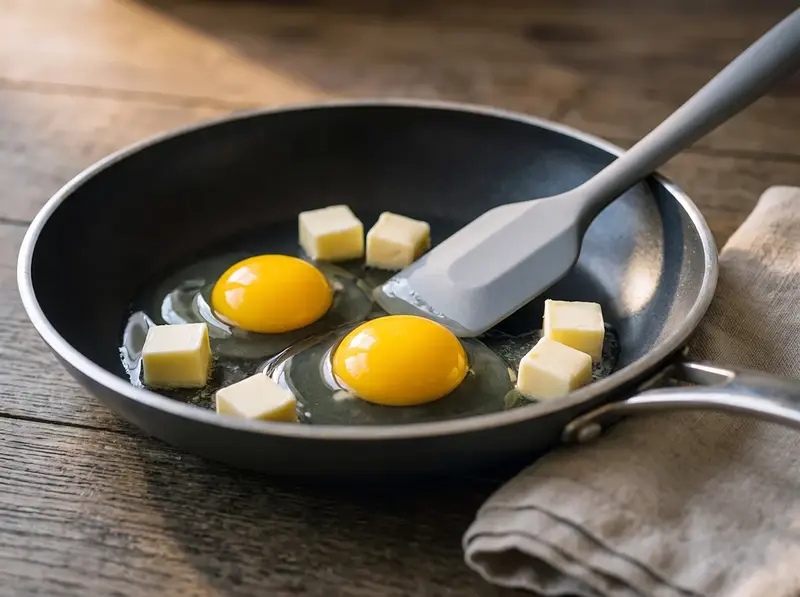
- Keep the heat low and stir constantly in slow, sweeping motions across the entire bottom of the pan. Every 20–30 seconds, lift the pan off the heat for 10 seconds while continuing to stir. This on-off technique prevents the eggs from setting too quickly and creates the small, creamy curds that define French-style scrambled eggs. The whole process should take 5–7 minutes — if it takes less, your heat is too high.
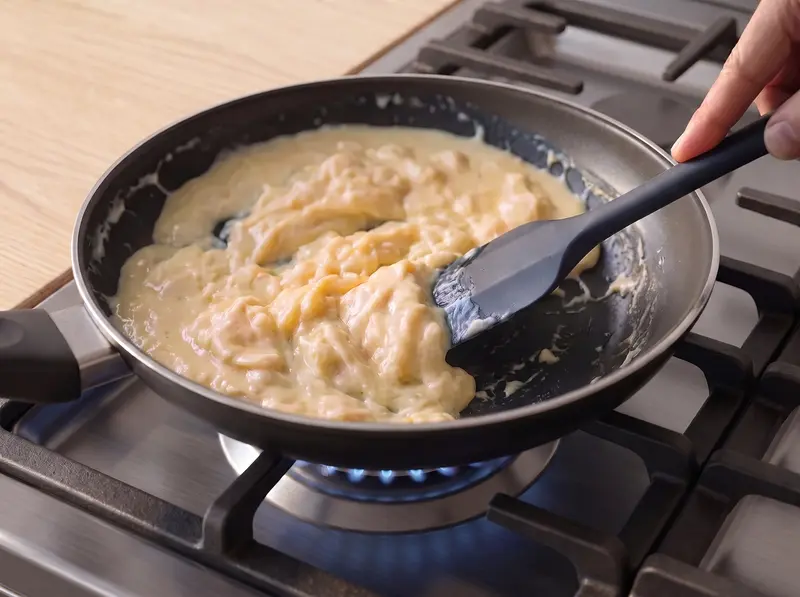
- Watch the eggs, not the clock. You are looking for a texture that is barely set — the eggs should flow lazily when you tilt the pan, like soft, glossy ribbons. They will still look slightly underdone and wet. This is exactly right, because residual heat will continue cooking them for another 30–45 seconds after you remove them from the burner.
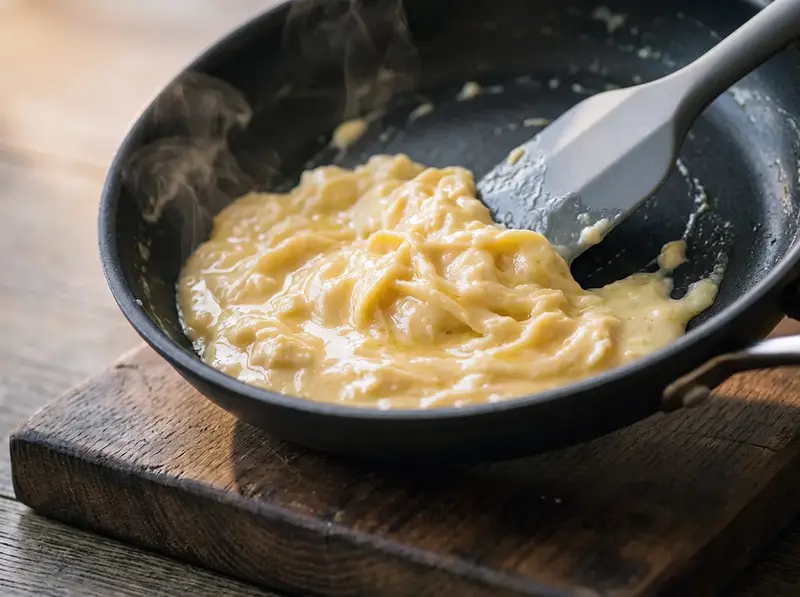
- When the eggs reach that barely-set, slightly-wet stage, pull the pan off the heat completely and stir in the cold crème fraîche. The cold dairy serves a critical function: it drops the temperature instantly and stops the cooking process. Without it, the carryover heat will push the eggs past the perfect point into dry, grainy territory. Season with salt now — adding it earlier draws out moisture and can make the curds watery.
- Spoon the eggs immediately onto warm toast — not hot, warm. Scatter the chives over the top and add a crack of black pepper. Scrambled eggs wait for no one; they continue to set on the plate, so serve the moment they hit the toast. The texture should be soft, almost sauce-like, with small curds that hold together just enough.
FAQ
Rubbery curds with a pool of liquid underneath is the most common scrambled egg problem, and it happens because of high heat. When the pan is too hot, the egg proteins seize up and squeeze out their moisture — you get tough curds swimming in expelled water. The fix is simple: use low heat, stir constantly, and pull the eggs off the heat every 20–30 seconds. The whole process should take 5–7 minutes. If your scrambled eggs are done in 2 minutes, your heat was far too high.
Adding milk before cooking actually makes eggs more likely to turn watery — milk is 87% water, and that extra liquid has to cook off before the eggs can set, which extends the cooking time and increases the risk of overcooking. Cream is slightly better because of its fat content, but the best approach is to add nothing before cooking and instead stir in cold crème fraîche or sour cream at the very end. This stops the cooking and adds richness without diluting the egg flavor.
Add salt at the very end, right when you stir in the crème fraîche. Salting eggs before cooking draws moisture out of the proteins through osmosis, which can result in a thinner, more watery texture. Some chefs argue that pre-salting makes eggs more tender by dissolving proteins, and there is some truth to that — but the moisture loss outweighs the benefit. Season at the end and you get the best of both worlds: eggs that hold their moisture and taste properly seasoned.
French scrambled eggs are cooked low and slow with constant stirring, producing very small, creamy curds with a texture close to loose custard. American scrambled eggs are cooked on medium-high heat with occasional folding, producing larger, fluffier curds with more volume. The French method takes 5–7 minutes and rewards patience with silk-like texture. The American method takes 2–3 minutes and gives you a heartier, more substantial plate. Neither is better — they are different dishes that happen to start with the same ingredient.
Honestly, reheated scrambled eggs will never match fresh ones — the proteins continue to tighten and squeeze out moisture as they sit, even in the fridge. If you must reheat, use the lowest microwave setting in 15-second bursts, stirring between each burst, and stop while they still look slightly underdone. Adding a small spoonful of crème fraîche or butter before reheating helps restore some creaminess. But the real answer is to make only what you will eat immediately — scrambled eggs take 8 minutes from start to plate.
Rate this
Recipes by email
One letter a week: a recipe picked for your taste, plus whatever is new on the site. Unsubscribe in one click.
Welcome gift: Sergei's cookbook (e-book).
By subscribing you agree to the privacy policy.
Tell us what you like to cook (30 seconds) →Keep browsing
More dishes from the French archive — picked by overlap with what you're cooking now.
Join the conversation
Comments (2)
Казалось бы яичница, что тут сложного. А попробовала по этому рецепту на медленом огне с маслом — совершенно другое блюдо! Нежное, кремовое, как в дорогом отеле на завтрак. Теперь только так готовлю.
I made these for a dinner party once — sounds absurd, but French scrambled eggs at 10pm with good sourdough toast and a glass of Champagne is one of the best meals I've ever served. The key insight that took me years: the eggs are done 30 seconds before they look done. Pull them off early. Every time.