
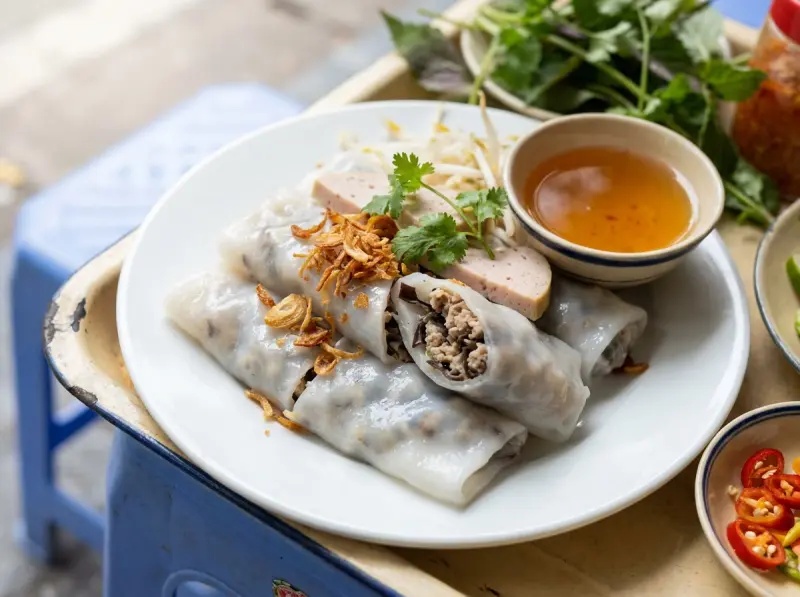
Banh Cuon (Vietnamese Steamed Rice Rolls)
Banh cuon are the silkiest thing in Vietnamese cooking — sheets of rice batter steamed paper-thin, so soft they're almost translucent, wrapped around minced pork and wood ear mushrooms. A northern Vietnamese breakfast staple, they're piled with fried shallots, fresh herbs, blanched bean sprouts, and slices of cha lua, then dipped in nuoc cham, the sweet-sour-salty fish sauce dressing. The tapioca starch in the batter is what gives the wrappers their gentle chew. The batter rests for at least 30 minutes before steaming.
Ingredients
- 200 grice flour
- 60 gtapioca starch
- 250 gground pork
- 25 gwood ear mushrooms
- 4 pcsshallots
- 4 tbspfish sauce
- 2 pcslimes
- 100 gbean sprouts
- 1 bunchcoriander
- 150 gvietnamese pork sausage
- 6 tbspvegetable oil (1 tbsp for the batter, the rest for frying the shallots and greasing)
- 2 tbspsugar (for the nuoc cham)
- to tastesalt and black pepper
- to tastegarlic and fresh red chili (optional, for the nuoc cham)
Method
- Whisk the rice flour and tapioca starch with 600 ml water, a pinch of salt, and a tablespoon of oil until completely smooth. Rest the batter at least 30 minutes, or overnight for the softest sheets.
- Soak the wood ear mushrooms in hot water for 15 minutes until soft, then drain, squeeze dry, and chop finely.
- Thinly slice half the shallots and fry in 3 tablespoons of the oil over medium heat until golden and crisp; lift out onto paper for the topping. Finely chop the rest.
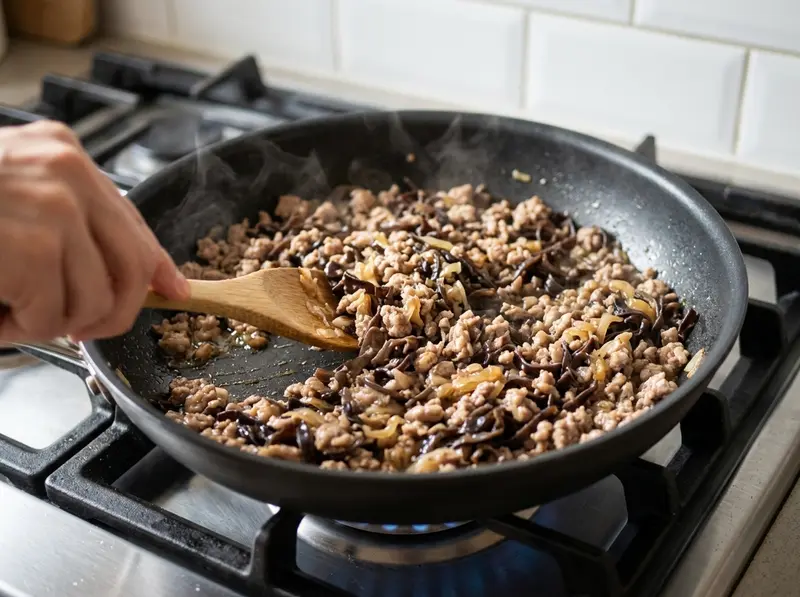
- In the same pan, cook the chopped shallots until fragrant, add the ground pork and break it up, then stir in the mushrooms, 1 tablespoon fish sauce, and pepper. Cook 5–6 minutes, until no pink remains in the pork and its juices run clear (71 °C), then set aside.
- Mix the nuoc cham: dissolve about 2 tablespoons of sugar (adjust to taste) in the juice of the limes, the remaining fish sauce, and 120 ml warm water, then add minced garlic and sliced chili to taste.
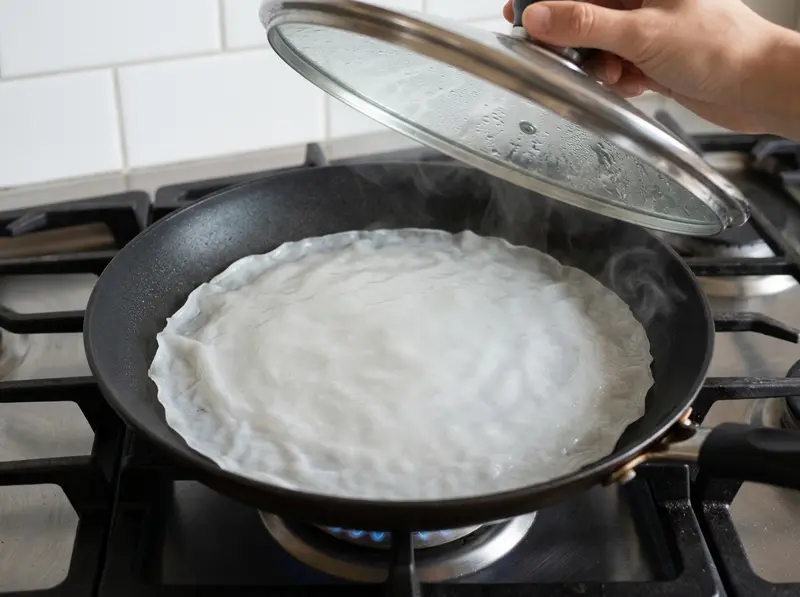
- Stir the batter well before every sheet, as the flour settles. Brush a nonstick pan lightly with oil, heat over medium, pour in a very thin layer, swirl to coat, cover, and steam 30–60 seconds until the sheet turns opaque and sets.
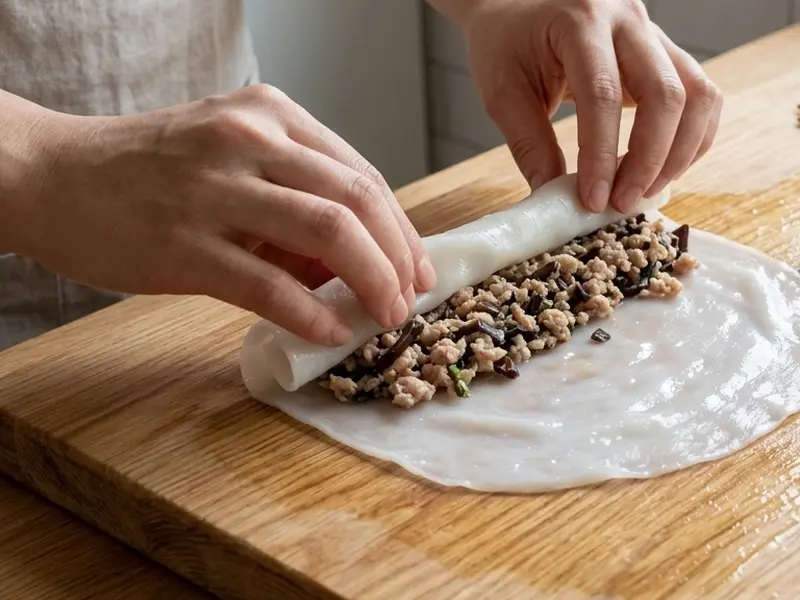
- Slide each sheet onto an oiled surface, add a spoonful of filling along one edge, and roll up. Blanch the bean sprouts in boiling water for 30 seconds and drain. Top the rolls with the fried shallots, blanched sprouts, coriander, and sliced pork sausage, and serve with the nuoc cham.
FAQ
Tapioca starch is what gives banh cuon their gentle chew and elasticity — without it, sheets made from rice flour alone are fragile and tear when you lift or roll them. It also contributes to the translucent look. Potato starch or cornstarch can stand in at the same weight, with slightly different texture. Many Vietnamese cooks simply buy a ready-made banh cuon flour premix, which is already blended in the right proportions and is a reliable shortcut.
Traditionally the batter is poured onto a cloth stretched over a pot of boiling water, which steams the sheet in seconds and gives the softest result. At home, a good nonstick skillet with a tight lid works very well: brush lightly with oil, pour a very thin layer, cover, and steam 30–60 seconds. The sheets come out slightly sturdier than the cloth-steamed version but are much easier to handle. Cloth steamer kits are also sold if you make it often.
Rice flour and tapioca starch don't dissolve, they sit in suspension, so within a minute or two they sink to the bottom of the bowl. If you don't stir from the bottom before each pour, the early sheets end up thick and the later ones watery and full of holes. Give it a proper stir every single time, and keep the batter thin — it should feel more like cream than pancake batter.
Nuoc cham is the ubiquitous Vietnamese dipping sauce: fish sauce, lime juice, sugar, and water, plus minced garlic and fresh chili. It should taste sweet, sour, salty, and mildly hot all at once, with no single element dominating. Start with roughly equal parts fish sauce and lime juice, about twice as much water, and sugar to taste, then adjust — more water to soften it, more lime to brighten, more sugar to round it. Add the garlic and chili last so they float.
The dish is naturally gluten-free, as the wrappers are rice flour and tapioca starch, but check your fish sauce and pork sausage labels if you need it strictly so. Banh cuon is at its best fresh and warm, when the sheets are at their softest, so it's not an ideal make-ahead dish. You can, however, prepare the filling, the fried shallots, and the nuoc cham a day in advance, then steam the sheets just before serving.
Keep browsing
More dishes from the Vietnamese archive — picked by overlap with what you're cooking now.

Recipes by email
One letter a week: a recipe picked for your taste, plus whatever is new on the site. Unsubscribe in one click.
Welcome gift: Sergei's cookbook (e-book).
By subscribing you agree to the privacy policy.
Tell us what you like to cook (30 seconds) →
Join the conversation
Comments
No comments yet — be the first!