
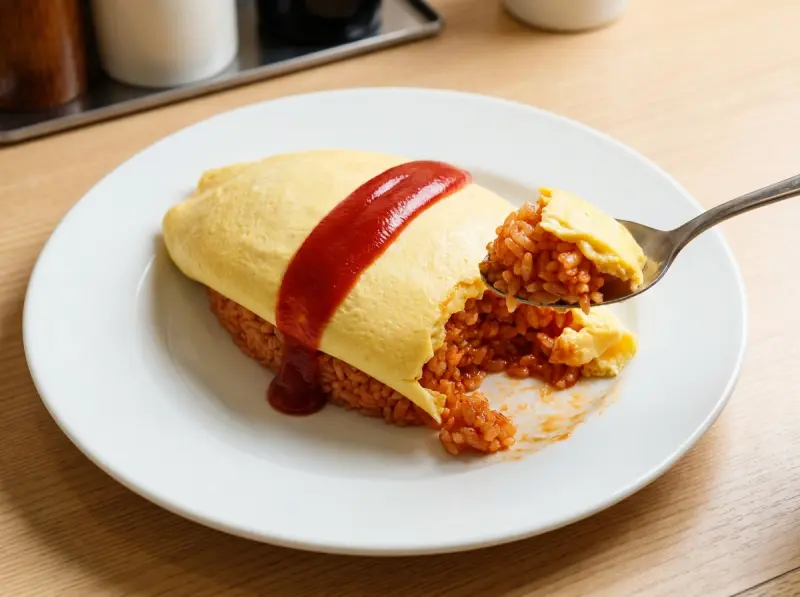
Omurice (Japanese Omelette Rice)
Japan's diner classic: ketchup-fried chicken rice packed into an oval and wrapped in a thin, barely-set omelette. The move that separates good omurice from sour, soggy rice is frying the ketchup in the hot pan before it ever touches the rice, and the egg is finished off the heat while it still looks underdone.
Ingredients
- 400 grice, cooked short-grain
- 4 pcseggs
- 150 gchicken, thigh
- 60 gketchup
- 1 pcsonion
- 30 gbutter
- 30 mlmilk
- 50 gmushrooms
- 5 mlsoy sauce
- 15 mlvegetable oil
- 40 ggreen peas
- 2 gblack pepper
Method
- Use cold, day-old rice and break the clumps apart with wet hands before you start. Freshly cooked rice is too moist and turns to paste once the ketchup goes in.
- Dice the chicken small and finely chop the onion and mushrooms. Heat the oil with half the butter in a frying pan and cook the chicken and onion over medium-high heat until the chicken is just done, about 4 minutes, then add the mushrooms.
- Push everything to one side, add the ketchup to the empty half of the pan and let it fry and darken for a minute before stirring it through. This cooks off the raw sharpness and is what makes the rice taste of tomato rather than of sauce.
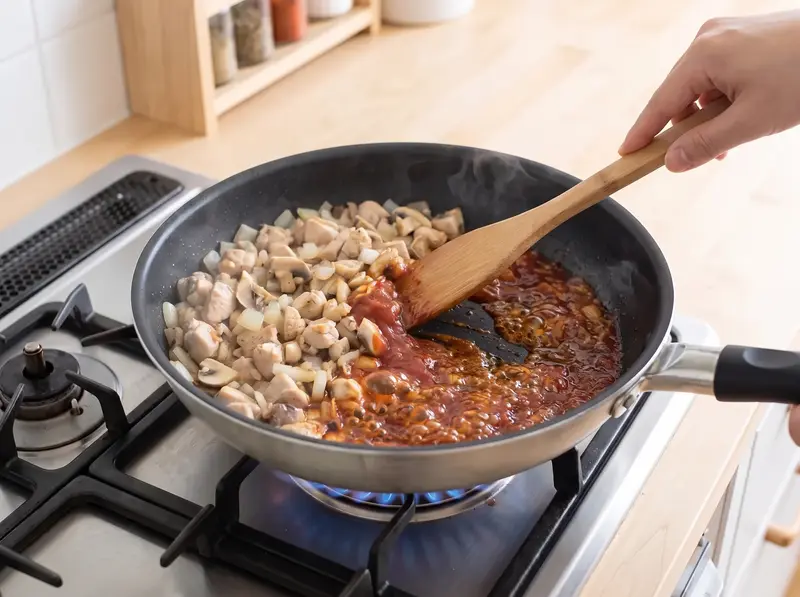
- Add the rice, peas, soy sauce, and pepper, and toss over high heat until every grain is coated and separate. Pack the rice into a bowl, then turn it out onto each plate as a neat oval mound.
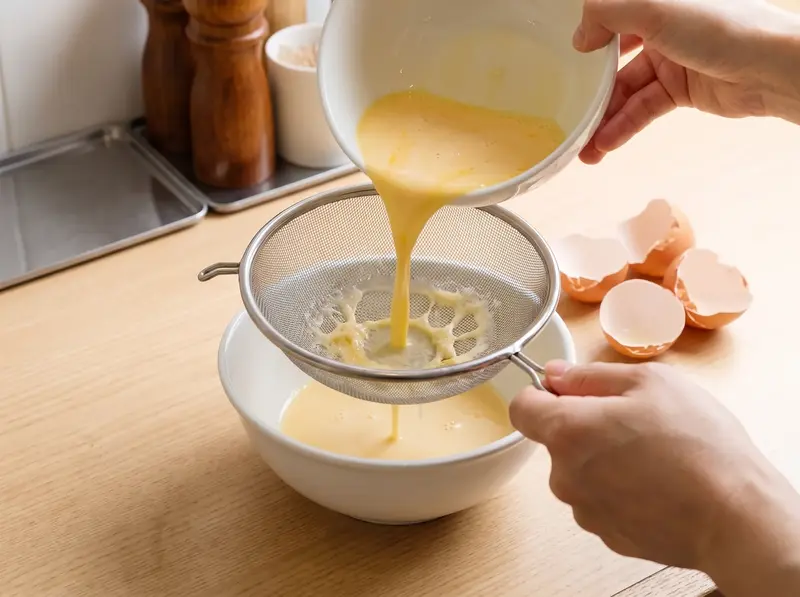
- Beat the eggs with the milk and a pinch of salt, then pour them through a sieve — this catches the stringy white and is the difference between a smooth omelette and a patchy one.
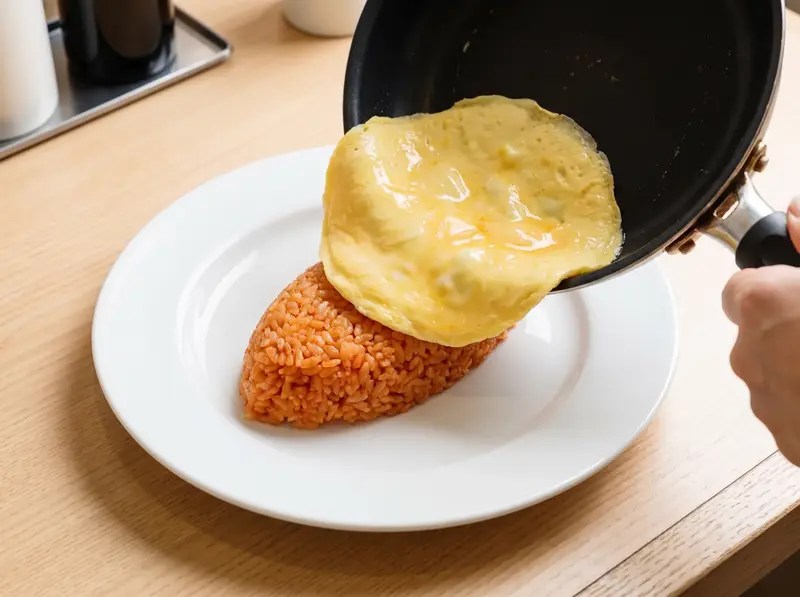
- Melt the rest of the butter in a clean non-stick pan over medium-low heat, pour in half the egg, and stir with chopsticks for a few seconds until it starts to set into soft curds. Let the base firm up while the top is still glossy and wet.
- Slide the omelette over the rice mound, tucking the edges under, and let the residual heat finish it. Repeat for the second portion, then draw a line of ketchup over the top and serve at once.
FAQ
Cooked short or medium-grain Japanese rice, ideally cooked the day before and chilled. Cold rice has firmed up and lost surface moisture, so the grains stay separate. Fresh hot rice steams in the pan and turns sticky and heavy once the ketchup is added.
Folded omurice wraps a fully cooked thin omelette around the rice, which is the traditional home and diner style. Tornado omurice is a soft, barely-set egg twisted or draped over the mound and cut open at the table so it flows down. Same ingredients, different egg technique.
The pan was too hot. Egg for omurice is cooked over medium-low heat in a non-stick pan with butter, and taken off while the surface still looks wet, because it keeps setting on the rice. Browning means the proteins tightened, and a browned omelette is also harder to fold without cracking.
Yes — leave out the chicken and use extra mushrooms, or add diced carrot, corn, and peppers, which is common in home versions. The dish is built on the ketchup rice rather than the meat, so it holds up well without it.
It's the classic finish and what most people expect. Restaurants often use demi-glace or a hayashi-style beef sauce instead, which turns it into a richer dish. A quick middle ground is ketchup loosened with a spoonful of the pan juices and a dash of Worcestershire sauce.
Keep browsing
More dishes from the Japanese archive — picked by overlap with what you're cooking now.

Recipes by email
One letter a week: a recipe picked for your taste, plus whatever is new on the site. Unsubscribe in one click.
Welcome gift: Sergei's cookbook (e-book).
By subscribing you agree to the privacy policy.
Tell us what you like to cook (30 seconds) →
Join the conversation
Comments
No comments yet — be the first!