
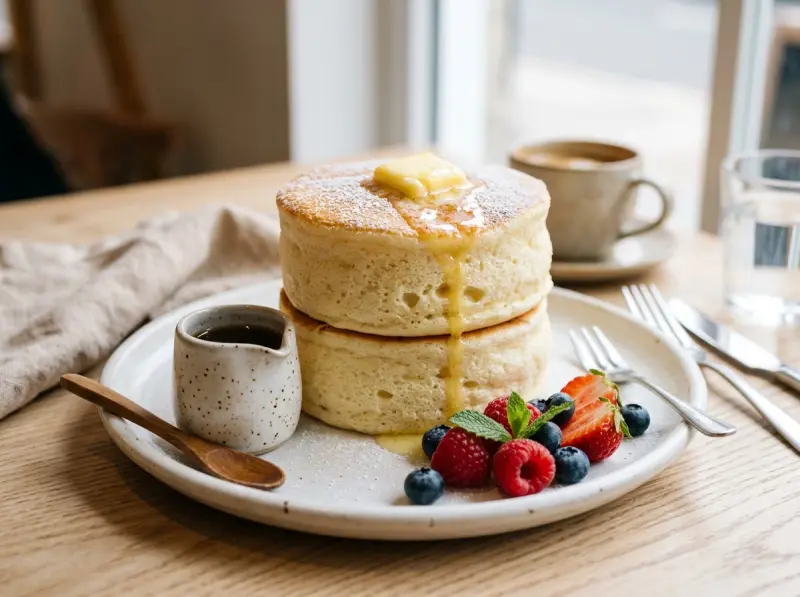
Japanese Souffle Pancakes
Japanese souffle pancakes (スフレパンケーキ, sometimes sold as fluffy or jiggly pancakes) are the tall, wobbly pancakes of Japanese cafés, made from eggs, a little flour and milk, and lifted mostly by whipped egg-white meringue. I'll be honest: they're finicky, and the first batch you make will probably be a bit lopsided. They rise so high because the batter is really a meringue with a small amount of yolk batter folded through, cooked low and slow under a lid with a splash of water for steam. Get the meringue right and everything else follows.
Ingredients
- 2 pcseggs
- 20 gflour
- 25 mlmilk
- 40 gsugar
- 2 gbaking powder
- 15 gbutter
- 10 mlvegetable oil
- 1 gvanilla extract
- 3 mllemon juice
- 15 gicing sugar
Method
- Separate the eggs carefully, putting the whites in a spotlessly clean bowl and the yolks in another. Any trace of yolk or grease in the whites will stop them whipping up, so this step is worth slowing down for.
- Whisk the yolks with the milk, vanilla, and melted butter, then sift in the flour and baking powder and whisk until smooth. Set this yolk batter aside while you deal with the whites.
- Add the lemon juice to the whites and start whipping. Add the sugar in three or four goes as they foam up, and keep going until you have a stiff, glossy meringue that holds a firm peak. This meringue is the whole dish, so don't stop early.
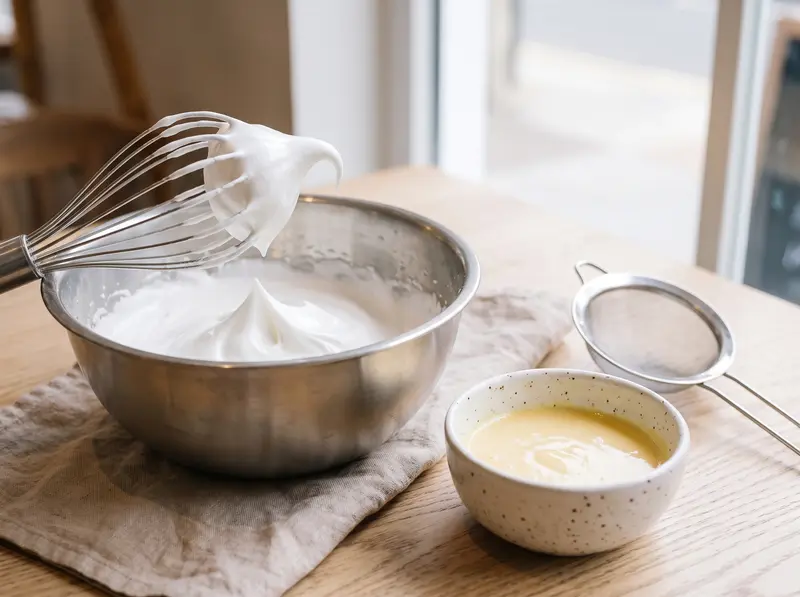
- Fold a third of the meringue into the yolk batter to loosen it, then fold in the rest gently, in two more additions. Stop the moment it's combined — every extra stir knocks out the air that makes the pancakes rise.
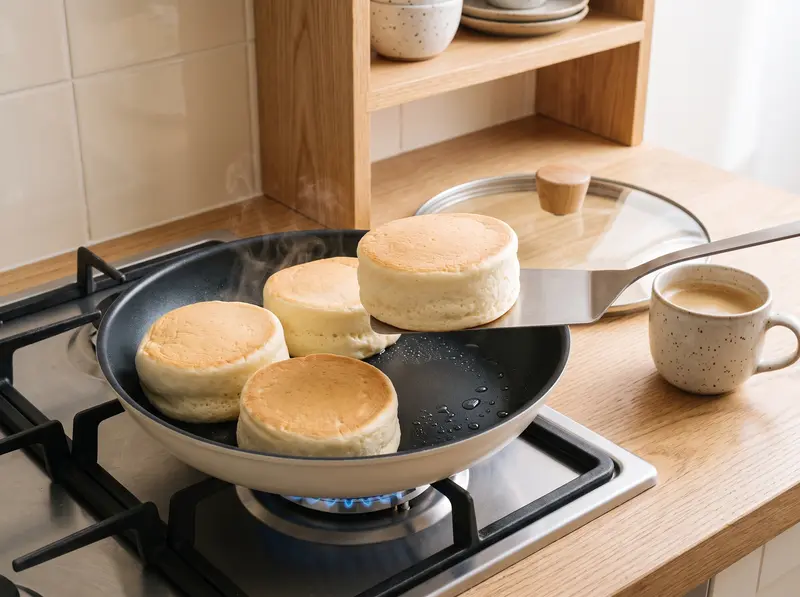
- Heat a non-stick pan on the lowest setting and brush it lightly with oil. Set metal rings in the pan if you have them, and pile the batter high inside each one; without rings, spoon tall mounds straight onto the pan and add more batter on top after a minute.
- Add a few drops of water to the empty parts of the pan and cover with a lid. The steam is what cooks the pancakes through without burning the outside. Cook for about 5 minutes, until the bottoms are set and pale gold.
- Flip each pancake gently — they're delicate — add a little more water, cover again, and cook another 5 minutes. They should feel springy, not wet, when you press the side. Dust with icing sugar and eat them at once, before they deflate.
FAQ
The meringue is almost always to blame. Whip the two egg whites with the sugar to firm, glossy peaks: the tip on the whisk stands up and only bends slightly at the very end. Under-whipped whites can't hold the batter up, and over-whipped ones turn grainy and fold in as lumps. Fold with a silicone spatula, bottom to top, in three additions, and stop as soon as the white streaks disappear.
They're not essential, but rings make it easier to get the neat, tall cylinders you see in cafés. Grease metal rings on the inside with butter or line them with a strip of baking paper, otherwise the batter sticks and tears when you flip. Without rings, spoon the batter into a tall mound of 2–3 tablespoons, and after a couple of minutes add another spoonful on top. They'll come out less even, but they taste exactly the same.
A little sinking as they cool is normal: the steam inside condenses, which is why they're served straight away. If a pancake collapses in front of you and has a raw band inside, the middle wasn't cooked through and the egg white hadn't set. Keep the heat at its lowest, don't lift the lid unless you need to, and after flipping add about another tablespoon of water to the empty spots in the pan. Test for doneness by pressing the side gently: it should spring back rather than stay dented.
No, once combined the batter can't wait: the meringue starts losing air within minutes, and batter that has stood spreads across the pan. You can weigh out the flour and baking powder in advance, mix the yolks with the milk, vanilla and melted butter and refrigerate that, and keep the whites separately in a clean, dry bowl. Whip the meringue when the pan is already on the heat. Cooked pancakes are best eaten right away: left to sit, they sink and turn denser.
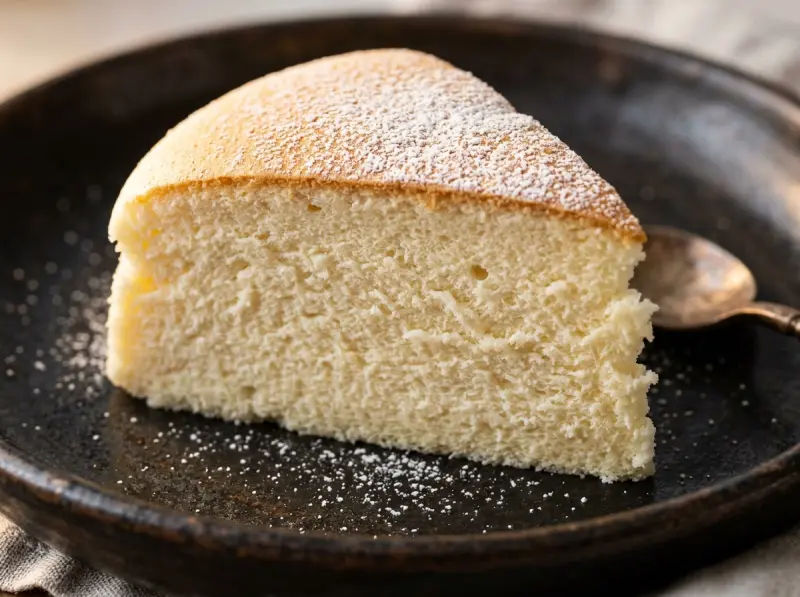
American pancakes are made from flour, buttermilk or milk and whole eggs, lifted by baking powder and cooked over medium heat without a lid. Souffle pancakes use very little flour and get their height from separately whipped egg whites, so they cook on the lowest heat under a lid, with water for steam. In texture they're closer to Japanese cotton cheesecake than to an ordinary pancake: the same moist, wobbly crumb built on egg-white foam.
Rate this
Keep browsing
More dishes from the Japanese archive — picked by overlap with what you're cooking now.
Join the conversation
Comments
No comments yet — be the first!