
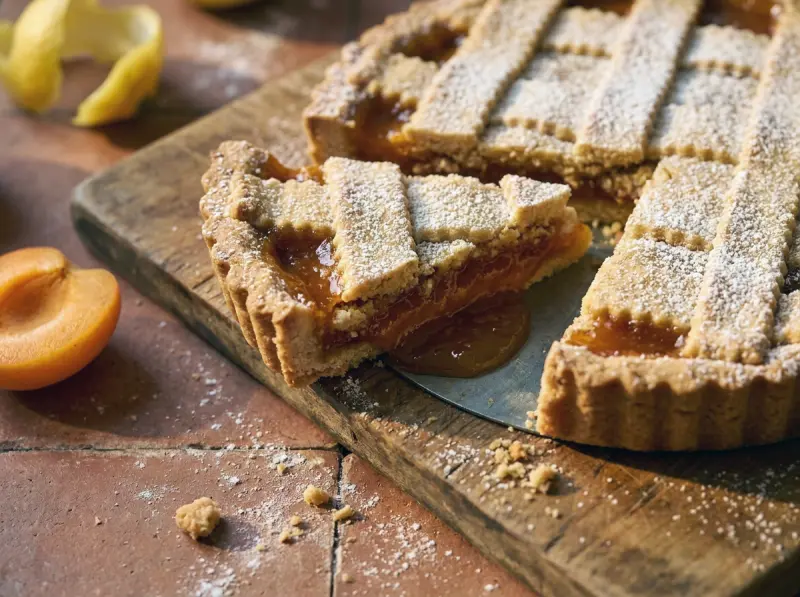
Crostata di Marmellata (Italian Jam Tart with Buttery Pasta Frolla Crust)
Crostata di marmellata is an Italian open jam tart: a shortcrust base called pasta frolla, filled with a thick layer of fruit jam and finished with a woven lattice on top. The dough is crumbly and cookie-like: butter rubbed in cold, then sugar and egg, handled as little as possible. Apricot is the most common filling, though cherry, fig, or wild berry jam work just as well. It's eaten at room temperature — for breakfast with coffee, as an afternoon snack, or as a simple dessert — and tastes better on the second day, once the crust has settled and the jam has soaked slightly into the base. Allow an extra hour for the dough to chill and another for the tart to cool.
Ingredients
- 300 gItalian 00 flour
- 150 gunsalted butter
- 100 gicing sugar
- 2 eggs
- 1 tspbaking powder
- 1 pinchsalt
- 1 lemon zest (from 1 unwaxed lemon)
- 350 gapricot jam
Method
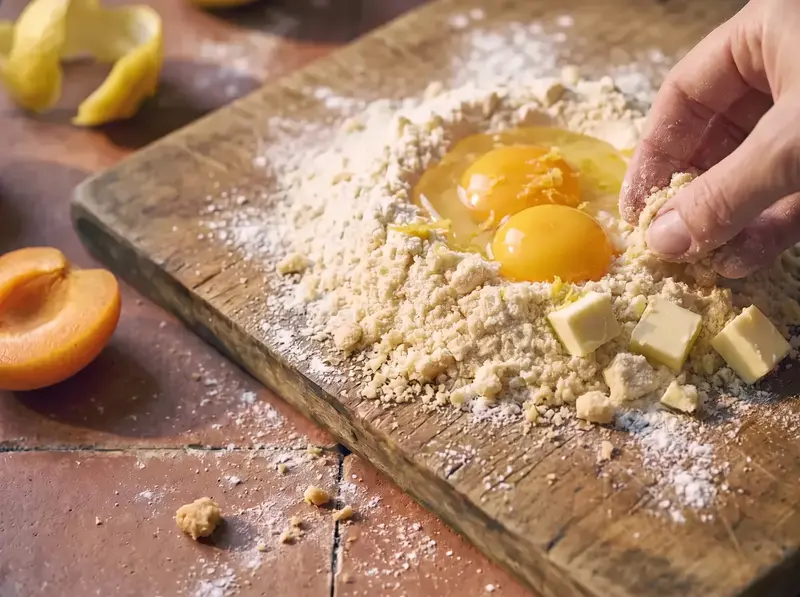
- Make the pasta frolla. Sift 300 g of Italian 00 flour onto a clean work surface or into a large bowl with 1 teaspoon baking powder and a pinch of salt. Cut 150 g of cold unsalted butter into small cubes (1 cm) and rub them into the flour with your fingertips or a pastry cutter until the mixture looks like coarse sand. Stir in 100 g of icing sugar and the finely grated zest of 1 lemon, make a well in the centre and add 1 whole egg and the yolk of the second egg — reserve the leftover egg white in a small covered bowl in the fridge for the egg wash later. Bring everything together quickly into a rough dough, working it as little as possible. Overworking activates gluten and makes the crust tough.
- Rest the dough. Shape the pasta frolla into a flat disc (this makes rolling easier later), wrap it tightly in plastic film, and refrigerate for at least 1 hour, ideally overnight. The rest period is critical — it allows gluten to relax and the butter to re-firm, making the dough far easier to roll without tearing. The dough can also be made up to 2 days ahead, or frozen for up to 2 months.
- Prepare the tart pan and roll out the base. Preheat the oven to 180°C (350°F). Grease a 24 cm (9.5 inch) round tart pan with a removable bottom — or a ceramic tart dish if you don't have one. Remove the dough from the fridge 15–20 minutes before rolling to soften slightly. Divide the dough into two pieces: about 2/3 for the base, 1/3 for the lattice. Refrigerate the smaller piece while you work with the larger one. On a lightly floured surface (or between two sheets of parchment paper, which is easier), roll out the larger piece into a round about 4–5 mm thick, slightly larger than the pan. Transfer to the pan by rolling onto the rolling pin, then unrolling over the pan. Press gently into the bottom and sides — don't stretch the dough, or it will shrink during baking. Trim excess at the rim. Use a fork to prick the bottom in several places to prevent puffing.
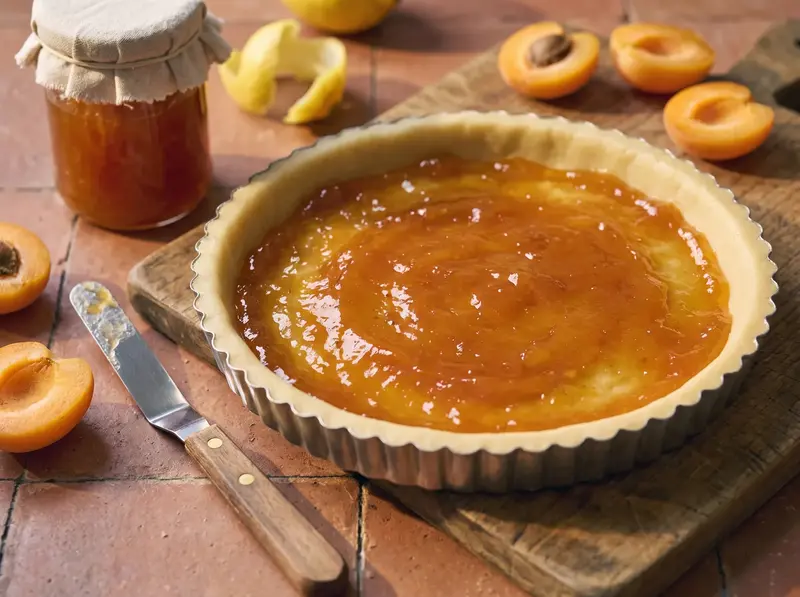
- Fill with jam. Spread 350 g of apricot jam evenly over the base, leaving a 1 cm border. If the jam is very thick, soften it first by warming gently with a tablespoon of water; if too runny, reduce on low heat for a few minutes. As Artusi puts it, 'se la conserva fosse troppo soda rammorbiditela al fuoco con qualche cucchiaiata d'acqua' — if the jam is too stiff, soften it over the heat with a few spoonfuls of water. The jam layer should be about 8–10 mm thick — generous enough to be the heart of the tart, but not so much it overflows during baking.
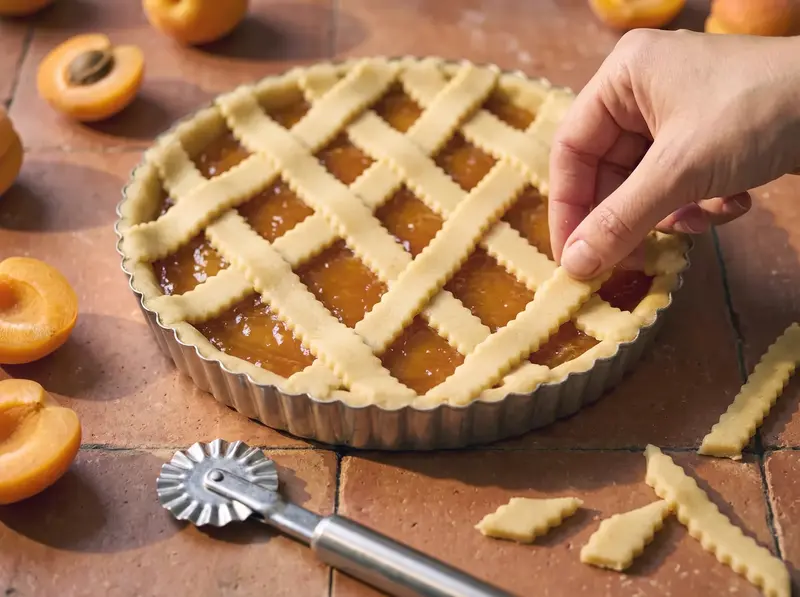
- Cut the lattice strips. Roll out the smaller piece of dough on a lightly floured surface into a rectangle about 3–4 mm thick. Using a fluted pastry wheel (or a sharp knife), cut strips about 1.5 cm wide. The fluted wheel gives the traditional decorative edge — the rotella tagliapasta of Italian bakers. You'll need around 10–12 strips for a 24 cm tart.
- Assemble the lattice. Lay 5–6 strips parallel across the tart, evenly spaced. Then lay the remaining strips at a 90-degree angle (or 45 degrees for a more decorative diamond pattern — Artusi calls this a mandorlato, an almond-shaped lattice). For a proper woven lattice, lift alternating strips of the first layer as you weave in each cross strip — though a simple cross pattern without weaving is perfectly traditional and easier. Press the ends gently against the rim to seal. Trim any overhanging dough. Optionally, add a thin strip of dough around the entire edge as a finishing band — Artusi recommends this: 'coprite l'estremità delle strisce con un cerchio all'ingiro fatto colla pasta rimanente'.
- Brush with egg white and bake. Beat the reserved egg white with a tiny pinch of salt until loosened and slightly frothy. Brush it lightly over the lattice strips with a soft pastry brush — this gives a light golden sheen that sets a homemade crostata apart from a store-bought one. Place the tart on the middle rack of the preheated oven and bake at 180°C for 30–40 minutes, until the lattice is a deep golden brown and the jam is bubbling gently in the centre. The base should be fully cooked and golden when checked with a small spatula.
- Cool and rest. Let the crostata cool completely in the pan on a wire rack — at least 1 hour — before unmoulding and serving. This is essential: cutting too early causes the jam to run and the crust to crumble. Artusi's only note on serving is that the crostata 'improves after a day or two', so if you can, cover it loosely and leave it at room temperature overnight. By then the flavors meld, the pasta frolla settles into its proper crumbly texture, and the jam fully infuses the crust at the seam. Serve at room temperature, never warm, with espresso, cappuccino, Vin Santo, or simply a glass of cold milk. Dust lightly with icing sugar just before serving for the classic pasticceria look. Keeps 2–3 days at room temperature under a glass dome or covered with a clean cloth — never in plastic wrap, which traps moisture and softens the crust.
FAQ
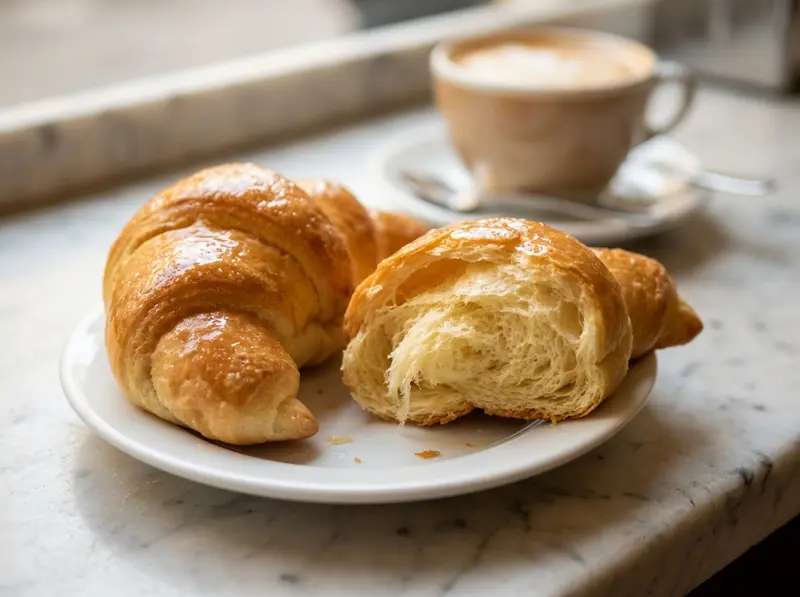
Crostata di marmellata is an Italian jam tart built on pasta frolla, a sweet shortcrust enriched with sugar and egg — in this recipe, roughly 2 parts flour to 1 part butter to two-thirds part sugar by weight. The sugar and egg bake up closer to a sturdy cookie than a flaky pastry: the crust holds its shape under the jam when sliced and stays crumbly rather than crisp. Cold butter worked in quickly, plus a rest in the fridge before rolling, are what keep it from turning tough or greasy. The same cold-butter discipline shows up in laminated pastries like cornetto, just with more folding.
Egg white gives shine more than color, so a pale lattice usually means the oven was not fully up to 180°C or the tart came out early: bake for the full 30–40 minutes on the middle rack, until the strips are deep golden. For a darker finish, brush with a beaten whole egg instead of the white, which is how Artusi glazes his; that takes one more egg than the recipe lists. A lattice cut wider than about 1.5 cm also shades itself unevenly, so keep the strips slim and evenly spaced.
Yes — cherry, fig, raspberry, or mixed berry preserves all work in place of apricot, as long as the jam is thick rather than runny. A loose, syrupy jam seeps through the dough and leaves the base soggy, so simmer down a thin jam for a few minutes first, and loosen a very stiff one with a spoonful of water. Whatever you use, spread it about 8–10 mm thick and stop 1 cm short of the rim so it doesn't bubble over the edge while baking.
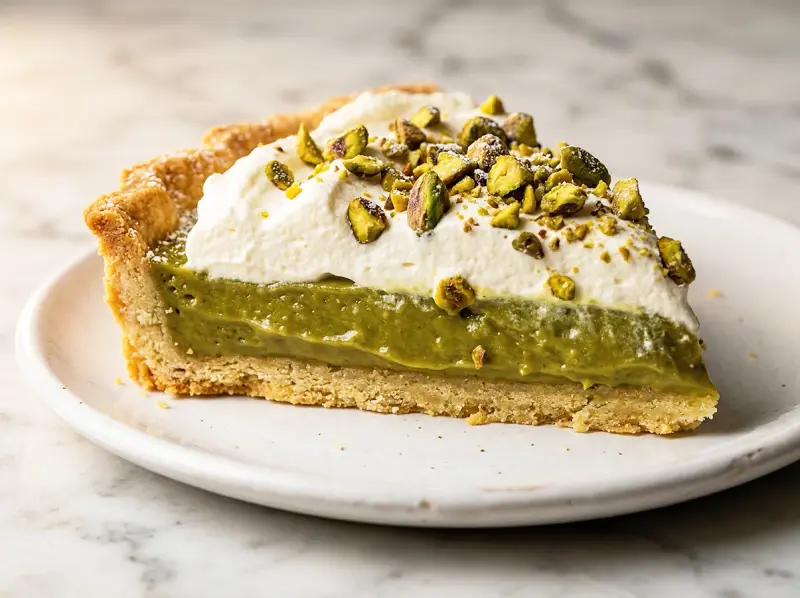
It keeps 2–3 days at room temperature, covered with a glass dome or a clean cloth rather than plastic wrap, which traps moisture and softens the crust. The fridge dries out pasta frolla faster than it protects it, so it's not the better option unless your kitchen is unusually warm. The raw dough freezes well for up to 2 months tightly wrapped, and a fully baked tart freezes for 1–2 months — thaw it in the fridge overnight and refresh it in a 160°C oven for 10–15 minutes before serving. If you want another make-ahead pastry for the freezer, pistachio cream tart keeps just as well.
The pasta frolla leans on egg for structure, but you can replace the whole egg and yolk with 3 tablespoons of plain yogurt, or a flax egg (1 tablespoon ground flaxseed mixed with 3 tablespoons water, rested for 10 minutes); brush the lattice with a little plant milk in place of the egg white for color. For a gluten-free version, swap in a 1:1 gluten-free flour blend with xanthan gum for the 00 flour — the dough will be more fragile to roll, so do it between two sheets of parchment paper rather than on a floured counter.
Rate this
Recipes by email
One letter a week: a recipe picked for your taste, plus whatever is new on the site. Unsubscribe in one click.
Welcome gift: Sergei's cookbook (e-book).
By subscribing you agree to the privacy policy.
Tell us what you like to cook (30 seconds) →Keep browsing
More dishes from the Italian archive — picked by overlap with what you're cooking now.
Join the conversation
Comments
No comments yet — be the first!