
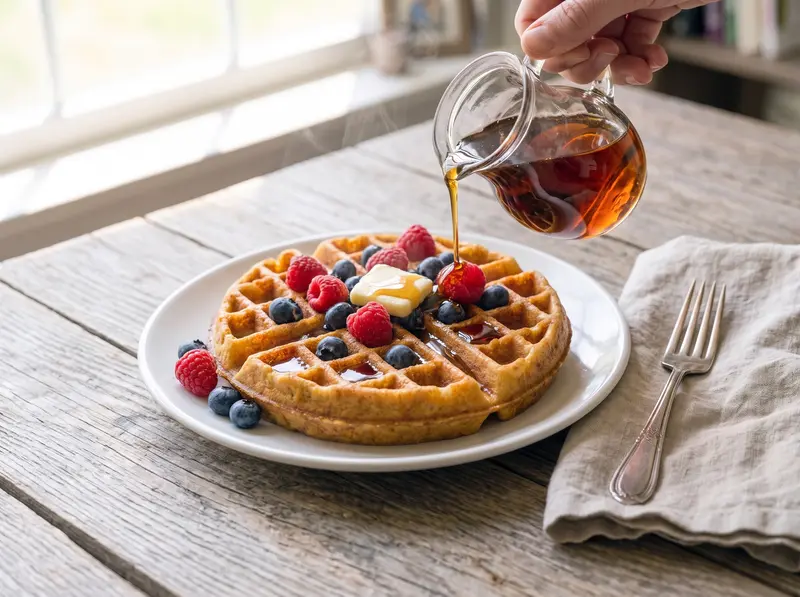
Waffles (Crispy Outside, Fluffy Inside)
These are crisp-edged American buttermilk waffles with a fluffy, tender crumb inside, leavened with baking powder and baking soda rather than yeast. Two tricks set this batter apart from a basic mix: cornstarch swapped in for some of the flour for extra crunch, and whipped egg whites folded in at the end for lift. Buttermilk reacts with the baking soda to create extra bubbles, so the batter puffs into pockets of steam the moment it hits the hot iron. The result is a waffle with real structure — crisp ridges that hold syrup without going soggy, and a tender interior that pulls apart in layers. Makes 7–8 waffles in a standard iron.
Ingredients
- 200 gall-purpose flour
- 60 gcornstarch
- 2 tspbaking powder
- 0.5 tspbaking soda
- 2 tbspsugar
- 0.5 tspsalt
- 480 mlbuttermilk
- 2 eggs, separated
- 80 gmelted butter
- 1 tspvanilla extract
Method
- Preheat your oven to 100°C (212°F) and set a wire rack on a baking sheet inside — this is where finished waffles will wait without steaming themselves soft. Preheat your waffle iron to medium-high heat and give it the full warm-up time your model calls for; a properly heated iron is the single biggest factor in achieving crisp waffles. You'll know it's ready once you pour in the batter and close the lid — if steam isn't rising within about 10 seconds, give the iron another minute or two before you try again.
- Whisk the flour, cornstarch, baking powder, baking soda, sugar, and salt together in a large bowl. In a separate bowl, combine the buttermilk, egg yolks (not the whites — set those aside), melted butter, and vanilla extract. Pour the wet ingredients into the dry and stir with a spatula until just combined — you want a few lumps remaining. Overmixing develops gluten, which turns waffles tough and chewy instead of tender. Let the batter rest for 5 minutes while the iron finishes heating — this gives the cornstarch time to hydrate and the baking powder time to start producing gas.
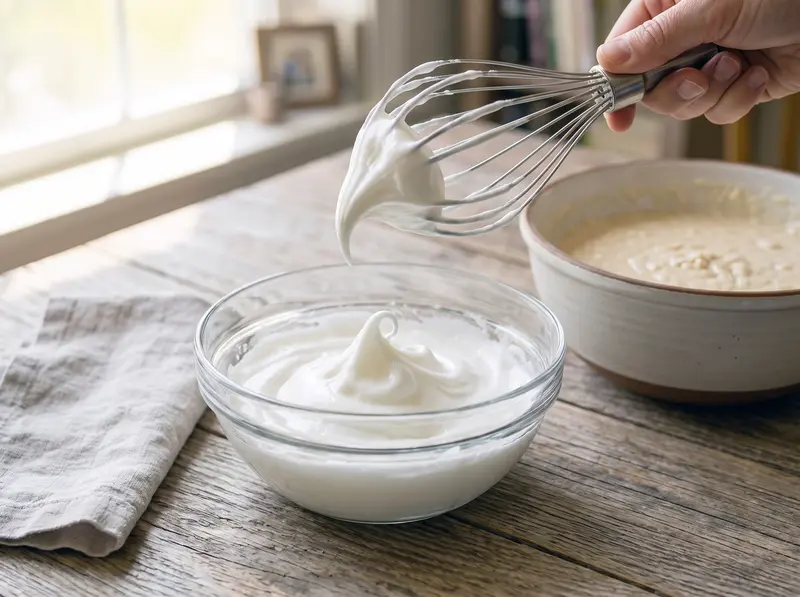
- Once the batter has rested, whip the egg whites in a clean bowl with a whisk or hand mixer until they hold stiff peaks: lift the whisk and the tip of the peak stands straight up without drooping. Gently fold the whites into the batter using a large spatula, cutting down through the center and sweeping along the bottom. You want to keep as much air as possible trapped in the batter. A few streaks of white are fine; the goal is volume, not uniformity. Start baking straight away, before the foam has time to settle.
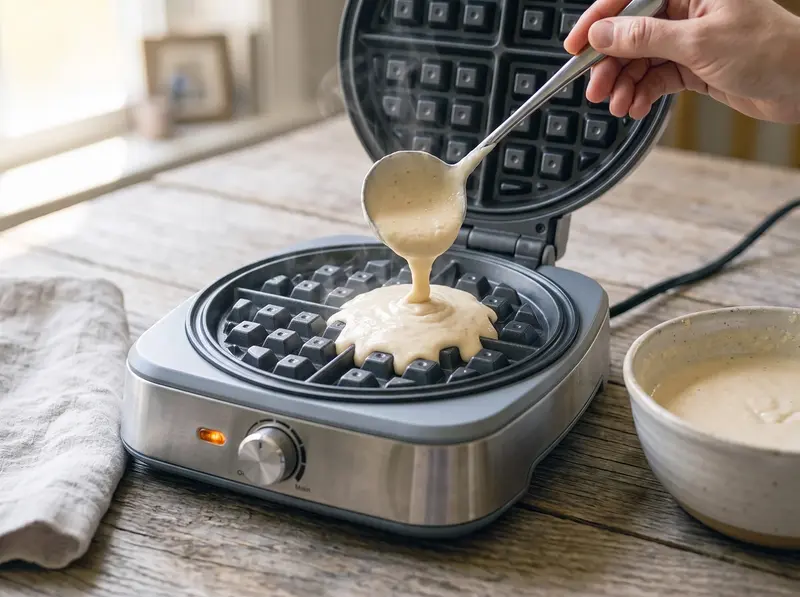
- Ladle the batter onto the center of the hot iron, using about 120–150 ml per waffle depending on your iron size. Close the lid and do not open it for at least 3 minutes. Steam will pour out at first — when the steam slows to a thin wisp, the waffle is close to done. Cook until deep golden brown, about 3–5 minutes total.
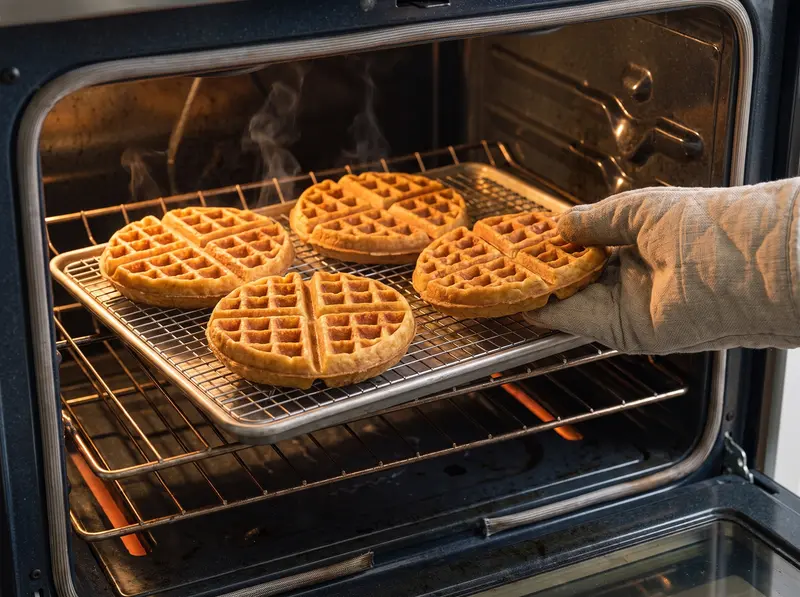
- Transfer each finished waffle directly to the wire rack in the oven — never stack them on a plate, which traps steam and makes the bottom soggy within a minute. The oven keeps them warm and the wire rack lets air circulate on both sides, preserving the crunch. Repeat with the remaining batter. Serve with maple syrup, fresh berries, whipped cream, or a dusting of powdered sugar — but serve quickly, because these waffles are at their absolute best within 5 minutes of coming off the iron.
FAQ
Soft, limp waffles almost always come down to three things: not enough heat, too much moisture in the batter, or stacking them after cooking. The waffle iron needs to be fully preheated — if no steam appears within 10 seconds of pouring the batter, it is not hot enough. Cornstarch in the batter absorbs excess moisture and creates a drier surface that crisps better than flour alone. After cooking, place waffles on a wire rack in a 100°C oven instead of a plate. Plates trap steam underneath, and a crisp waffle turns soggy in under a minute.
Cornstarch replaces some of the flour and creates a lighter, crispier texture because it contains no gluten. Gluten is what makes bread chewy and elastic, but in waffles, you want the opposite — a tender interior that breaks apart easily and a crust that shatters. The cornstarch also absorbs moisture from the batter, which means the surface dries out faster on the iron and browns more evenly. You can skip it, but the waffles will be noticeably softer and more bread-like. If you do skip it, add the same weight in flour — so 260 g total flour instead of 200 g flour plus 60 g cornstarch.
Belgian waffles are made in an iron with much deeper pockets, so each waffle is thicker and holds more syrup and toppings per square. The lift usually comes from whipped egg whites (as in this recipe) or from a yeasted batter, rather than baking powder alone, which gives a more open, airy crumb. Liège waffles go further still — a rich, yeasted dough closer to brioche than to pancake batter, studded with pearl sugar that caramelizes into sticky, crunchy spots on the outside. This recipe follows the American approach instead: thinner, leavened with baking powder and soda plus whipped egg whites rather than yeast, and ready in about 40 minutes rather than requiring an overnight rise.
The wire-rack-in-the-oven method is the only reliable approach. Set your oven to 100°C (212°F) and place a wire cooling rack on a baking sheet. As each waffle comes off the iron, transfer it directly to the rack in a single layer — never stack them, and never cover them with foil. The rack allows air to circulate on both sides, preventing condensation from softening the crust. Waffles will hold for 15–20 minutes this way and stay almost as crisp as they were fresh off the iron. The same trick works for keeping American pancakes warm, if you're making both for a crowd.
Yes, waffles freeze beautifully for up to 2 months. Cool them completely on a wire rack first, then freeze in a single layer on a baking sheet before transferring to a freezer bag — this prevents them from sticking together. To reheat, put the frozen waffle directly into a toaster or toaster oven at the highest setting. A regular oven at 190°C (375°F) for 5 minutes also works well. Do not use a microwave — it steams the waffle and turns the crust into rubber. The toaster method actually makes them crispier than they were originally because it drives out additional moisture.
Rate this
Recipes by email
One letter a week: a recipe picked for your taste, plus whatever is new on the site. Unsubscribe in one click.
Welcome gift: Sergei's cookbook (e-book).
By subscribing you agree to the privacy policy.
Tell us what you like to cook (30 seconds) →Keep browsing
More dishes from the American archive — picked by overlap with what you're cooking now.
Join the conversation
Comments (1)
After testing probably 20 waffle recipes over the years, the cornstarch ratio in this one (roughly 1:3 with flour) is the sweet spot I keep coming back to. More cornstarch makes them too brittle; less and you lose the distinctive crunch. The egg white folding step takes 2 extra minutes but the difference in lightness is immediately obvious — side by side, there's no comparison.