


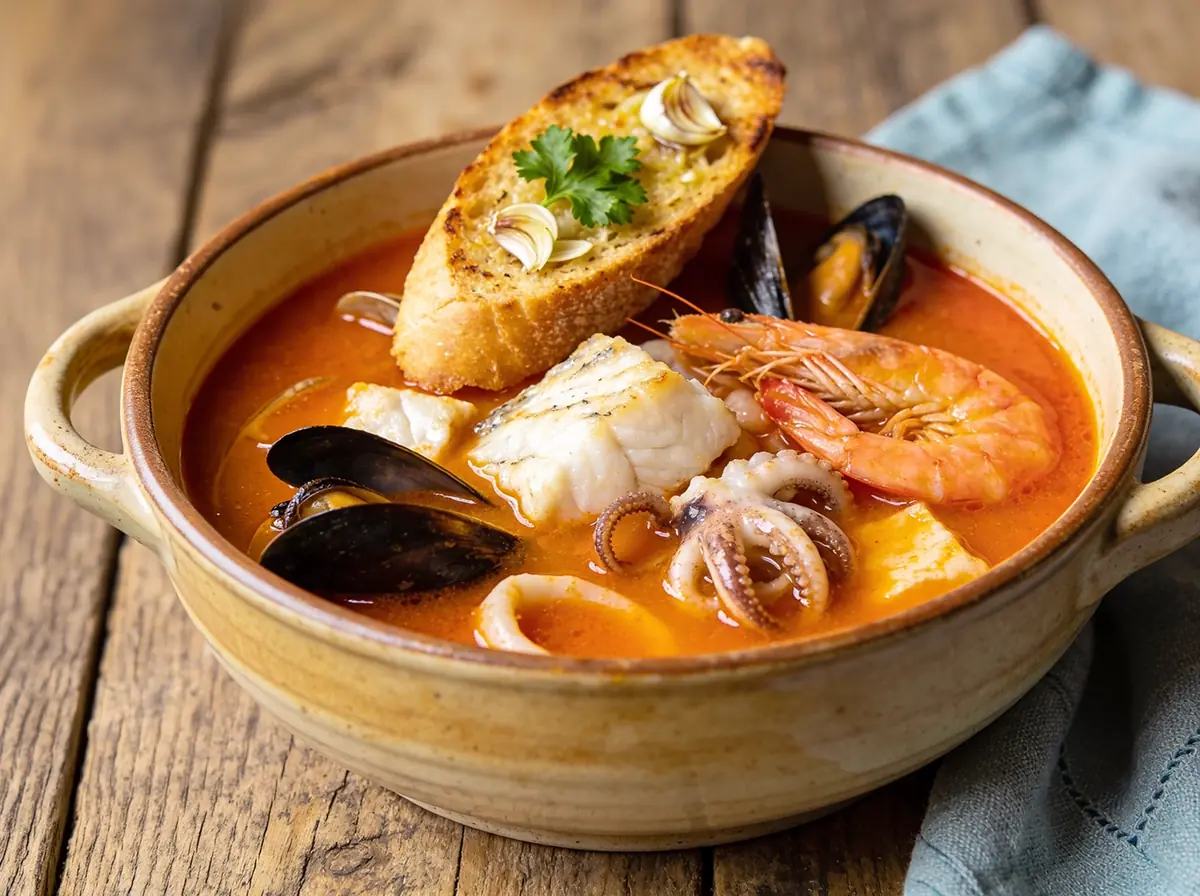
Bouillabaisse
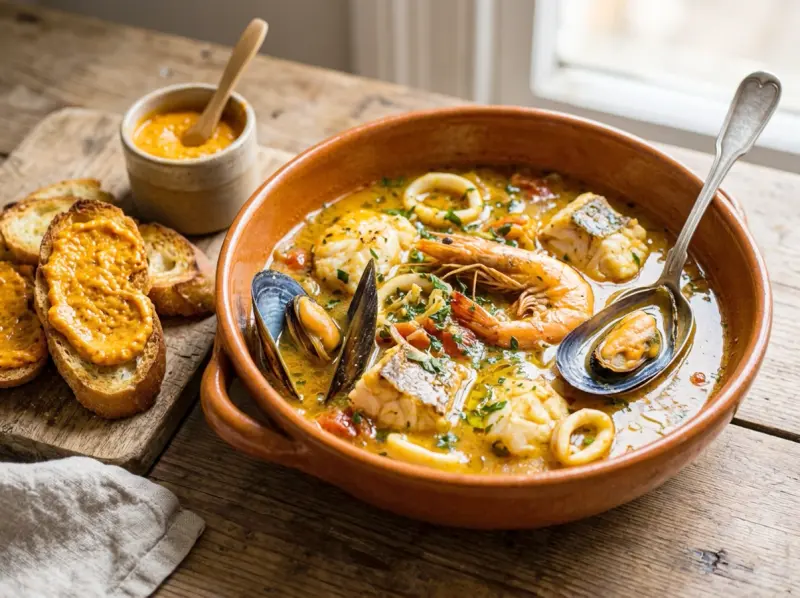
Bouillabaisse is a famous fish soup from Provence, originating from the port city of Marseille. It is a flavorful broth with various types of fresh fish and seafood, flavored with saffron, fennel and orange zest.
Ingredients
- 1 kgmixed fresh fish
- 500 gseafood
- 2 onions
- 4 clovesgarlic
- 2 stalkscelery
- 1 carrot
- 1 potato
- 1 bunchfresh fennel
- 1 tspsaffron
- 2 tomatoes
- 1 orange
- 1 bunchfresh herbs
- 60 mlolive oil
- 250 mldry white wine
- to tastesalt and pepper
- 2 egg yolks
- 2 clovesgarlic
- 1 tspsaffron
- 1/2 tspcayenne pepper
- 1 cupolive oil
- 500 gfish heads, bones and small white fish for the broth
- 1 baguette, sliced and toasted
1 cup = 240 ml
Method
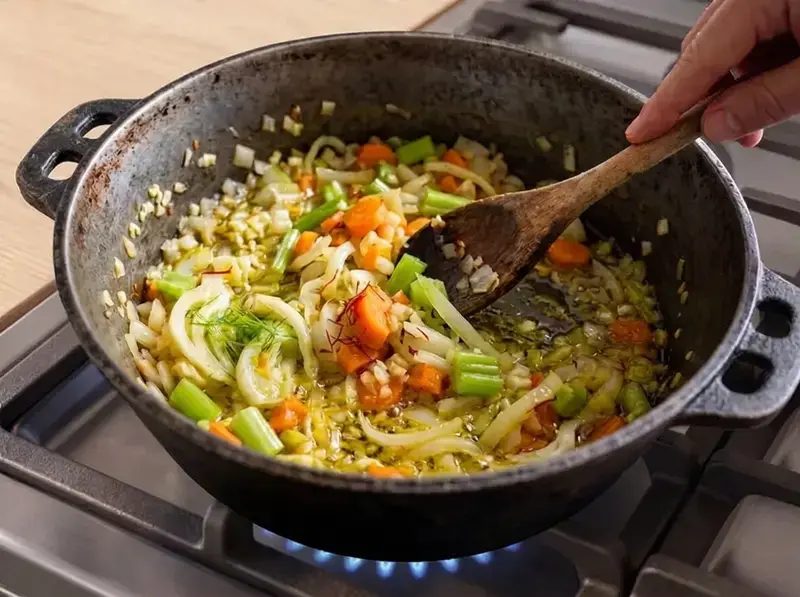
- In a large saucepan, heat the olive oil and fry the onion, garlic, celery, carrot, sliced fennel and saffron until soft but not browned; browning makes the broth bitter. Add the fish heads, bones and small fish and stir for 5 minutes.
- Add the tomatoes, orange zest, herbs (a few sprigs of thyme and parsley and 1 bay leaf), wine and enough water to cover the ingredients. Bring to a boil.
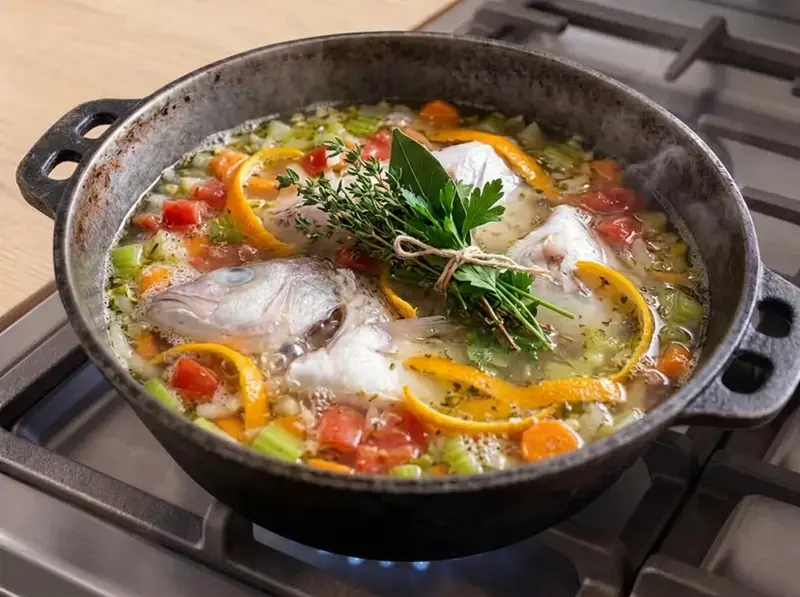
- Reduce the heat and simmer for 1 hour, skimming off the foam at the start. Then strain the broth through a fine sieve, pressing hard on the solids to get all the juice, and throw the solids away.
- Return the strained broth to the pot and bring it to a boil. Add the potato, peeled and cut into 1 cm slices, and cook for 10 minutes. Add the firm fish (sea bass, sea bream, salmon) and simmer for 8–10 minutes, then the delicate fish (cod, pollock) for 5 minutes more. Add the mussels and clams and cook for 2–3 minutes, until the shells open; throw away any that stay closed. Add the shrimp last and cook for 1–2 minutes, until pink and opaque. The fish is done when the flesh is opaque all the way through and flakes easily with a fork (63 °C).
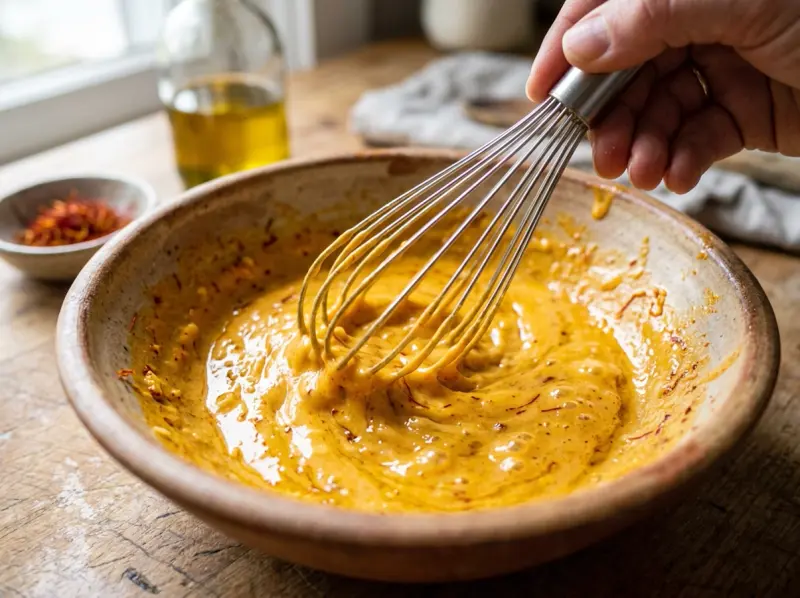
- For the rouille, have all the ingredients at room temperature. Whisk the egg yolks with the crushed garlic, saffron and cayenne, then add the olive oil drop by drop at first, then in a thin stream, whisking all the time, until the sauce is thick like mayonnaise. It makes about 1 cup. The yolks stay raw, so use pasteurized eggs, especially if you are serving pregnant women, young children, older people or anyone with a weakened immune system. Keep the rouille in the fridge until serving and don't leave it out for more than 2 hours.
- Serve in deep plates, pouring the broth over the fish, seafood and potato slices. Serve with the rouille, about 2 tbsp per bowl, and baguette croutons.
Cooked it? Rate the recipe
FAQ
Classic Marseille bouillabaisse calls for 5–7 types of fish, including pricey varieties — but at home that's not required. The key rule: use fish with different textures — one delicate type (cod, pollock) plus one firm type (salmon, sea bream, sea bass) plus any seafood (mussels, shrimp, squid). A budget version is perfectly fine as long as you keep the aromatic base: saffron, fennel, orange zest, and pastis or anise. Those spices, not the price of the fish, create the unmistakable flavor.
Saffron gives bouillabaisse its golden color and distinctive spiced aroma — it's the key ingredient. You can substitute turmeric (similar color but different flavor), dried safflower, or paprika — the taste will differ but the soup will still be delicious. If you have no saffron at all, use extra fennel and orange zest for the right aromatics. Real saffron is added in a pinch, pre-soaked in hot water for 10–15 minutes — this releases the aroma much more fully.
Bouillabaisse broth is not meant to be clear. The name comes from the saying "quand ça bout, on abaisse" (when it boils, lower the heat), and in Marseille the broth boils for at least an hour. What you do want to avoid is bitterness: don't brown the onion and garlic, use white fish heads and bones rather than oily fish, skim the foam at the start and press the solids through a fine sieve.
Rouille is a Provençal garlic sauce based on mayonnaise with saffron and cayenne pepper — it's an inseparable part of bouillabaisse. You can serve the soup without it, but you lose half the experience. Homemade rouille: whisk 2 egg yolks with 2 crushed garlic cloves, the saffron and the cayenne, then add the olive oil drop by drop and then in a thin stream, as for mayonnaise. Use pasteurized eggs, because the yolks stay raw. A quicker version: mix store-bought mayonnaise with garlic, saffron, and cayenne. Rouille is spread onto toasted baguette slices and placed directly in the bowl.
The order matters. The potato slices go in first and cook for 10 minutes. Then add the firm fish (sea bass, sea bream, salmon) and cook for 8–10 minutes. Then delicate fish (cod, pollock, haddock) — another 5 minutes. Last, add mussels and clams (2–3 minutes, until they open; throw away any that stay closed) and peeled shrimp (1–2 minutes). The fish is done at 63 °C, when the flesh is opaque and flakes easily. Squid goes in at the very end — it's done in 1 minute. Overcooked seafood turns rubbery and delicate fish falls apart into mush — following the right sequence solves both problems.
Keep browsing
More dishes from the French archive — picked by overlap with what you're cooking now.


Recipes by email
One letter a week: a recipe picked for your taste, plus whatever is new on the site. You can stop the letters in one click.
Welcome gift: Sergei's cookbook (e-book).
By signing up for the newsletter you agree to the privacy policy.
Tell us what you like to cook (30 seconds) →
Join the conversation
Comments (2)
😋Looks delicious!I will try 📝
Yes!