
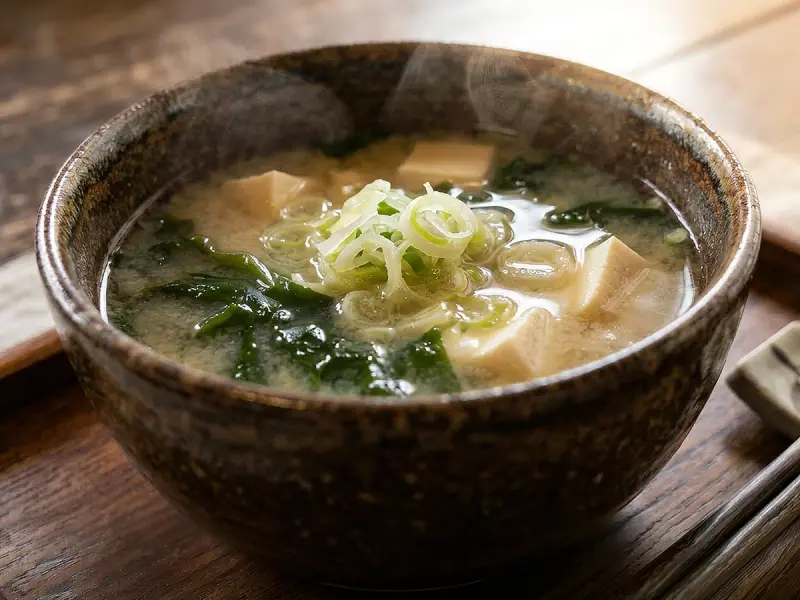
Miso Soup
The soul of Japanese daily cooking: a light umami-rich broth of dashi and miso with silken tofu, wakame seaweed, and scallion. Ready in 15 minutes with just 6 ingredients. The one rule: never boil miso — it kills the living enzymes and dulls the flavor.
Ingredients
- 500 mldashi broth
- 2 tbspmiso paste
- 100 gsilken tofu
- 1 tbspdried wakame seaweed
- 1 scallion stalk
Method
- Bring the dashi broth to a gentle simmer in a saucepan over medium heat. Watch carefully — you want it just below boiling, with small bubbles forming at the edges. If using dashi powder, dissolve it in the water first and stir well.
- Add the dried wakame to the hot broth. It will expand to several times its size within a minute or two, turning silky and deep green. If using pre-soaked wakame, add it now as well.
- Gently lower the tofu cubes into the broth. Handle them carefully — silken tofu is delicate and will crumble if stirred too aggressively. Let everything simmer together for 1-2 minutes so the tofu warms through.
- Remove the pot from heat. Ladle a few spoonfuls of hot broth into a small bowl, add the miso paste, and stir until completely dissolved — no lumps. Pour this mixture back into the pot and stir gently. Never boil miso: temperatures above 75 °C destroy the beneficial enzymes and dull the complex, savory flavor you're after.
- Ladle into individual bowls immediately and scatter sliced green onion on top. Miso soup is best served the moment it's made — it doesn't reheat well and the miso settles to the bottom as it sits.
FAQ
Boiling destroys miso's delicate aroma and flavor — that is the main reason to avoid it. Probiotics also die above 60°C, but the bigger loss is the taste. Always add miso off the heat or at a very low simmer.
Miso paste keeps 6–12 months in the fridge after opening. It is fermented and spoils slowly. As long as the color and smell seem normal, it is fine to use.
Yes — but remove the tofu before freezing as its texture changes after thawing. The broth with seaweed freezes well for up to 2 weeks.
Dashi is the flavor backbone and has no perfect substitute. Your best options are dashi powder (available in Asian stores) or miso paste with dashi already added. Vegetable broth will give a different result.
White miso (shiro) is milder and slightly sweet — ideal for beginners. Red miso (aka) is richer, saltier, and more intense. Many Japanese cooks mix both in a 1:1 ratio for a balanced depth.
Rate this
Recipes by email
One letter a week: a recipe picked for your taste, plus whatever is new on the site. Unsubscribe in one click.
Welcome gift: Sergei's cookbook (e-book).
By subscribing you agree to the privacy policy.
Tell us what you like to cook (30 seconds) →Keep browsing
More dishes from the Japanese archive — picked by overlap with what you're cooking now.

Join the conversation
Comments (4)
出汁をちゃんと取ると全然違う。顆粒だしでも作れるけど昆布とかつおで取った方が100倍うまい。手間かかるけどね
味噌は最後に入れるのが大事。沸騰させると風味が飛びます。基本中の基本だけど意外と知らない人多い
Мисо-суп варится две минуты. Две! Даси доводите до кипения, снимаете, разводите пасту. Кто кипятит мисо — уничтожает весь вкус и все полезные бактерии. Это самый простой суп в мире, и именно поэтому люди умудряются его испортить, пытаясь усложнить.
Start with cold water for miso soup. Adding dashi broth to cold water and bringing it up slowly extracts far more flavor than dumping ingredients into a rolling boil. The difference in depth is significant.