
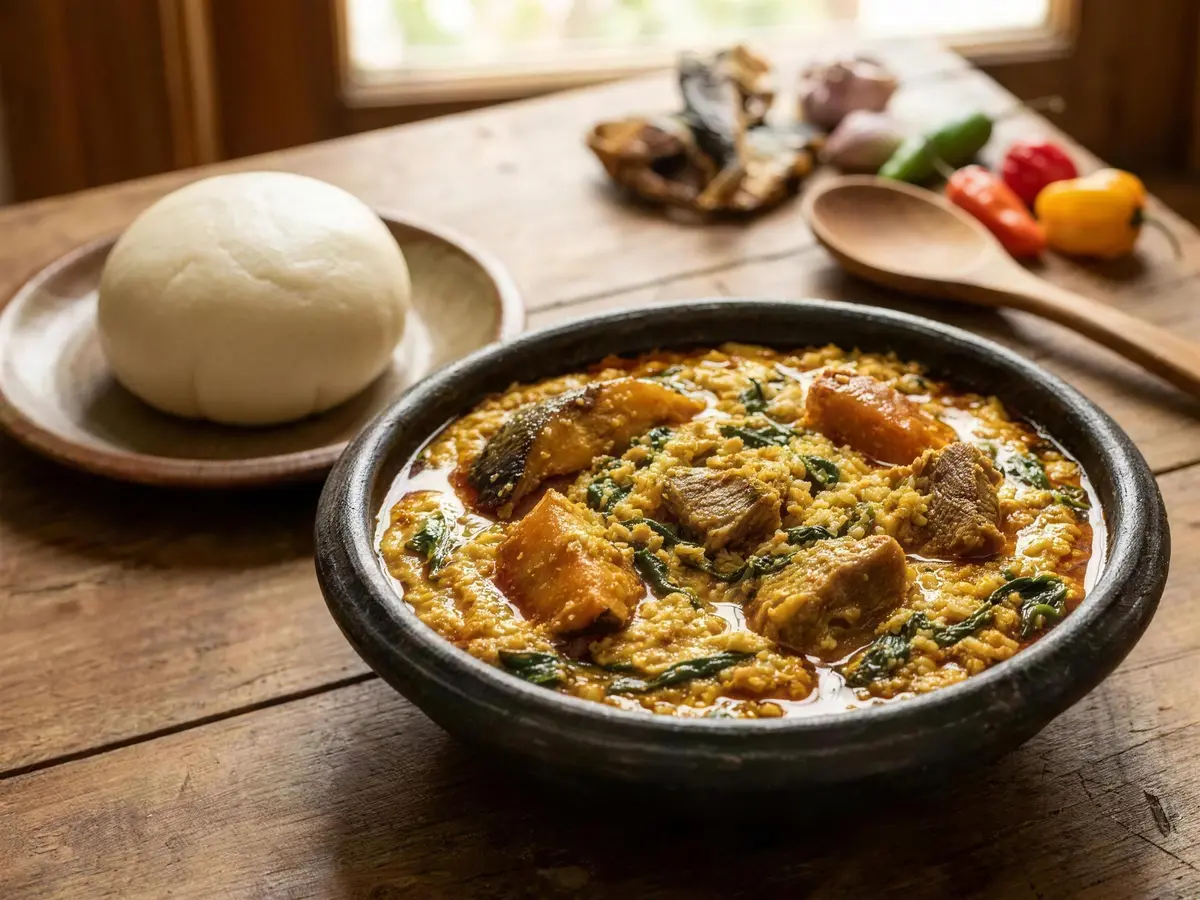
Egusi Soup (Nigerian Melon Seed Stew)
Egusi soup is one of Nigeria's most widely eaten soups — a thick, richly savoury stew built on ground egusi, the dried seeds of a West African melon. The seeds are fried in red palm oil until nutty and set into soft lumps, then simmered with beef, smoked fish, ground crayfish, and fermented locust beans for deep umami, finished with leafy greens. It's hearty, nutty, and satisfying, eaten with pounded yam, eba, or rice.
Ingredients
- 250 gground egusi seeds
- 600 gbeef chuck or shin, cut into 3 cm pieces
- 150 mlpalm oil
- 300 gspinach
- 150 gsmoked fish
- 30 gground crayfish
- 2 pcsScotch bonnet pepper
- 2 pcsonion
- 1 tbspfermented African locust beans (iru)
- 2 pcsred bell pepper
- 1 pcsstock cube
- 1.2 lwater, for boiling the beef
Method
- Put the beef in a pot with salt, chopped onion, and the stock cube, and pour in 1.2 litres of water. Bring to a boil, then simmer 45–60 minutes, until a fork goes into the meat easily. Reserve the meat and its stock separately; you need about 700 ml of stock for the soup.
- Mix the ground egusi with 4–5 tbsp of water into a thick paste and set aside. Blend the red bell pepper, Scotch bonnet, and remaining onion into a rough pepper mix.
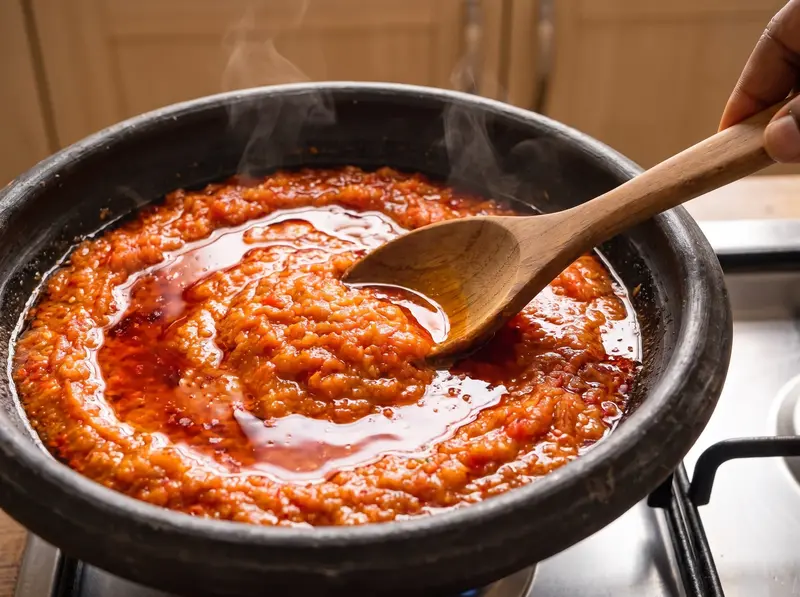
- Heat the palm oil in a heavy pot, add the pepper mix, and fry over medium heat until the oil floats to the top and the sauce thickens, about 10–15 minutes.
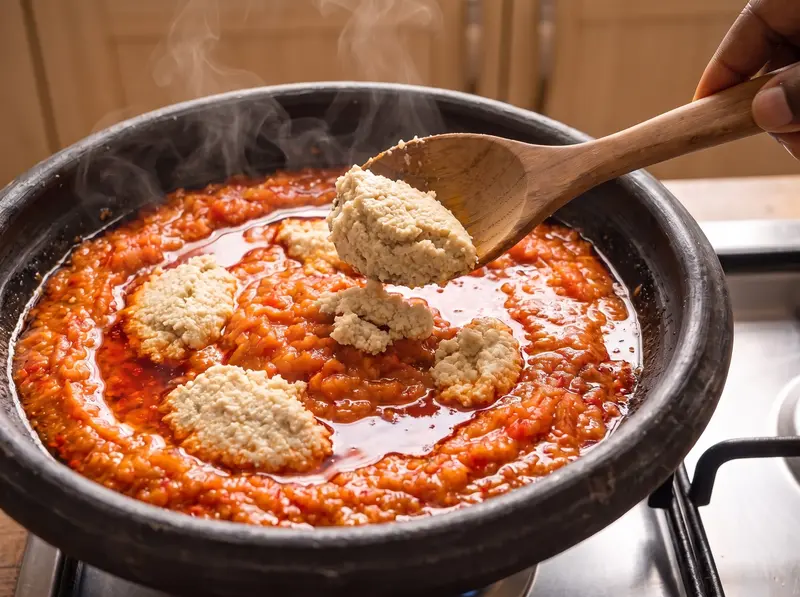
- Drop the egusi paste in spoonfuls into the hot pepper base. Don't stir for 2–3 minutes so a crust forms, then fry gently, turning occasionally, 8–10 minutes until it smells nutty and roasted.
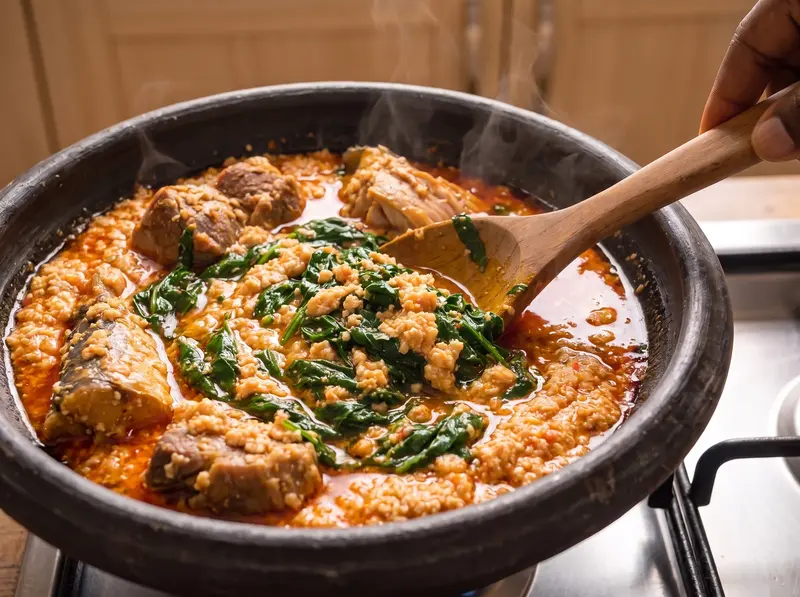
- Pour in about 700 ml of the reserved beef stock and stir to a thick but pourable soup. Add the cooked beef, flaked smoked fish, ground crayfish, and locust beans.
- Simmer on medium-low 15–20 minutes, stirring occasionally, so the flavours meld and the soup thickens. Add a little more stock if it stiffens too much; season with salt.
- Stir in the washed, chopped spinach and cook just 3–5 minutes so it keeps its colour. Serve hot with pounded yam, eba, or rice.
FAQ
Egusi is the dried, shelled seed of a West African melon (a relative of the watermelon), grown mainly for its protein- and fat-rich seeds rather than its bitter flesh. The seeds are ground to a coarse flour or paste, which thickens the soup and gives it its signature nutty flavour and slightly grainy texture. Sometimes called melon seeds, they're sold whole or ground in African and international grocers. There's no true substitute — the whole dish is built around them — though ground pumpkin seeds are a rough approximation in a pinch.
These are the two main ways to cook the egusi, and Nigerian cooks debate them fiercely. In the frying method (common among the Yoruba), the egusi paste is dropped into hot palm oil and pepper and fried until it forms lumps with a nutty, roasted flavour and a drier, more textured feel. In the boiling method, the egusi is cooked directly in the stock, giving a smoother, creamier soup. Both are authentic; this recipe uses the frying method for its deeper flavour and classic lumps.
Red palm oil is central to egusi soup: it gives the deep orange-red colour and a distinctive earthy, slightly savoury flavour that defines the dish. It's not the same as refined palm oil or palm kernel oil. You can technically make egusi with another oil, but it won't look or taste traditional. Look for unrefined red palm oil in African or Caribbean grocers. Use it in moderation, as it's rich, and let it heat before adding the pepper base.
These dried and fermented ingredients are what give egusi its deep, layered umami — the savoury complexity that makes it so distinctive. Ground crayfish (dried, powdered shrimp-like shellfish) adds a briny depth; smoked or stockfish brings a rich, fishy savouriness; and iru (also sold as dawadawa), the fermented seeds of the African locust bean tree, Parkia biglobosa, adds a pungent, fermented note similar in role to miso or fish sauce. They're traditional and worth seeking out, but you can make a simpler version with just the crayfish, or lean on extra stock and seasoning. Crayfish is a shellfish and smoked fish is fish — both are allergens, and the soup can be made without them.
Egusi is traditionally eaten with a 'swallow' — a soft, dough-like staple you pinch off and dip into the soup. The classics are pounded yam, eba (made from cassava/garri), fufu, semovita, and amala. It's also delicious with plain boiled rice, boiled yam, or plantain. The soup is thick and rich, so a plain, starchy side balances it. Serve it hot in generous bowls, and don't be shy with the assorted meats and fish on top.
Keep browsing
More dishes from the Nigerian archive — picked by overlap with what you're cooking now.

Recipes by email
One letter a week: a recipe picked for your taste, plus whatever is new on the site. Unsubscribe in one click.
Welcome gift: Sergei's cookbook (e-book).
By subscribing you agree to the privacy policy.
Tell us what you like to cook (30 seconds) →
Join the conversation
Comments
No comments yet — be the first!