Korea · Meat Dishes
Bibimbap (Korean Mixed Rice Bowl)
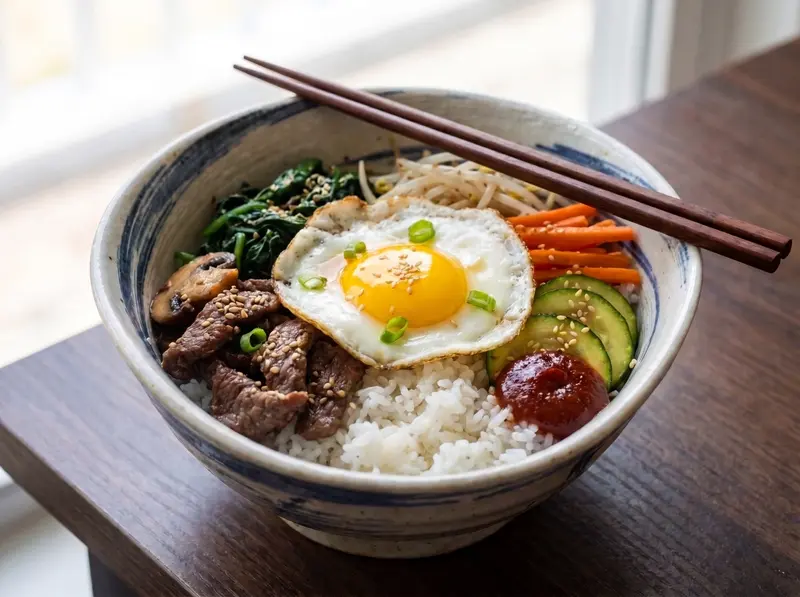
Korea's most celebrated rice dish: a bowl of short-grain rice topped with individually seasoned and cooked vegetables (namul), thinly sliced marinated beef, a sunny-side-up egg, and gochujang sauce — then mixed together…
Ingredients
- short-grain white rice, uncooked400 g
- beef, very thinly sliced200 g
- soy sauce2 tbsp
- sesame oil1 tbsp
- sugar1 tbsp
- garlic cloves2
- baby spinach150 g
- bean sprouts150 g
- large carrot1
- zucchini1
- shiitake mushrooms100 g
- eggs4
- gochujang3 tbsp
- sesame oil1 tbsp
- honey or sugar1 tbsp
- rice vinegar1 tbsp
- toasted sesame seeds1 tbsp
- sesame oil1 tsp
- soy sauce, for the mushrooms1 tsp
- sesame oil, for the namul1.5 tsp
- garlic, minced, for the spinach0.5 tsp
- neutral oil, for frying the vegetables and eggs2 tbsp
Method
- 1Start with the rice: rinse it until the water runs almost clear, cook it in a rice cooker or according to the package directions, and keep it warm and covered. Meanwhile, marinate the beef. Use a tender cut such as sirloin or rib eye; half-freeze it for 30 minutes to slice it thinly across the grain. Combine 2 tbsp soy sauce, 1 tbsp sesame oil, 1 tbsp sugar and the 2 garlic cloves, finely chopped. Add the sliced beef and toss to coat. Marinate at least 15 minutes. Cook in a very hot pan or wok for 2 to 3 minutes until slightly caramelized at the edges. Set aside.
- 2Prepare the namul (seasoned vegetables) with their own seasonings, listed separately at the end of the ingredients — the soy sauce, sesame oil and garlic above are already used in the marinade and the sauce. Cut the carrot and the zucchini into thin matchsticks about 5 cm long and slice the mushroom caps thinly, discarding the tough stems. Each vegetable is cooked and seasoned separately — this is what makes bibimbap taste distinct from a simple rice bowl. Blanch the spinach in boiling water for 30 seconds, rinse under cold water, squeeze firmly dry, toss with 0.5 tsp garlic and 0.5 tsp sesame oil. Blanch the bean sprouts until just tender: 1 minute for mung bean sprouts, 2 to 3 minutes for soybean sprouts (kongnamul), which must lose their raw bean smell; neither kind goes into the bowl raw. Drain, then season with salt and 0.5 tsp sesame oil. Stir-fry the carrot in a hot pan with a little neutral oil for 2 minutes with a pinch of salt. Stir-fry the zucchini the same way. Stir-fry the mushrooms with 1 tsp soy sauce and 0.5 tsp sesame oil until golden. Season each component with salt to taste.
- 3Make the gochujang sauce. Stir together the 3 tbsp gochujang, 1 tbsp sesame oil, 1 tbsp honey (or sugar) and 1 tbsp rice vinegar until smooth. Taste — it should be spicy, sweet, and lightly acidic. Add 1 to 2 teaspoons of water to adjust consistency to a drizzleable sauce. Set aside.
- 4Assemble the bowls. Fry the eggs sunny-side up in a little neutral oil until the whites are set and the yolks still runny. Cook the yolks through if you are serving small children, pregnant women, older people or anyone with a weakened immune system. Divide the warm rice among 4 bowls. Arrange the five vegetable namul and the beef around the rice in neat separate sections — the color contrast is part of the dish. Place a fried egg in the center. Drizzle the last teaspoon of sesame oil over the four bowls and scatter over the sesame seeds. Add a spoonful of gochujang sauce.
- 5Mix and eat. Serve immediately. Each diner mixes the entire bowl together with a spoon before eating — the runny egg yolk coats the rice, the gochujang sauce distributes into every grain, and the vegetables integrate. Serve extra gochujang on the side. For dolsot bibimbap: brush a stone bowl or cast-iron pan with sesame oil, heat until very hot, add the rice, assemble toppings, and heat on the stove for 5 minutes until you hear the rice crackling — then add the egg and serve immediately. The bowl stays very hot: carry it on a trivet and do not touch it with bare hands.