Japan · Fish and Seafood Dishes
Buri Daikon (Japanese Simmered Yellowtail and Daikon)
Buri daikon (ぶり大根, also written ブリ大根) is a Japanese winter home dish of yellowtail, called buri, simmered with thick pieces of daikon radish in soy sauce, sake, mirin and sugar.
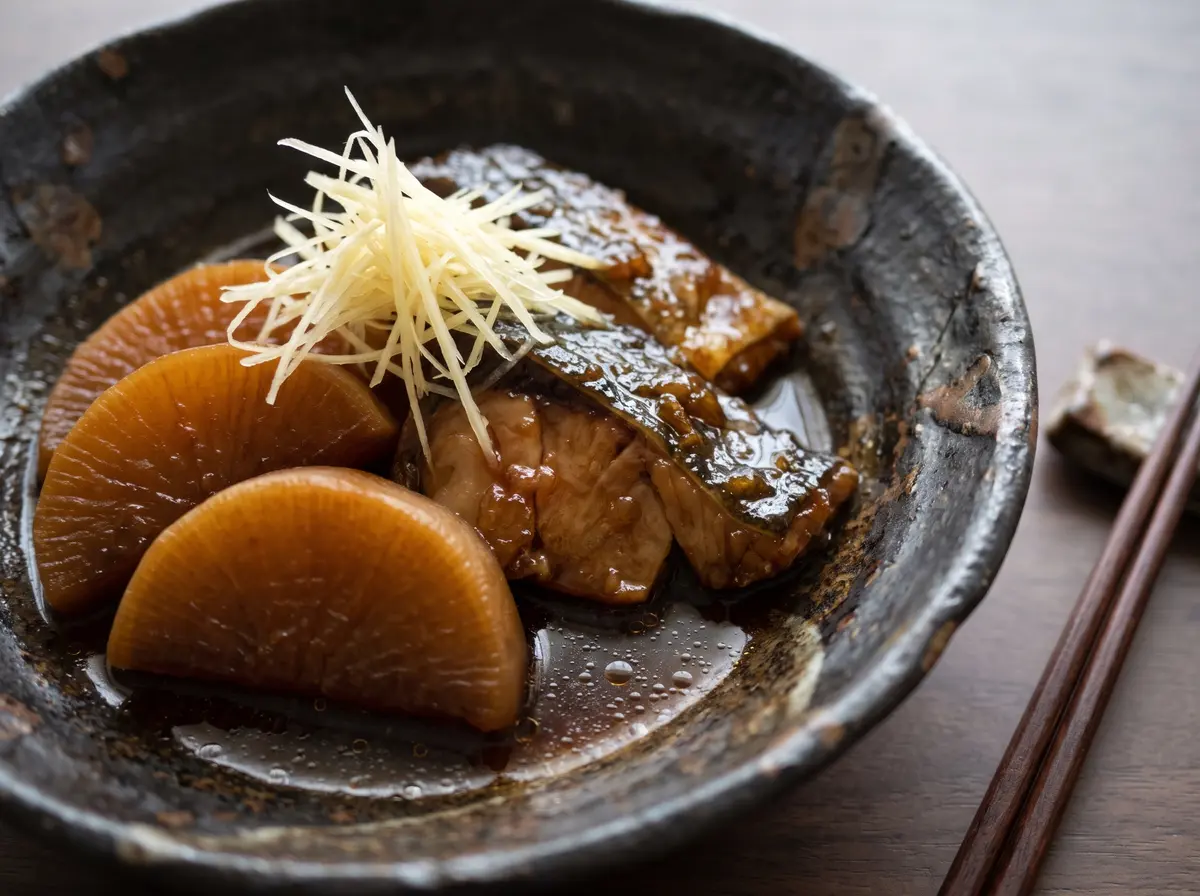
Ingredients
- daikon600 g
- water2400 ml
- uncooked short-grain rice2 tbsp
- skin-on yellowtail fillets400 g
- fine salt0.5 tsp
- ginger30 g
- sake100 ml
- mirin3 tbsp
- sugar25 g
- soy sauce4 tbsp
Method
- 1Cut the 600 g daikon into 2 cm rounds. Peel each round thickly, 3 to 4 mm deep, until the stringy ring just under the skin is gone, because those fibres stay tough however long they cook. Halve any round wider than 5 cm into half-moons, then shave a thin strip off the cut edges with the knife. Rounded edges don't crumble in the pot.
- 2Put the daikon in a wide 24 cm pot (about 3 L) with 1000 ml of the water and the 2 tbsp rice, starting from cold water. If you drop daikon into boiling water, the outside falls apart before the middle softens. Bring to a boil over high heat, then turn to low and cook for 15 to 20 minutes, until a skewer slides in easily and the edges look translucent. Japanese cooks believe the rice takes away the radish's bitterness. Drain, rinse the daikon and the pot under cold water, and set the daikon aside.
- 3While the daikon cooks, cut each of the 4 skin-on yellowtail fillets (400 g in total) in half, into pieces about 5 cm long. Sprinkle the ½ tsp fine salt over both sides, skin included, and leave for 10 minutes. Peel the 30 g ginger. Slice 20 g of it thinly for the pot and cut the remaining 10 g into very fine matchsticks for serving.
- 4Bring another 1000 ml of the water to a boil in an 18 cm saucepan. Lower in the fish 3 or 4 pieces at a time for 10 to 15 seconds, just until the surface turns white, then lift them into a bowl of iced water. The inside should still be raw. Under cold running water, rub off any leftover scales, dark blood and slime, then pat the pieces dry. This scalding is called shimofuri, and it takes away the fishy smell and helps the pieces hold together in the pot.
- 5Lay the daikon in one layer in the rinsed 24 cm pot, put the fish on top skin side up and scatter over the ginger slices. Add the remaining 400 ml water, the 100 ml sake, 3 tbsp mirin and 25 g sugar (2 tbsp). Bring to a boil over high heat, skim off the grey foam and lay a drop lid (otoshibuta) right on the food: a wooden one soaked in water first, or a 22 cm circle of baking parchment with a small slit or hole cut in the middle. The liquid won't cover the fish, and that is expected: the drop lid keeps it washing over the top while steam escapes, which an ordinary lid would not do. Simmer on medium-low, bubbling steadily, for 10 minutes.
- 6Lift the drop lid, pour in the 4 tbsp soy sauce and tilt the pot gently to mix it into the broth. Some Japanese cooks, among them Yoshiharu Doi on NHK and Shirogohan.com, add the sugar first and the soy sauce a little later, as here. Put the drop lid back and simmer on medium-low for 10 minutes more, until the daikon turns light brown.
- 7Take the drop lid off and raise the heat to medium. For 5 minutes, keep spooning the broth over the fish and daikon until it has cooked down to about a third and looks glossy. Stop before the pot runs dry. The fish is done when the flesh is opaque all the way through and flakes at the thickest part (63°C). A skewer should slide into the daikon with no resistance.
- 8Turn off the heat, lay the drop lid back on and let the pot rest for 30 minutes, tilting it once to coat the daikon. The daikon keeps taking up the broth as it cools. Warm it through again if you like, serve in bowls with a little broth and put the ginger matchsticks on the fish. Get leftovers into the fridge within 2 hours of turning off the heat, counting the 30-minute rest. Eat them within 2 to 3 days and reheat until steaming hot, 74°C in the middle.