Japan · Meat Dishes
Chicken Katsu
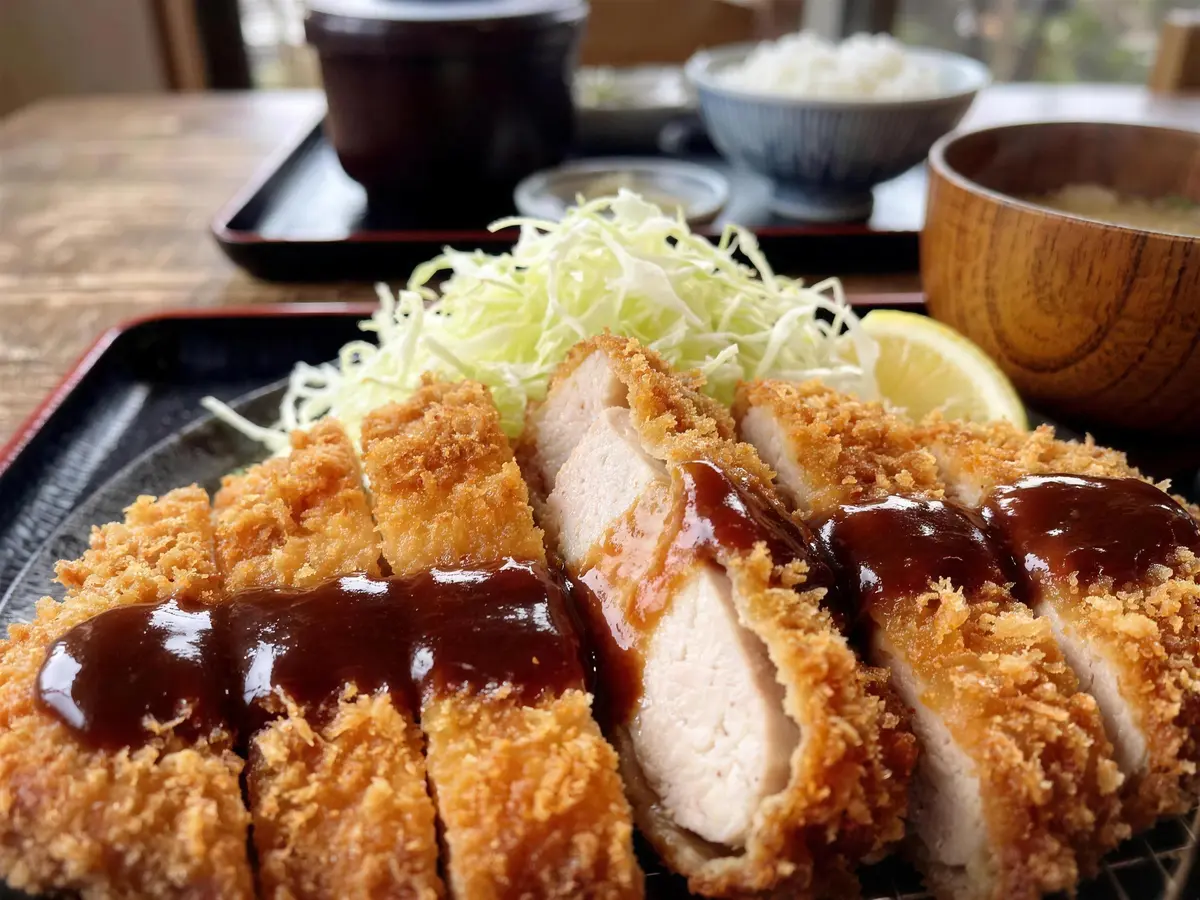
Chicken katsu is a Japanese fried cutlet: chicken breast pounded thin, coated in flour, egg and panko, and fried until the crust crackles while the meat stays juicy.
Ingredients
- chicken breasts600 g
- salt1 tsp
- black pepper0.5 tsp
- all-purpose flour70 g
- eggs2
- panko breadcrumbs140 g
- vegetable oil700 ml
- white cabbage250 g
- tonkatsu sauce80 ml
- lemon1
Method
- 1Prepare the cabbage. Shred the cabbage as finely as possible, soak it in ice water for 10 minutes, then drain and dry it well. Cold, crisp cabbage cuts through the fried crust, while wet cabbage would soften it on the plate.
- 2Shape the chicken. Use 2 large breasts, about 300 g each. Butterfly each breast, cut it in half to make 4 cutlets, and pound each one between sheets of baking paper to an even 8 mm thickness. Season both sides with salt and pepper, then leave for 5 minutes; equal thickness lets the center cook before the panko turns too dark.
- 3Set up the breading. Put flour, beaten eggs, and panko in three wide dishes. Coat each cutlet lightly in flour, dip it completely in egg, then press it into panko without crushing the flakes; shake off only the loose crumbs.
- 4Heat the oil safely. Pour the oil into a deep, heavy pot or high-sided pan 20 to 24 cm across: it should be 1.5 to 2 cm deep, enough for a cutlet to float, and come no more than halfway up the side. Heat it to 170°C. A panko crumb should sink briefly and rise at once with steady bubbles; oil that is cooler makes a greasy crust. Dry your hands and tools before you start, because water makes hot oil spit, and never leave the pot unattended. Keep a lid within reach: if the oil ever catches fire, turn off the heat and cover the pot. Never pour water on it.
- 5Fry the cutlets. Lower in one cutlet at a time, laying it away from you so the oil cannot splash toward your hand, and fry for 4 minutes, turning once after 2 minutes. Keep the oil near 170°C and do not crowd the pot; the crust should be deep gold, the thickest part should reach 74°C, and the meat there should be white with no pink when you cut into it.
- 6Drain and rest. Transfer each cutlet to a wire rack, not paper towels, and leave it for 3 minutes. The rack lets steam escape, and the short rest keeps the juices inside when you slice.
- 7Slice and serve. Cut each katsu across the grain into 2 cm strips with a clean downward motion. Plate beside the cabbage, add lemon wedges and tonkatsu sauce, and serve immediately while the broken edges of panko are still crisp.