


Chicken Katsu
Chicken katsu is a Japanese fried cutlet: chicken breast pounded thin, coated in flour, egg and panko, and fried until the crust crackles while the meat stays juicy. Two large breasts, about 300 g each, are cut in half to make four cutlets. Serve it as a set meal with finely shredded cabbage, rice, lemon, and fruity tonkatsu sauce.
Ingredients
- 600 gchicken breasts
- 1 tspsalt
- 0.5 tspblack pepper
- 70 gall-purpose flour
- 2 eggs
- 140 gpanko breadcrumbs
- 700 mlvegetable oil
- 250 gwhite cabbage
- 80 mltonkatsu sauce
- 1 lemon
Method
- Prepare the cabbage. Shred the cabbage as finely as possible, soak it in ice water for 10 minutes, then drain and dry it well. Cold, crisp cabbage cuts through the fried crust, while wet cabbage would soften it on the plate.
- Shape the chicken. Use 2 large breasts, about 300 g each. Butterfly each breast, cut it in half to make 4 cutlets, and pound each one between sheets of baking paper to an even 8 mm thickness. Season both sides with salt and pepper, then leave for 5 minutes; equal thickness lets the center cook before the panko turns too dark.
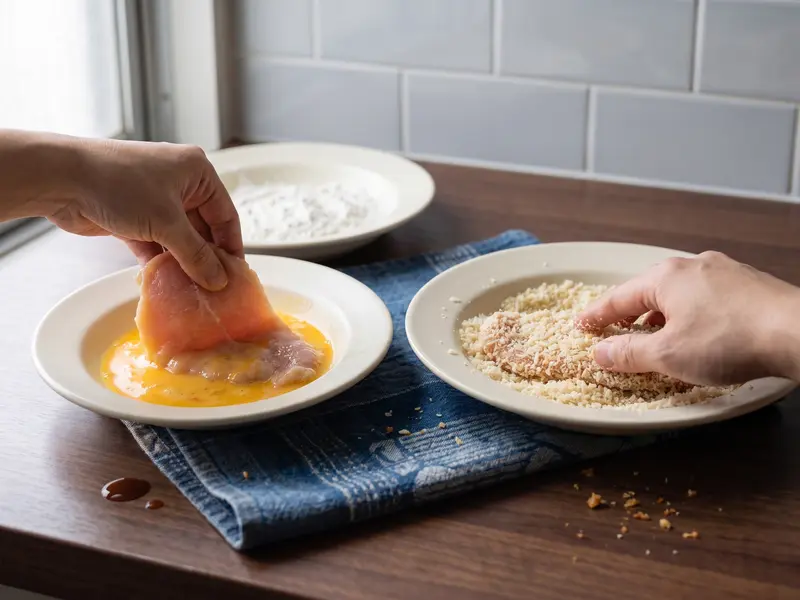
- Set up the breading. Put flour, beaten eggs, and panko in three wide dishes. Coat each cutlet lightly in flour, dip it completely in egg, then press it into panko without crushing the flakes; shake off only the loose crumbs.
- Heat the oil safely. Pour the oil into a deep, heavy pot or high-sided pan 20 to 24 cm across: it should be 1.5 to 2 cm deep, enough for a cutlet to float, and come no more than halfway up the side. Heat it to 170°C. A panko crumb should sink briefly and rise at once with steady bubbles; oil that is cooler makes a greasy crust. Dry your hands and tools before you start, because water makes hot oil spit, and never leave the pot unattended. Keep a lid within reach: if the oil ever catches fire, turn off the heat and cover the pot. Never pour water on it.
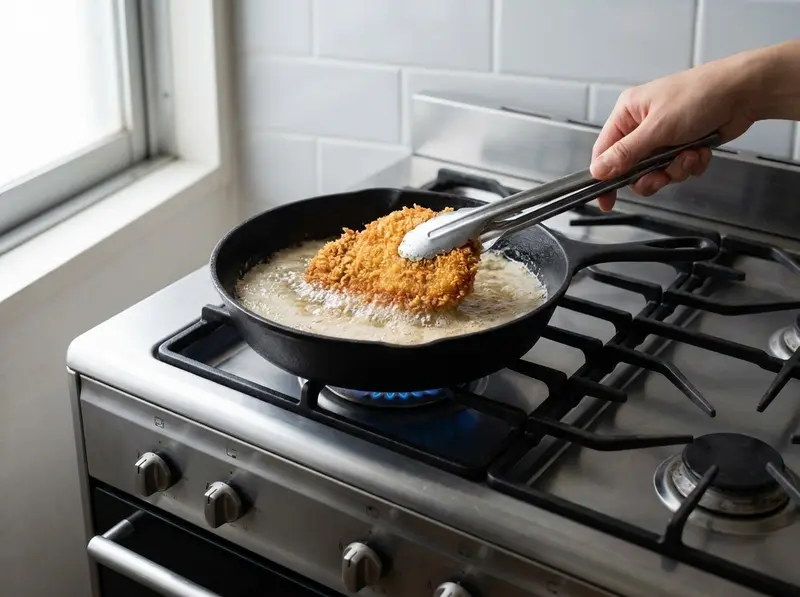
- Fry the cutlets. Lower in one cutlet at a time, laying it away from you so the oil cannot splash toward your hand, and fry for 4 minutes, turning once after 2 minutes. Keep the oil near 170°C and do not crowd the pot; the crust should be deep gold, the thickest part should reach 74°C, and the meat there should be white with no pink when you cut into it.
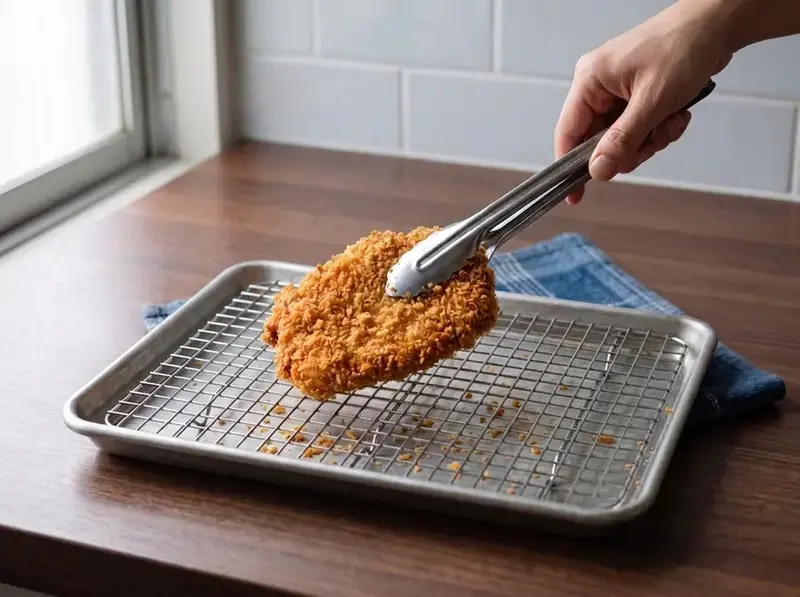
- Drain and rest. Transfer each cutlet to a wire rack, not paper towels, and leave it for 3 minutes. The rack lets steam escape, and the short rest keeps the juices inside when you slice.
- Slice and serve. Cut each katsu across the grain into 2 cm strips with a clean downward motion. Plate beside the cabbage, add lemon wedges and tonkatsu sauce, and serve immediately while the broken edges of panko are still crisp.
Cooked it? Rate the recipe
FAQ
Coarsely crushed unsweetened cornflakes are the closest pantry substitute and stay crisper than fine breadcrumbs. Use the same 140 g and press them on gently. Ordinary breadcrumbs work, but the crust will be denser and brown faster, so lower the oil to 168°C.
Yes. Spray both sides of the breaded cutlets with oil and cook in a preheated air fryer at 200°C for 10 minutes, turning after 6 minutes. Check that the center reaches 74°C; the coating will be lighter and less craggy than a fried katsu.
The usual causes are wet chicken, too much flour, or moving the cutlet too soon. Pat the meat dry, use only a thin flour film, and let the egg wet every edge before adding panko. Once the cutlet enters the oil, leave it alone for 90 seconds so the crust can set.
Cool the cutlets on a rack, then refrigerate them in a covered container for up to 2 days. Reheat on a rack in a 210°C oven for 8 minutes, or in an air fryer at 190°C for 4 minutes, until hot all the way through (74°C in the center). A microwave heats the meat but turns the panko soft.
A simple teishoku-style plate usually includes shredded cabbage, steamed Japanese rice, tonkatsu sauce, and often miso soup. Lemon or karashi mustard may sit beside the cutlet. Pour the sauce just before eating so the crust does not lose its crunch.
Keep browsing
More dishes from the Japanese archive — picked by overlap with what you're cooking now.




Recipes by email
One letter a week: a recipe picked for your taste, plus whatever is new on the site. You can stop the letters in one click.
Welcome gift: Sergei's cookbook (e-book).
By signing up for the newsletter you agree to the privacy policy.
Tell us what you like to cook (30 seconds) →
Join the conversation
Comments
No comments yet — be the first!