
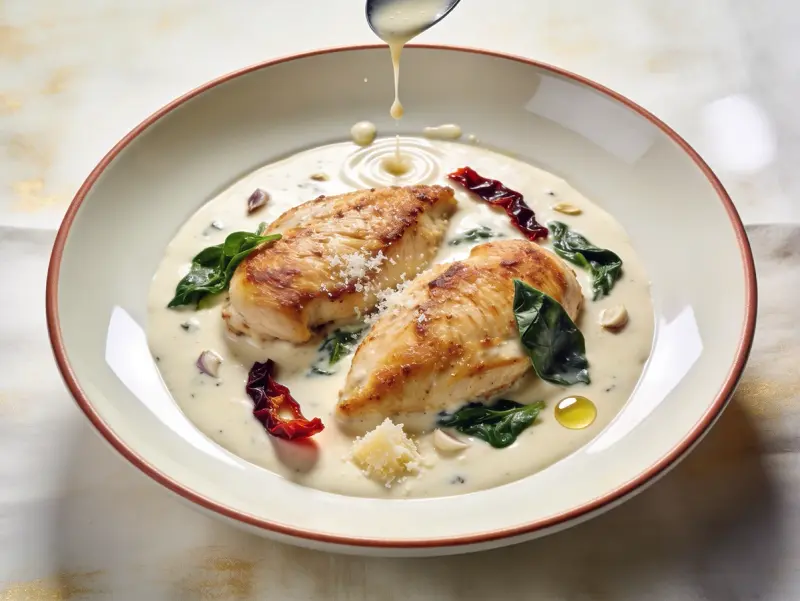
Creamy Tuscan Chicken
Chicken breasts seared until golden, then finished in a Parmesan cream sauce with sun-dried tomatoes, garlic and wilted spinach. Looks restaurant-level, takes 30 minutes, uses one skillet. Around 42g of protein per serving.
Ingredients
- 700 gchicken breasts
- 100 gsun-dried tomatoes in oil
- 100 gbaby spinach
- 240 mlheavy cream
- 60 gParmesan cheese
- 4 garlic cloves
- 1 small onion
- 120 mlchicken broth
- 2 tspItalian seasoning
- 1 tspsmoked paprika
- 2 tbspolive oil
- 1 tspsalt
- 0.5 tspblack pepper
Method
- Slice the chicken breasts in half horizontally to create 4 thinner cutlets — this is faster and more even than cooking whole breasts. Season both sides with Italian seasoning, smoked paprika, salt and pepper.
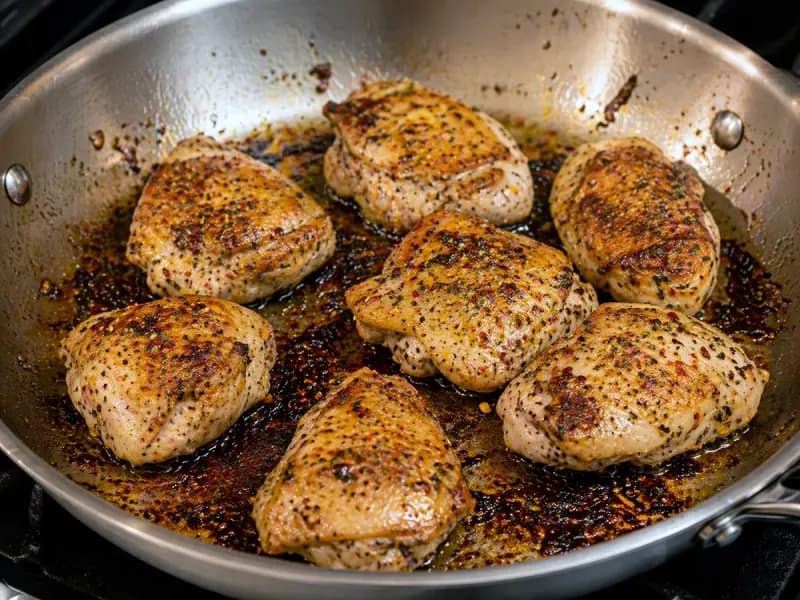
- Heat the olive oil (or 1 tbsp of the oil from the sun-dried tomato jar — it has concentrated flavor) in a large skillet over medium-high heat. Sear the chicken 4–5 minutes per side until deep golden and cooked through (74°C/165°F). Remove to a plate.
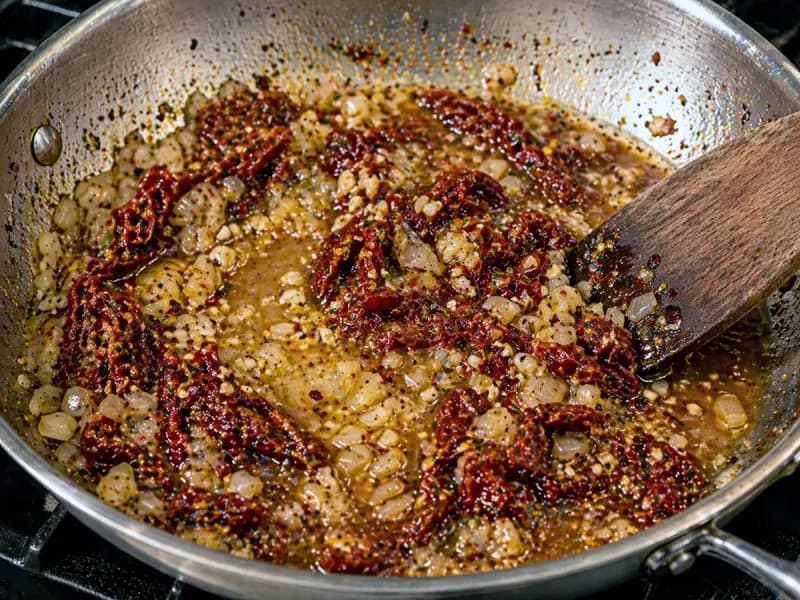
- In the same skillet, reduce heat to medium. Add the diced onion and cook 2–3 minutes until softened, scraping up the browned bits. Add the minced garlic and sliced sun-dried tomatoes. Cook 1 minute until fragrant.
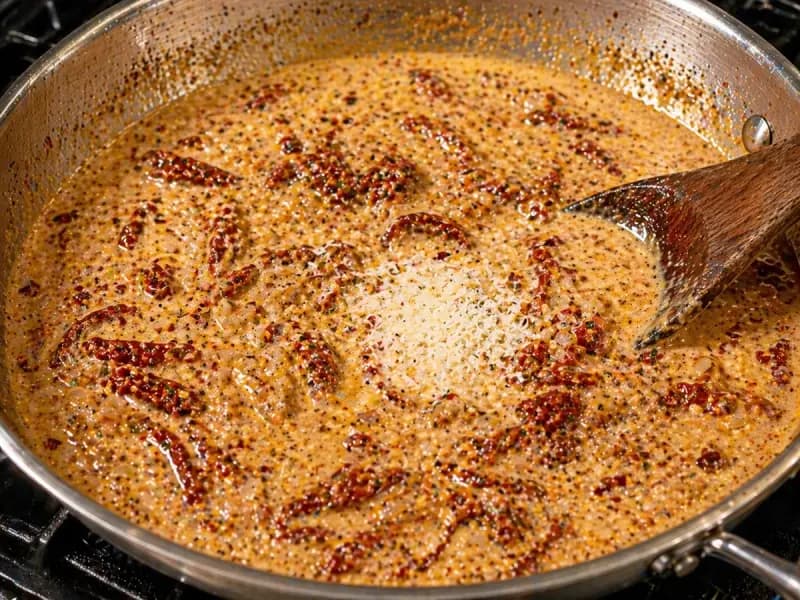
- Pour in the chicken broth. Let it bubble for 1–2 minutes, lifting everything from the bottom. Add the heavy cream and grated Parmesan. Stir and bring to a gentle simmer. Cook 3–4 minutes until the sauce thickens slightly.
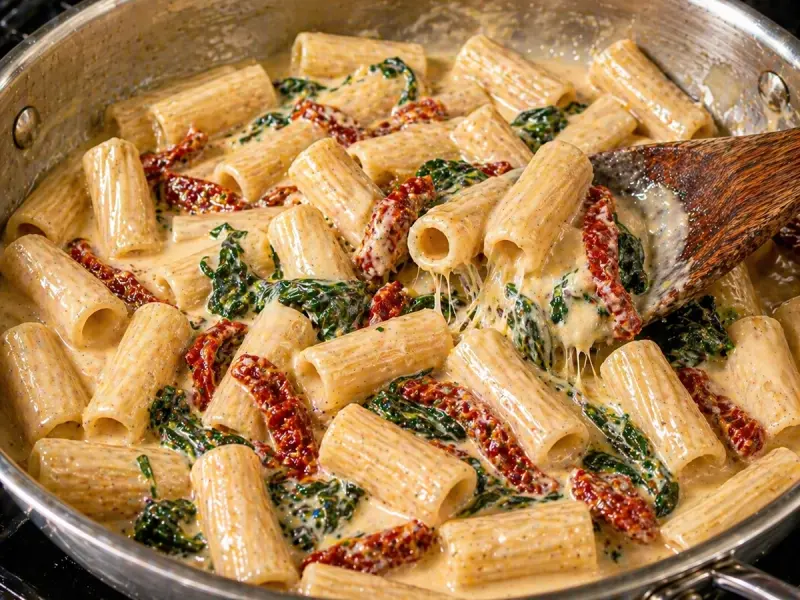
- Add the baby spinach in handfuls, stirring after each addition until just wilted — about 1–2 minutes total. Taste and adjust salt.
- Return the chicken to the skillet, pressing it into the sauce. Simmer on low for 3–5 minutes until everything is warmed through and the chicken has absorbed some of the sauce. Serve immediately over pasta, rice or with crusty bread.
FAQ
Cream sauce splits for two reasons: wrong dairy and too much heat. First, always use heavy cream (30%+ fat) — lower-fat options like milk or half-and-half break at the temperature needed to reduce a sauce. Second, never boil the sauce hard after adding the cream. Bring to a gentle simmer (a few lazy bubbles) and keep it there. If you see vigorous boiling, the fat is separating from the liquid. The Parmesan also helps stabilize the sauce — grate it fresh and add it off maximum heat, then stir until melted before returning to a simmer.
Thighs work well and are arguably better — more fat means more flavor and they're harder to overcook. Boneless thighs don't need to be butterflied; cook them whole for 6–7 minutes per side. The sauce is identical. The only adjustment: thighs release more fat during searing, so pour off a little excess before building the sauce or it will be greasier than intended. The finished dish will be richer and more forgiving on reheat.
The sauce is the star and it needs something to carry it. Pasta is the classic: linguine or pappardelle coat every strand. Mashed potato absorbs the sauce beautifully. Polenta is the most authentically Italian base and softens the richness. Plain white rice works for a more neutral pairing. For low-carb: zucchini noodles or spaghetti squash hold the sauce surprisingly well. Crusty bread on the side is non-negotiable regardless of the base — there will be sauce left in the pan that deserves to be eaten.
Yes, it keeps up to 3 days in the fridge. The sauce thickens considerably as it cools — this is normal. To reheat: warm gently in a skillet over low heat with a splash of chicken broth or water, stirring as it heats. Never microwave on full power — it overheats the cream rapidly and causes splitting. If the sauce has separated after refrigeration, add a tablespoon of broth and stir constantly over low heat as it warms; it will usually come back together. Add the spinach fresh when reheating if possible — spinach stored in the sauce turns gray and mushy.
Sun-dried tomatoes provide concentrated sweetness, acidity and umami that is difficult to replicate exactly. The closest substitutes: roasted red peppers (similar sweetness, less acid), cherry tomatoes halved and cooked down in the sauce for 5 minutes (fresher, less intense), or a tablespoon of tomato paste added with the garlic (adds depth without texture). If you use cherry tomatoes, cook them separately first until they blister and release their juices before adding to the sauce. Omitting sun-dried tomatoes entirely makes a good cream sauce but a noticeably less complex one.
Rate this
Recipes by email
One letter a week: a recipe picked for your taste, plus whatever is new on the site. Unsubscribe in one click.
Welcome gift: Sergei's cookbook (e-book).
By subscribing you agree to the privacy policy.
Tell us what you like to cook (30 seconds) →Keep browsing
More dishes from the American archive — picked by overlap with what you're cooking now.

Join the conversation
Comments (1)
An instant-read thermometer eliminates all guesswork with creamy tuscan chicken. Chicken is perfectly done at 74°C in the thickest part. Every degree beyond that moves you further from juicy toward dry.