


Chicken Kiev
Chicken Kiev, also written chicken Kyiv, is a chicken breast pounded thin, rolled around cold garlic and herb butter, breaded and fried until golden. Both Ukraine and Russia claim it, and its origin is still disputed. The butter needs 30 minutes in the freezer and the breaded cutlets 30 minutes in the fridge; that time is not counted in the cooking time.
Ingredients
- 4 largechicken breasts
- 100 gall-purpose flour
- 2 largeeggs
- 150 gpanko or regular breadcrumbs
- to tastesalt and freshly ground black pepper
- 1 litervegetable oil for deep-frying
- 100 gunsalted butter
- 3–4 clovesgarlic
- 3 tbspfresh parsley
- 2 tbspfresh dill
- 1/2 lemon zest
Method
- Mix the softened butter with minced garlic, the zest of half a lemon, and chopped herbs. Roll into a log using parchment paper and freeze for at least 30 minutes, until hard.
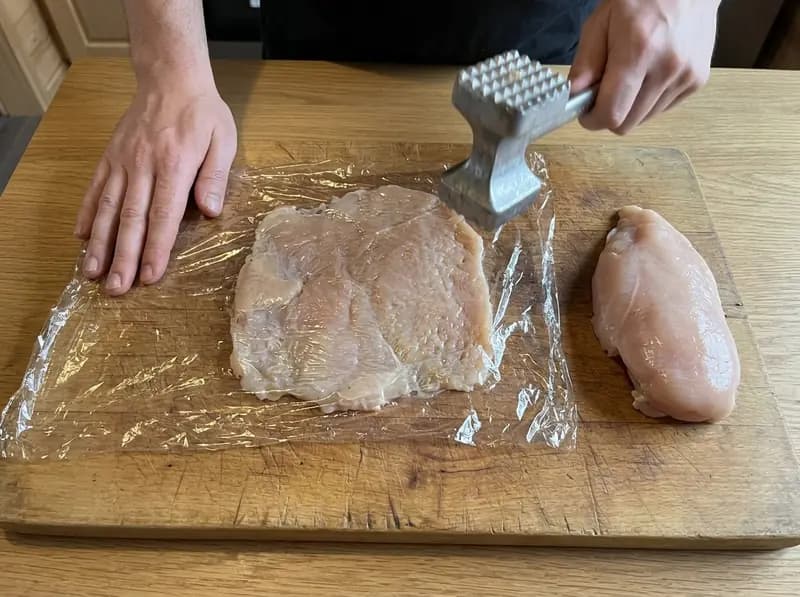
- Place each chicken breast between sheets of plastic wrap and pound to an even thickness of about 5–6 mm. Season both sides with salt and pepper.
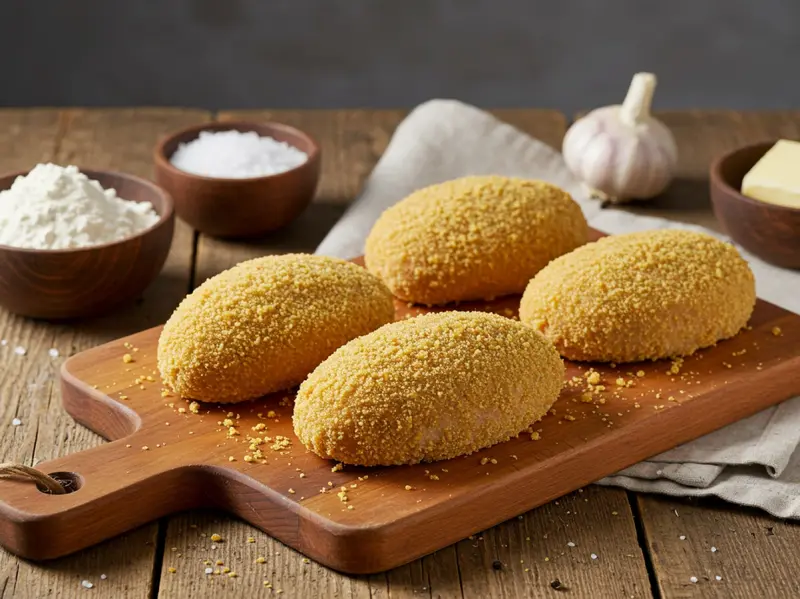
- Cut the frozen butter into 4 pieces. Place one piece in the center of each chicken fillet and roll up tightly, ensuring the butter is completely sealed inside. Dredge each parcel in flour, then egg, then breadcrumbs. Chill the breaded cutlets in the fridge for 30 minutes.
- Pour the oil into a deep, heavy pot so it comes no more than halfway up the sides, and heat it to 170°C, checking with a thermometer. Keep children away from the stove, keep a lid within reach, and never leave the pot unattended. Lower the cutlets in gently with a slotted spoon, two at a time, and fry for 8–10 minutes, turning occasionally, until golden brown and the chicken is cooked through: a thermometer pushed into the meat at the thick end, not into the butter core, should read 74°C. If the crust browns before the meat gets there, finish the cutlets on a rack in a 180°C oven for 5–10 minutes. If the oil catches fire, turn off the heat and cover the pot with the lid. Never use water.
- Drain on a wire rack and serve immediately, traditionally with mashed potatoes.
Cooked it? Rate the recipe
FAQ
Butter leaks when the chicken is not sealed tightly enough or the herb butter was too warm when rolled. The herb butter must be frozen hard before wrapping: shape it into a log, wrap it in cling film and freeze it for at least 30 minutes, until solid. When rolling, place the frozen butter in the center of the pounded breast, fold the sides in first, then roll tightly from bottom to top without any gaps. Press the seam firmly. After breading, chill the cutlets in the fridge for 30 minutes. Cold filling expands less rapidly during frying and stays inside. Also check that the chicken is pounded evenly to 5–6 mm — thin spots can tear and let the butter escape.
The breading falls off for three main reasons: the surface was too wet, the layers were not applied in the right order, or the oil was not hot enough. Pat the rolled chicken dry before breading. Apply in this exact order: flour (shake off excess), egg wash, breadcrumbs — pressing the crumbs firmly onto every surface. For extra security, repeat the egg and breadcrumb layers a second time (double breading). After breading, refrigerate for 30 minutes — this lets the coating set and bond to the meat. The oil should be at 170–175°C; too cool and the breading absorbs oil and slips off, too hot and it burns before the chicken cooks through. The same three-step breading (flour, egg, crumbs) is used for schnitzel.
Yes. Preheat the oven to 200°C (fan). First, shallow-fry the breaded cutlets in 1–2 cm of hot oil in a frying pan for 2 minutes per side until golden — this sets the crust and seals the breadcrumbs. Then transfer to a rack over a baking tray and bake for 15–18 minutes until the meat at the thick end reaches 74°C. Baking on a rack allows hot air to circulate underneath and keeps the bottom crispy. Do not skip the initial pan sear — baking from raw produces a pale, soft crust. Spray or brush lightly with oil before baking for extra color.
Place the breast between two sheets of cling film or in a zip-lock bag — this prevents tearing and keeps juices contained. Start pounding from the center outward with a meat mallet (flat side), using light, even strokes. The goal is a uniform 5–6 mm thickness across the entire piece — thinner than that and it will tear when you roll it. If the breast has a thick lobe, butterfly it open before pounding. Work slowly; rushing creates holes. If a small tear does appear, overlap the edges slightly and they will fuse during rolling.
Chicken Kiev freezes very well. After breading (double-breaded is best), place on a tray lined with baking paper and freeze until solid (2–3 hours), then transfer to a freezer bag. Store for up to 2 months. To cook from frozen: do not thaw. Heat oil to 160°C (lower than usual to give the center time to cook through) and fry for 5–6 minutes until golden, then transfer to a 180°C oven for 20–25 minutes until the meat at the thick end, not the butter core, reaches 74°C. The lower initial frying temperature prevents the crust from burning before the frozen center heats up. Alternatively, bake from frozen at 190°C for 35–40 minutes, turning once halfway, until the chicken reaches 74°C at the thick end.
Keep browsing
More dishes from the Russian archive — picked by overlap with what you're cooking now.



Recipes by email
One letter a week: a recipe picked for your taste, plus whatever is new on the site. You can stop the letters in one click.
Welcome gift: Sergei's cookbook (e-book).
By signing up for the newsletter you agree to the privacy policy.
Tell us what you like to cook (30 seconds) →
Join the conversation
Comments
No comments yet — be the first!