Argentina · Sauces and Dips
Chimichurri Rojo (Argentine Red Chimichurri)
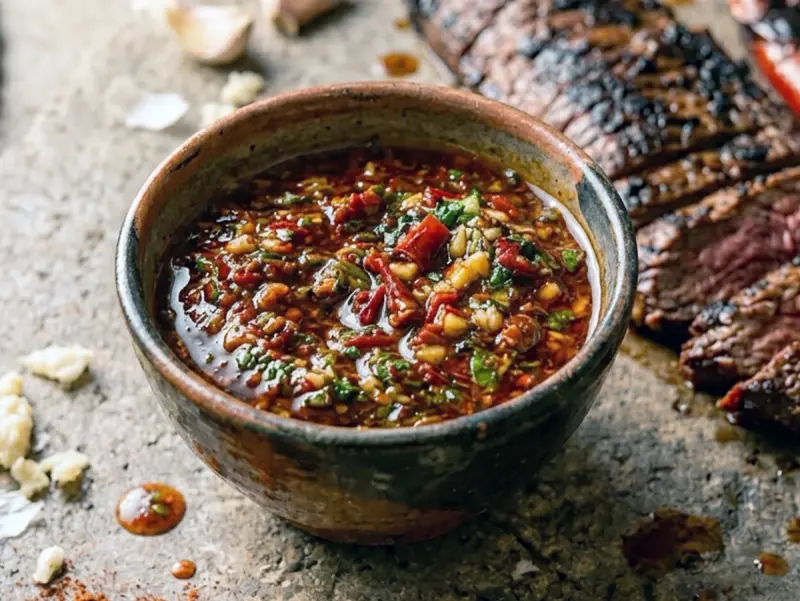
Chimichurri rojo is the red version of Argentina's chimichurri, the uncooked sauce of parsley, garlic, oregano, wine vinegar and oil that goes on grilled meat.
Ingredients
- roasted red bell pepper1
- fresh flat-leaf parsley30 g
- garlic cloves4
- small onion0.5
- sweet paprika (pimentón dulce)2 tsp
- dried oregano1 tsp
- ají molido or crushed red pepper flakes0.5 tsp
- red wine vinegar3 tbsp
- lemon juice1 tbsp
- extra virgin olive oil100 ml
- salt0.5 tsp
Method
- 1Char the pepper. If you start with a raw red bell pepper, set it whole directly on a gas burner over a high flame, or under the oven grill (broiler) at maximum heat, and turn it with tongs every couple of minutes for 10 to 12 minutes, until the skin is black and blistered on every side. Put it in a bowl, cover with a plate and leave it for 10 minutes: the steam loosens the skin. Rub the charred skin off with your fingers or the back of a knife, under a thin stream of cold water where it sticks, then pull out the stem and seeds. A jarred roasted pepper goes straight in: drain it and pat it dry with paper towel.
- 2Chop by hand. Cut the peeled pepper into small dice, about 3 mm. Chop the parsley leaves and their thin stems finely, mince the garlic and dice the onion as small as you can. Argentine recipes chop chimichurri with a knife, and that keeps the pieces separate. If you use a food processor, put in everything except the liquids and give it 5 to 8 short pulses; stop while you can still tell pepper from parsley, because a few seconds more and it is a paste.
- 3Season and add the vinegar. Scrape the chopped mixture into a bowl and add the sweet paprika, oregano, ají molido and salt. Pour in the vinegar and lemon juice and stir until the paprika has dissolved and the liquid is brick red. Leave it for 5 minutes so the dried oregano and chili soak up the acid and soften before the oil coats them.
- 4Add the oil. Pour in the olive oil and stir. It will not emulsify and is not supposed to: the oil floats above the vinegar and you stir it back together with a spoon each time you serve. Taste on a piece of bread, then add a pinch of salt or a teaspoon more vinegar if it tastes flat.
- 5Rest before serving. Cover and leave at room temperature for at least 30 minutes. Straight after mixing, the raw garlic is harsh and the vinegar stands apart; half an hour later both have moved into the oil and the sauce tastes like one thing. If you make it further ahead, keep it in the fridge and take it out 20 minutes before eating, because olive oil turns cloudy and thick when cold. Stir and serve.