
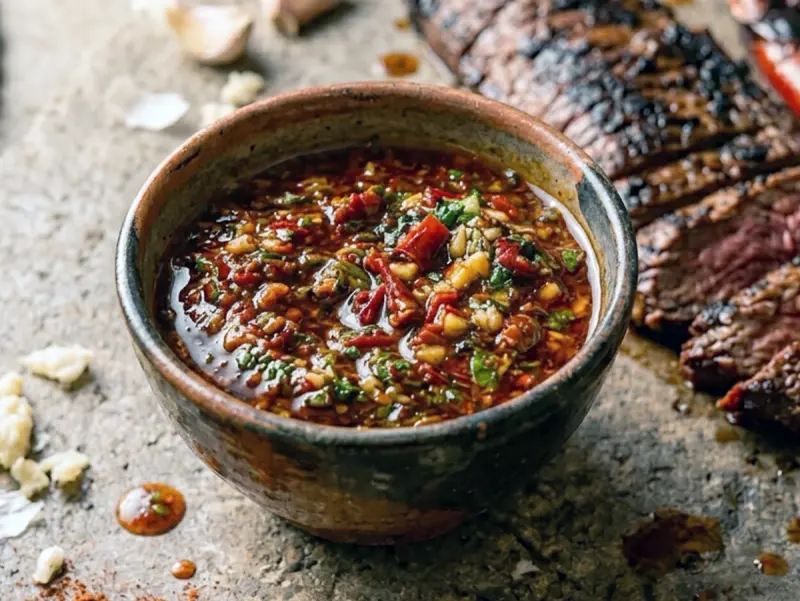
Chimichurri Rojo (Argentine Red Chimichurri)
Chimichurri rojo is the red version of Argentina's chimichurri, the uncooked sauce of parsley, garlic, oregano, wine vinegar and oil that goes on grilled meat. The red comes from pimentón dulce (sweet paprika) and ají molido, the crushed dried chili of the Argentine pantry; some cooks there also add chopped red bell pepper (morrón), and this recipe takes that route, charring the pepper over a flame first. Everything is chopped by hand, stirred with the vinegar, then covered with oil. Hands-on time is about 30 minutes; the pepper steams under a plate for 10 minutes while you chop the rest, and the finished sauce needs 30 minutes on the counter before it tastes right. Makes about 350 ml (1½ cups); a serving is about 3 tablespoons.
Ingredients
- 1 roasted red bell pepper
- 30 gfresh flat-leaf parsley
- 4 garlic cloves
- 0.5 small onion
- 2 tspsweet paprika (pimentón dulce)
- 1 tspdried oregano
- 0.5 tspají molido or crushed red pepper flakes
- 3 tbspred wine vinegar
- 1 tbsplemon juice
- 100 mlextra virgin olive oil
- 0.5 tspsalt
Method
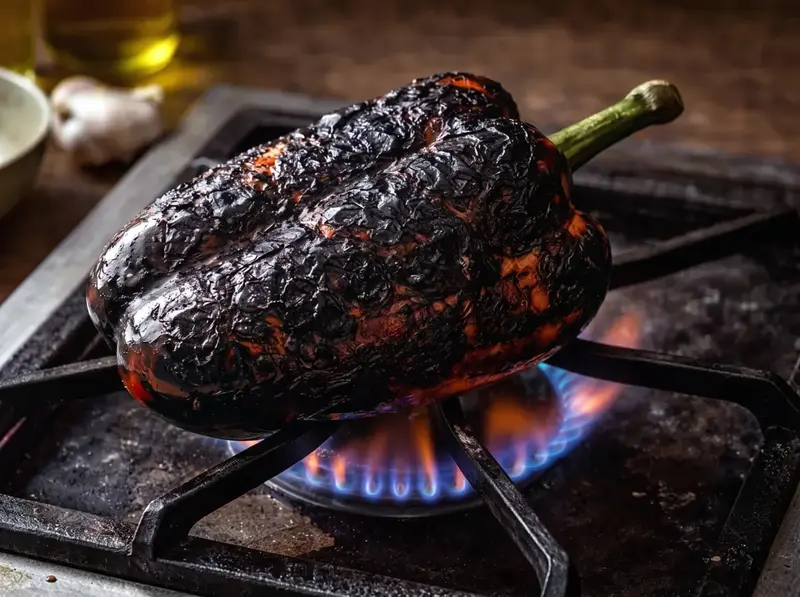
- Char the pepper. If you start with a raw red bell pepper, set it whole directly on a gas burner over a high flame, or under the oven grill (broiler) at maximum heat, and turn it with tongs every couple of minutes for 10 to 12 minutes, until the skin is black and blistered on every side. Put it in a bowl, cover with a plate and leave it for 10 minutes: the steam loosens the skin. Rub the charred skin off with your fingers or the back of a knife, under a thin stream of cold water where it sticks, then pull out the stem and seeds. A jarred roasted pepper goes straight in: drain it and pat it dry with paper towel.
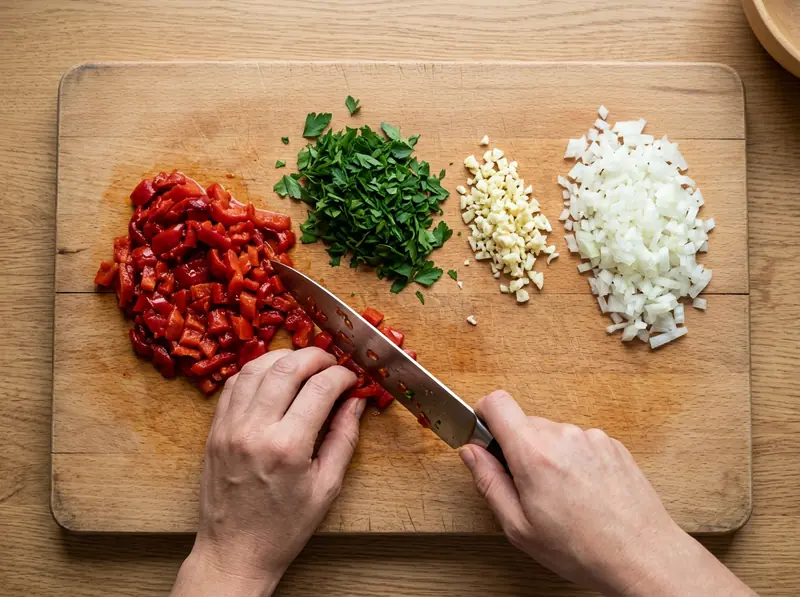
- Chop by hand. Cut the peeled pepper into small dice, about 3 mm. Chop the parsley leaves and their thin stems finely, mince the garlic and dice the onion as small as you can. Argentine recipes chop chimichurri with a knife, and that keeps the pieces separate. If you use a food processor, put in everything except the liquids and give it 5 to 8 short pulses; stop while you can still tell pepper from parsley, because a few seconds more and it is a paste.
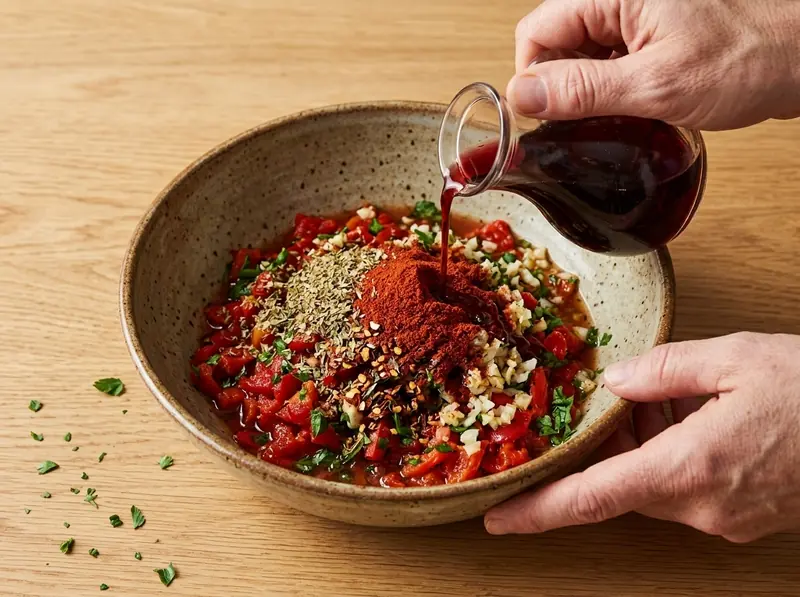
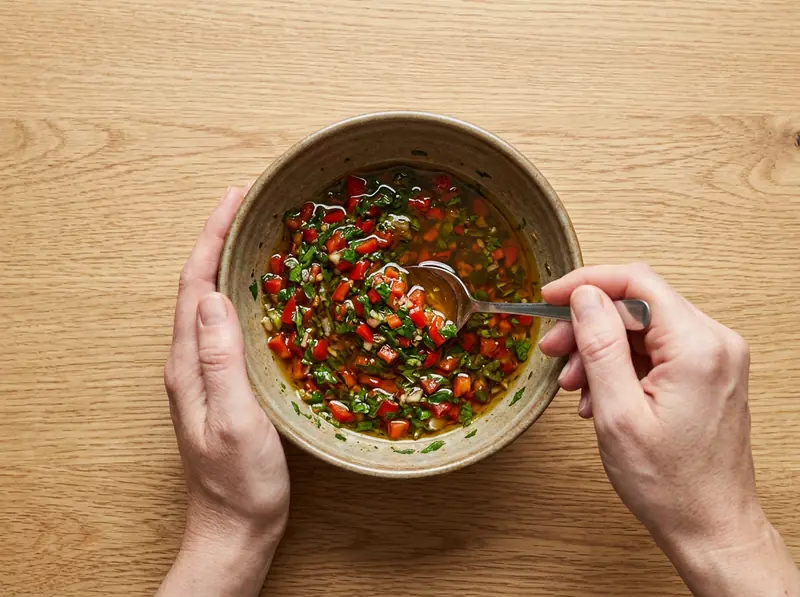
- Season and add the vinegar. Scrape the chopped mixture into a bowl and add the sweet paprika, oregano, ají molido and salt. Pour in the vinegar and lemon juice and stir until the paprika has dissolved and the liquid is brick red. Leave it for 5 minutes so the dried oregano and chili soak up the acid and soften before the oil coats them.
- Add the oil. Pour in the olive oil and stir. It will not emulsify and is not supposed to: the oil floats above the vinegar and you stir it back together with a spoon each time you serve. Taste on a piece of bread, then add a pinch of salt or a teaspoon more vinegar if it tastes flat.
- Rest before serving. Cover and leave at room temperature for at least 30 minutes. Straight after mixing, the raw garlic is harsh and the vinegar stands apart; half an hour later both have moved into the oil and the sauce tastes like one thing. If you make it further ahead, keep it in the fridge and take it out 20 minutes before eating, because olive oil turns cloudy and thick when cold. Stir and serve.
FAQ
Green chimichurri is parsley, garlic, oregano, vinegar and oil: sharp and herbal. Chimichurri rojo keeps that base and adds sweet paprika, ají molido and, in some versions, red bell pepper, so it is sweeter, thicker and brick red. In this recipe the pepper is charred first, which adds a little smoke. The green one cuts through a fatty cut like ribeye; the red is good on leaner steak, chorizo and grilled vegetables. Nothing stops you putting both on the table.
Keep it in a closed glass jar in the fridge and use it within 4 days. It contains raw garlic and fresh pepper under oil, so it is not a preserve and should not sit at room temperature for longer than the two hours of a meal. The flavour is best from the first to the third day; after that the parsley darkens and the garlic fades. To keep it longer than 4 days, freeze it in an ice-cube tray, move the cubes to a bag and use them within 3 months. Thawed chimichurri is a little looser but still good as a marinade.
Yes, and a knife gives the better sauce. Dice the roasted pepper and onion small, chop the parsley and garlic finely, then stir in the paprika, oregano, ají molido, vinegar and oil. Each piece stays separate and the oil stays clear and red. A blender turns the parsley and pepper into a paste, and the sauce goes cloudy and loses its texture. If you do use a processor, 5 to 8 short pulses are the limit.
Choripán comes first: a grilled chorizo in a split roll with a spoonful of chimichurri. It also works as a marinade for chicken thighs or firm fish, 30 minutes in the fridge before they go on the grill; set a portion aside for the table beforehand, because sauce that has touched raw meat should not be served. Spoon it over grilled aubergine, courgette or sweet potato, or over a slice of provoleta straight from the pan. Two spoonfuls stirred into warm boiled potatoes make a quick salad.
As written it is mild: sweet paprika gives colour and sweetness, and half a teaspoon of ají molido adds a background warmth. For more heat, use a full teaspoon of ají molido, or replace half a teaspoon of the sweet paprika with hot paprika (pimentón picante). For none at all, leave the ají out; the sauce stays red from the paprika and the pepper. Add heat in small steps and taste after the 30-minute rest, because the chili gets stronger as it soaks.
Keep browsing
More dishes from the Argentinian archive — picked by overlap with what you're cooking now.
Recipes by email
One letter a week: a recipe picked for your taste, plus whatever is new on the site. Unsubscribe in one click.
Welcome gift: Sergei's cookbook (e-book).
By subscribing you agree to the privacy policy.
Tell us what you like to cook (30 seconds) →
Join the conversation
Comments
No comments yet — be the first!