


Classic Ajvar
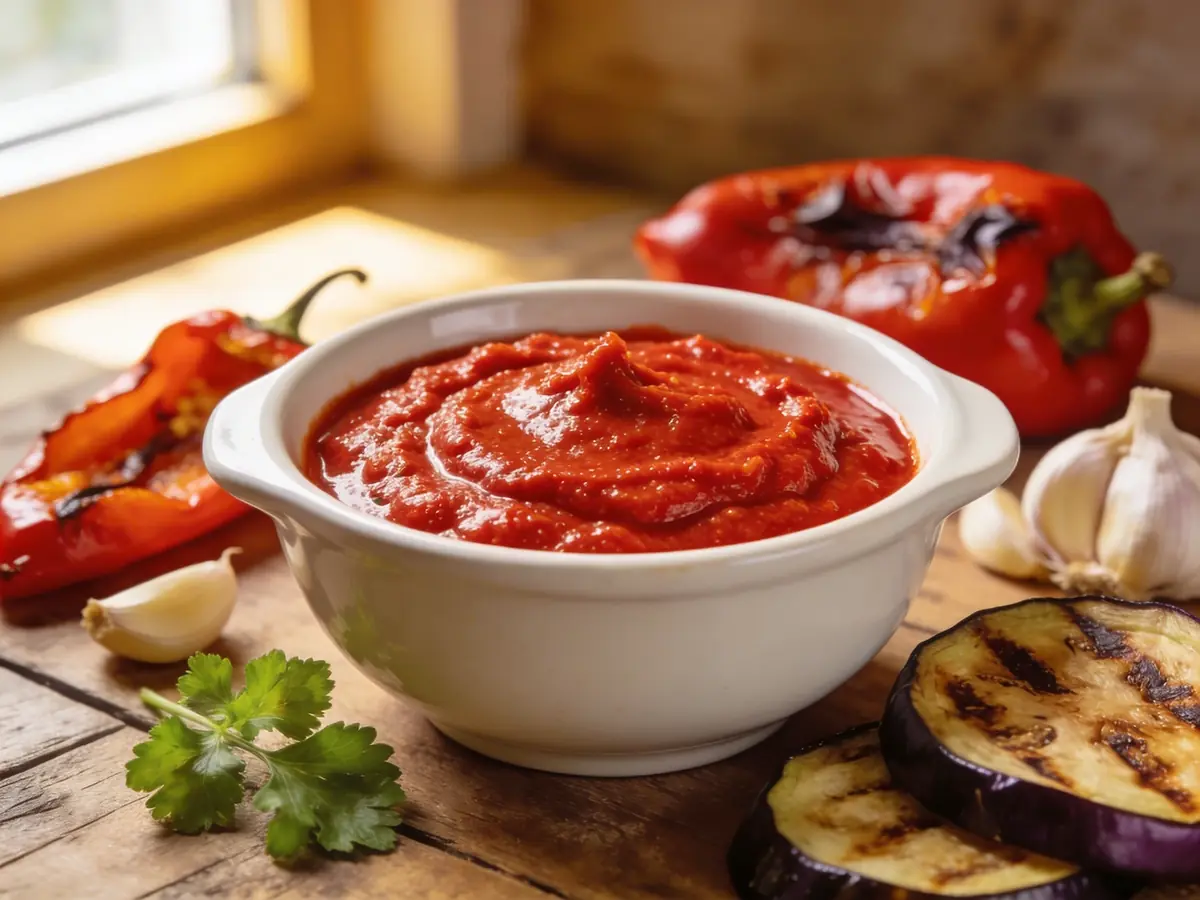
Ajvar is a sauce popular in the Balkans. It is a paste of roasted red peppers, often with eggplant, garlic, oil and vinegar; this version also has a spoonful of tomato paste.
Ingredients
- 10 red bell peppers
- 2 eggplants
- 3 garlic cloves
- 100 mlolive oil
- 1 tbsptomato paste
- to tastesalt and ground black pepper
- 1/2 tspsugar
- 1 tbspvinegar
Method
- Preheat the oven to 200°C. Wash and prick the eggplants with a fork.
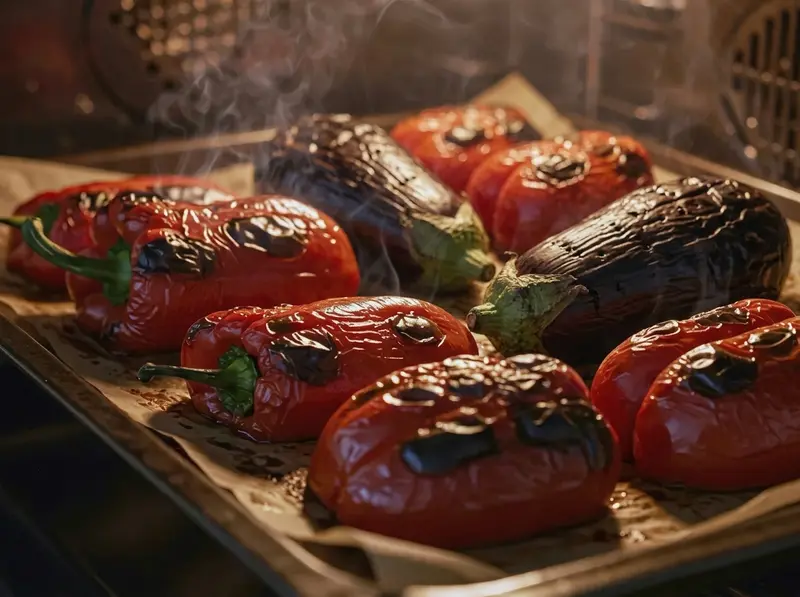
- Bake the peppers and eggplants for 30–40 minutes, turning them, until the skins are blackened and blistered and the vegetables are soft.
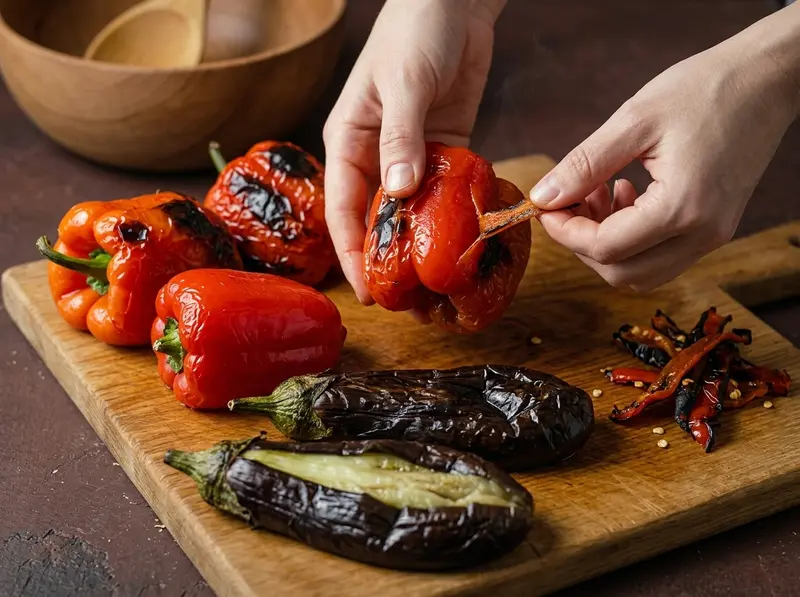
- Place the vegetables in a bag for 10–15 minutes, then peel off the skin and remove the seeds. Do not rinse the peeled peppers: water washes away the smoky flavor; rinse your fingers in a bowl of water instead. Let the peeled vegetables drain in a colander for 15 minutes.
- Chop the vegetables finely with a knife or pulse them briefly in a food processor to a coarse paste, not a smooth purée. Crush the garlic to a paste. Put everything in a wide heavy-bottomed pot and add the garlic, oil, tomato paste, salt, pepper, sugar and vinegar.
- Cook over low heat for 30–40 minutes, stirring often, until the ajvar is thick and glossy and a spoon dragged across the bottom of the pot leaves a trail that does not close up straight away.
Cooked it? Rate the recipe
FAQ
Ajvar is uniquely Balkan: roasted red peppers (sometimes with eggplant) ground into a paste and simmered until thick. Lecho is a Hungarian pepper and tomato ragout — more liquid with chunky pieces. Harissa is a North African hot chili paste with coriander — a completely different flavor profile. Ajvar is mild, sweet, and smoky from roasting — eaten as a spread on bread and served alongside grilled meat.
The main reason is insufficient evaporation. Once the vegetables are chopped, simmer the mass on low heat for 30–40 minutes, stirring often, until it is thick and glossy and a spoon leaves a trail on the bottom of the pot. A wide pot helps: the larger the surface, the faster the water cooks off. Before that, let the peeled peppers and eggplants drain in a colander for 15 minutes and pour off the liquid — they hold a lot of it.
Bitterness comes from charred skin not fully removed. The right method: roast peppers at 200°C until the skin blackens, immediately seal in a bag or covered bowl for 15 minutes — steam loosens the skin. Peel by hand, removing all black bits; rinse your fingers in a bowl of water, not the peppers — water washes away the smoky flavor. Remove seeds too — they add sharpness.
In the Balkans, ajvar is the main winter spread — made in autumn from the pepper harvest and preserved in jars. Eaten on white bread or flatbread, with white brined cheese like feta, with grilled meat — especially ćevapčići and kebabs. In Serbia it is served at breakfast just like butter — simply spread on bread.
You can, but the flavor will be noticeably simpler. Freezing breaks down the peppers' structure — the roasted aroma won't be as deep. Ajvar from frozen peppers will be more watery and need longer simmering. If fresh red peppers aren't available, quality jarred roasted peppers are the closest substitute.
Keep browsing
More dishes from the Macedonian archive — picked by overlap with what you're cooking now.



Recipes by email
One letter a week: a recipe picked for your taste, plus whatever is new on the site. You can stop the letters in one click.
Welcome gift: Sergei's cookbook (e-book).
By signing up for the newsletter you agree to the privacy policy.
Tell us what you like to cook (30 seconds) →
Join the conversation
Comments
No comments yet — be the first!