
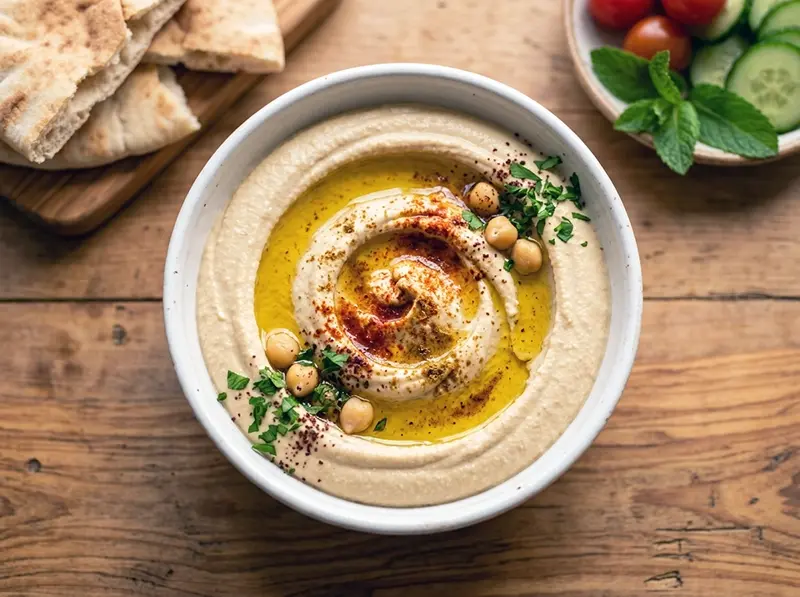
Hummus
Creamy homemade hummus from chickpeas, tahini, lemon, and garlic — blended until impossibly smooth. Ten minutes from can to bowl, and it beats every store-bought tub I have ever tried.
Ingredients
- 400 gcanned chickpeas
- 3 tbsptahini
- 2 tbsplemon juice
- 1 clovegarlic
- 2 tbspolive oil
- 0.5 tspground cumin
- 2 tbspice water
- to tastesalt
Method
- Drain and rinse the chickpeas. For extra-smooth hummus, rub them between your hands under running water and slip off as many skins as you can — this step is optional but makes a real difference.
- Add the tahini and lemon juice to a food processor and blend for 1 minute until the mixture turns pale and whipped. Scrape down the sides.
- Add the garlic, cumin, and a generous pinch of salt. Blend for 30 seconds.
- Add the chickpeas and blend for 2 minutes, scraping down once halfway through.
- With the processor running, drizzle in the ice water one tablespoon at a time. Continue blending for another minute until the hummus is completely smooth and light.
- Taste and adjust salt and lemon. Transfer to a bowl, create a swirl with the back of a spoon, drizzle with olive oil, and dust with a little extra cumin or paprika.
FAQ
Three things cause grainy hummus. First, the chickpea skins — they do not break down fully in a home food processor. Removing skins by rubbing chickpeas between your hands under water solves this entirely. Second, not blending long enough. Blend for at least 3 to 4 minutes total, scraping down twice. Third, skipping the ice water step. Adding 2 tablespoons of ice water with the processor running emulsifies the tahini and creates that whipped, airy texture. Professional hummus bars blend for 5 minutes or more and always use ice water.
Tahini is a paste made from toasted sesame seeds, similar in concept to peanut butter but with a more bitter, nutty flavor. It is essential to authentic hummus — it provides the characteristic richness and helps create that creamy emulsion. If you cannot find tahini, the closest substitutes are sunflower seed butter or cashew butter, using the same amount. Peanut butter works in a pinch but shifts the flavor noticeably. Without any nut or seed butter, add an extra tablespoon of olive oil and a tablespoon of Greek yogurt for body.
Dried chickpeas soaked overnight and boiled until very soft produce noticeably smoother hummus with a cleaner, sweeter flavor. The key is overcooking them: boil with half a teaspoon of baking soda for 40 to 50 minutes until a chickpea crushes between two fingers with zero resistance. Canned chickpeas work well for a quick batch — drain, rinse, remove skins, and blend longer. The difference is real but not dramatic: canned gets you to 85 percent of the quality in 10 percent of the time.
Homemade hummus keeps 5 to 7 days in an airtight container in the fridge. Drizzle a thin layer of olive oil on top before sealing — it prevents the surface from drying and cracking. Hummus freezes well for up to 4 months: freeze in portions, thaw overnight in the fridge, and stir vigorously with a fork to restore the texture. The tahini may separate slightly after thawing — add a teaspoon of warm water and stir until smooth again.
Beyond pita, hummus pairs beautifully with raw vegetables like carrots, cucumbers, and bell peppers. Warm flatbread, crackers, or toasted sourdough all work. For toppings that transform it into a full appetiser: spiced ground lamb or beef, roasted pine nuts, a drizzle of chili oil, roasted cherry tomatoes, za'atar with olive oil, or crispy fried chickpeas. In Israel, hummus is often served warm with a whole egg and pickles for breakfast — it is a complete meal, not just a dip.
Rate this
Recipes by email
One letter a week: a recipe picked for your taste, plus whatever is new on the site. Unsubscribe in one click.
Welcome gift: Sergei's cookbook (e-book).
By subscribing you agree to the privacy policy.
Tell us what you like to cook (30 seconds) →Keep browsing
More dishes from the Israeli archive — picked by overlap with what you're cooking now.
Join the conversation
Comments (2)
Девяносто процентов домашнего хумуса — это зернистая масса, которую стыдно подать гостям. Секрет шёлковой текстуры: варить нут до полного разваривания и снимать шкурки. Да, это нудно. Да, это обязательно. И тахини должна быть свежей — прогорклая паста из старой банки испортит всё.
Taste this hummus at room temperature, not straight from the fridge. Cold mutes flavors — you might oversalt it. Let it warm up for 10-15 minutes, taste, then make your final seasoning adjustments.