
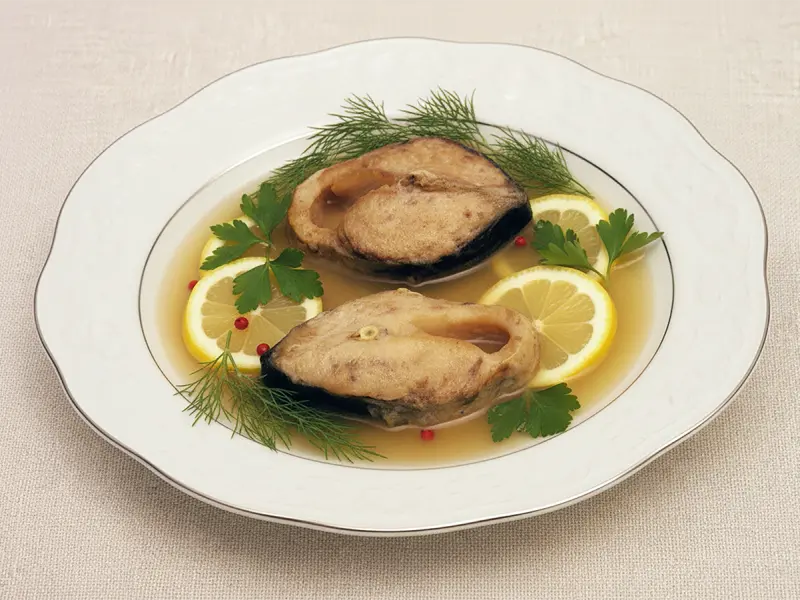
Stuffed Fish (Gefilte Fish)
An Ashkenazi Jewish classic — whole fish is cut into steaks, the flesh is ground with onion and bread to make a tender stuffing, then the pieces are gently simmered in aromatic broth until the cooking liquid sets into a golden jelly. Best served cold with horseradish.
Ingredients
- 1750 gwhole fish: carp or pike (or a mix)
- 3 piecelarge onions
- 1 piecelarge carrot
- 110 gwhite bread soaked in water
- 3 pieceeggs
- 2 tbspvegetable oil
- 1 tspsugar
- 2 piecebay leaves
- 100 ghorseradish for serving
- 5 pieceallspice berries
- 2 tspsalt
- 1 tspblack pepper
Method
- Scale the fish. Cut off head, tail and fins. Carefully remove innards without puncturing the gallbladder. Cut crosswise into 3-4 cm steaks. Using a small knife, carefully cut out the flesh from each steak, keeping the skin and backbone intact to form rings.

- Pass the fish flesh, 1 onion and squeezed bread through a meat grinder twice (without a grinder, use a food processor in short pulses so the mixture does not turn to paste). Combine with eggs, sugar, salt and pepper. Finely chop the second onion and fry it in oil until golden; mix into the filling. Knead well to make the mixture fluffy. Refrigerate 30 minutes.

- With wet hands, shape filling into oval patties and gently press into the fish skin rings. Do not over-pack — the filling expands during cooking.
- Line the bottom of a wide pot with fish head, spine, bones, onion skins, the third onion sliced into rings and half the carrot rounds. Arrange stuffed pieces on top. Add remaining carrot, allspice and bay leaves.

- Cover with cold water to 2-3 cm above the fish. Bring to a boil, reduce heat to very low, season with salt and simmer uncovered for 1.5-2 hours.
- Allow to cool in the cooking liquid, then refrigerate. Serve cold when the broth has set into jelly, with sharp horseradish.
FAQ
Dryness usually comes from too little soaked bread or over-mixing the filling. The bread (soaked and squeezed) should make up about 20% of the fish mince — it binds moisture and creates a soft texture. Mix the filling gently with your hands just until combined; overworking develops protein strands that tighten during cooking. Also make sure the broth is barely simmering, not boiling hard — aggressive heat squeezes moisture out of the patties. Adding a tablespoon of vegetable oil to the filling helps too.
Traditionally a mix of carp and pike is used: carp brings fat and sweetness, pike gives a firmer, more elastic texture. Zander (pike-perch) is an excellent substitute for pike — mild flavor and firm flesh. Using carp alone can make the patties too soft and slightly muddy in taste. If you can only find one fish, carp works but add an extra egg to help the filling hold together. Freshwater fish works best; sea fish like cod or hake can be used but the flavor will be different.
Yes. The bread's role is to absorb water and lighten the texture. You can replace it with an equal amount (by weight) of matzo meal soaked in water — this is actually the traditional Passover version. Cooked rice (about 3–4 tablespoons per 500 g of fish) also works well and gives a slightly denser result. A grated raw potato is another option and adds binding. Avoid breadcrumbs without soaking — they absorb too little moisture and the filling will be grainy.
Stuffed fish rolls or patties need about 1.5 to 2 hours of gentle simmering in an uncovered pot over very low heat. The broth should just barely bubble — a rolling boil will break the patties apart and make them tough. They are done when the flesh is opaque all the way through (cut one open to check) and the broth is richly flavored and slightly gelatinous. The internal temperature should reach 70°C (160°F). If you are cooking individual oval patties without the skin, 45–60 minutes is usually enough.
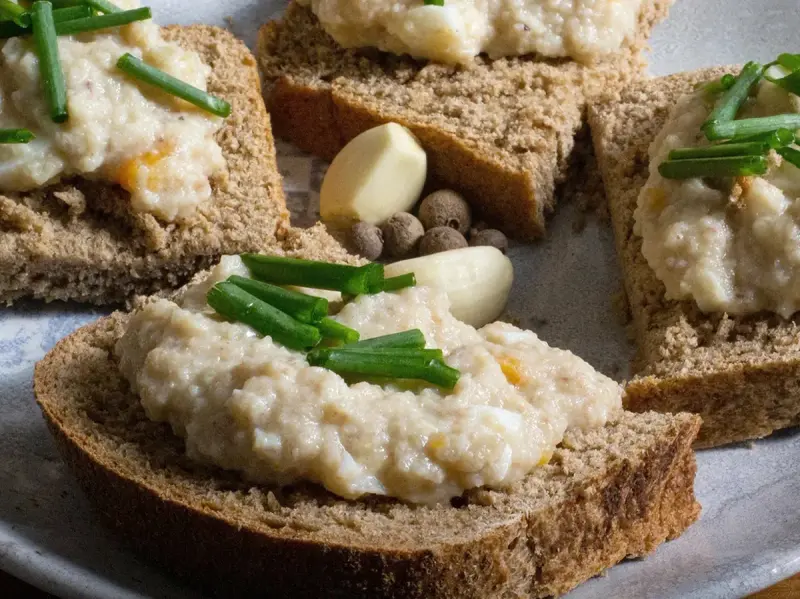
Gefilte fish keeps very well in the refrigerator for 3 to 5 days — store it in the cooking broth in a sealed container. The broth sets into a light jelly as it cools, which helps preserve the fish. For freezing: cool completely, place patties in the broth in a freezer-safe container, and freeze for up to 3 months. Thaw overnight in the refrigerator. Do not reheat repeatedly — warm once through gently on the stovetop. Avoid microwaving, as it dries out the fish. It is good on a cold table next to forshmak.
Rate this
Recipes by email
One letter a week: a recipe picked for your taste, plus whatever is new on the site. Unsubscribe in one click.
Welcome gift: Sergei's cookbook (e-book).
By subscribing you agree to the privacy policy.
Tell us what you like to cook (30 seconds) →Keep browsing
More dishes from the Israeli archive — picked by overlap with what you're cooking now.

Join the conversation
Comments (1)
Don't move the fish once it's in the pan for stuffed fish. If it sticks, it's not ready to flip — the proteins haven't released yet. When it's ready, it slides freely. Patience prevents broken fillets.