
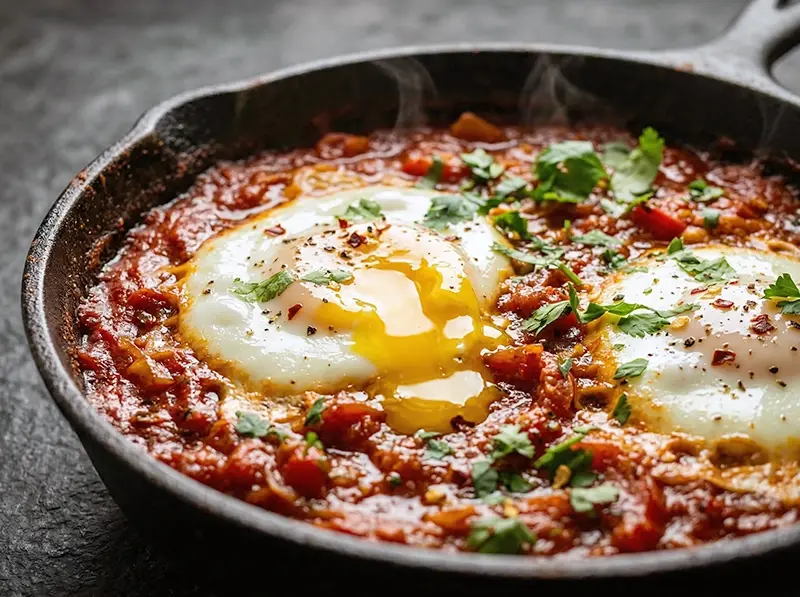
Shakshuka
Eggs poached directly in a spiced tomato and pepper sauce. One pan, 30 minutes. The sauce does most of the work — build it properly and the eggs finish themselves.
Ingredients
- 3 tbspolive oil
- 1 large onion
- 1 red bell pepper
- 4 garlic cloves
- 2 tbsptomato paste
- 1 tspground cumin
- 1.5 tspsmoked or sweet paprika
- 1 tbspharissa paste, or 0.5 tsp chili flakes
- 800 gcanned crushed tomatoes
- 1 tspsalt
- 0.5 tspblack pepper
- 6 large eggs
- 80 gfeta cheese
- 3 tbspfresh parsley or cilantro
- 4 slices of crusty bread or pita
Method
- Heat olive oil in a large deep skillet over medium heat. Add the diced onion and pepper. Cook 6–8 minutes, stirring occasionally, until soft and the onion is translucent.
- Add garlic, tomato paste, cumin, and paprika. Stir constantly for 2 minutes until the paste darkens and the spices are fragrant.
- Add harissa and crushed tomatoes. Season with salt and pepper. Stir well, bring to a simmer.
- Cook uncovered for 12–15 minutes, stirring occasionally, until the sauce has thickened noticeably and reduced. It should hold its shape when you draw a spoon through it — not pool immediately.
- Make 6 wells in the sauce with the back of a large spoon. Crack one egg into each well. Reduce heat to low.

- Cover the pan with a lid and cook 5–7 minutes until the egg whites are fully set and opaque but the yolks are still slightly runny. Check at 5 minutes — the timing depends on your stove and pan. Remove from heat before the yolks firm up completely.
- Scatter feta and fresh herbs on top. Bring the pan straight to the table. Serve with bread or pita for mopping up the sauce.
FAQ
Two causes. First, the heat is too high after the eggs go in — switch to low. Second, no lid. Cover the pan after cracking in the eggs: the steam from above sets the whites from the top faster than the heat from below reaches the yolks. Check at 5 to 6 minutes: the whites should be opaque and firm, the yolks bright and still slightly wobbly. Press a yolk gently with your finger — it should spring back a little. That's when to pull it off the heat.
Simmer the sauce uncovered for 12 to 15 minutes before adding any eggs — the excess liquid needs to cook off. The right consistency: the sauce holds its shape when you drag a spoon through it and doesn't pool immediately. Make the wells with a large deep spoon so the whites have a container to set in rather than spreading. If the sauce is still too thin, add a tablespoon of tomato paste and cook another 5 minutes.
The sauce without eggs keeps for 4 days in the fridge and freezes for 3 months — excellent for meal prep. Always add fresh eggs when serving: reheat the sauce to a gentle simmer, make the wells again, crack in fresh eggs, and cook as usual. Reheating shakshuka that already has eggs in it gives you hard rubber yolks. The sauce is worth making ahead; the eggs are not.
Cumin and paprika (smoked or sweet) are the non-negotiable base. Harissa is a concentrated North African chili paste with garlic and spices — it adds heat and depth simultaneously. Substitutes: 1 teaspoon of any chili paste plus half a teaspoon of extra cumin; adjika; or half a teaspoon of chili flakes plus a pinch of coriander. Without harissa the shakshuka is milder and less characterful, but still good.
Any deep skillet with a lid works. Cast iron holds heat well and looks good brought straight to the table. The only thing to watch: the acidity of tomatoes over extended contact can damage unseasoned cast iron and pick up a metallic note in the sauce — don't leave shakshuka sitting in cast iron for long. A stainless steel or non-stick pan with a lid works perfectly without any drawback.
Rate this
Recipes by email
One letter a week: a recipe picked for your taste, plus whatever is new on the site. Unsubscribe in one click.
Welcome gift: Sergei's cookbook (e-book).
By subscribing you agree to the privacy policy.
Tell us what you like to cook (30 seconds) →Keep browsing
More dishes from the Israeli archive — picked by overlap with what you're cooking now.


Join the conversation
Comments (2)
Шакшука — блюдо, которое невозможно испортить. И всё-таки люди умудряются. Самая частая ошибка — варить яйца до резинового состояния. Белок должен схватиться, а желток — оставаться жидким. Снимайте с огня раньше, чем вам кажется нужным. И свежий хлеб для макания обязателен, это не обсуждается.
The sauce for shakshuka needs to be thick enough to hold the eggs in place. If it is too watery, the eggs sink to the bottom and overcook against the pan. I reduce the tomato mixture until a spoon drawn through it leaves a clear trail before cracking the eggs in.