
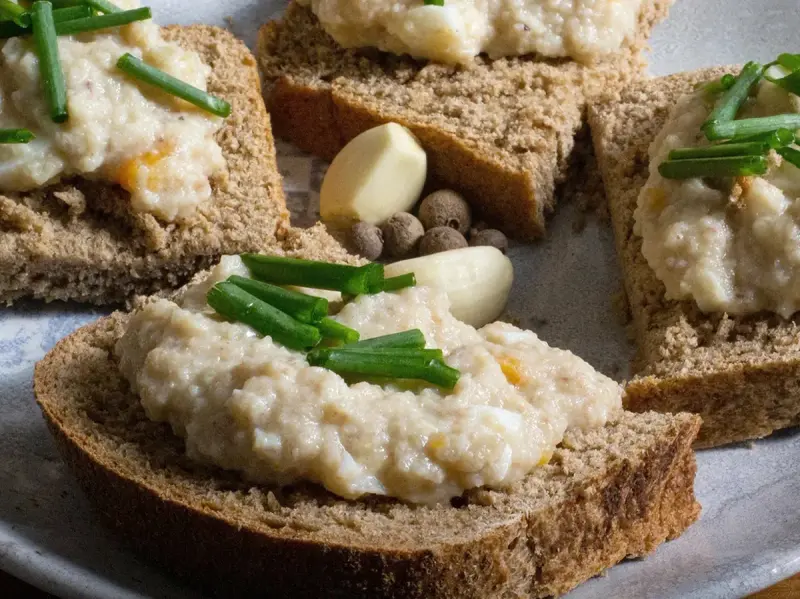
Forshmak
Salt-cured herring ground with tart apples, butter, and a touch of onion into a creamy, pungent spread. A staple of Jewish cuisine that hits every note — briny, sweet, sharp — all at once on a piece of dark rye bread.
Ingredients
- 500 glightly salted herring fillet
- 150 gstale white bread
- 50 mlmilk
- 3 eggs
- 2 apples
- 1 onion
- 2 tspsugar
- 2 tbspvegetable oil
- 1 tbspwine vinegar
- 1 tsplemon juice
- 1 tspmustard
- to tastesalt and freshly ground black pepper
Method
- Grind herring fillets together with white bread soaked in milk and squeezed, and apple. Add vegetable oil and lemon juice and beat with a wooden spatula.

- Add finely chopped whites of boiled eggs, sautéed onions, sugar (2 tsp), pepper, and salt. Mix thoroughly.

- Put the forshmak in a herring bowl in the shape of a fish, pour mustard sauce (beaten yolks with vinegar and mustard) and sprinkle with finely chopped green onions.

- Serve on slices of rye bread or pumpernickel, garnished with fresh dill or pickled cucumber.
FAQ
Forshmak (from Yiddish vorshpeis — appetizer) is an Ashkenazi Jewish dish with several key differences from plain mashed fish. Classic forshmak always includes a sour apple (for balance), soaked bread (for texture), and an egg (for creaminess). Everything is ground together and served chilled. Regular mashed herring is simply fish with onion — without the sour apple and bread, a completely different flavor.
The herring for forshmak should be lightly salted or 'tender' cured — not spiced or strongly salted. If the herring is too salty, soak it 1–2 hours in milk or cold water, changing the liquid once. The bread is also soaked in milk — it additionally neutralizes saltiness. The sour apple and vinegar in the recipe are not just for flavor but to balance the salt.
Apple is not an optional extra — it is a structural ingredient. It provides acidity (balances the fattiness of herring), juiciness (lightens the texture), and gentle sweetness. Best varieties are tart or sweet-tart: Antonovka, Granny Smith, Semirenko. A sweet apple like Golden will make it cloying. Some recipes use a quarter apple, some half — the fattier the herring, the more apple is needed.
Classic serving is on thin slices of rye or dark bread, garnished with green onion. In Ashkenazi tradition forshmak is served as the first appetizer on the holiday table — for Shabbat or Rosh Hashanah. It pairs well with hard-boiled egg, pickled cucumbers, and thin crackers. In modern cuisine forshmak is served in tartlets or on crostini — an elegant version for cocktail parties.
Technically yes, but it will be a different dish. Salted smoked mackerel gives a similar fatty profile. Anchovies are too intense — use only 2–3 as an accent. Cod is too neutral — forshmak will lose its character. Historically forshmak was also made from boiled veal or lamb (hot forshmak) — a completely different dish popular in Finnish cuisine.
Rate this
Recipes by email
One letter a week: a recipe picked for your taste, plus whatever is new on the site. Unsubscribe in one click.
Welcome gift: Sergei's cookbook (e-book).
By subscribing you agree to the privacy policy.
Tell us what you like to cook (30 seconds) →Keep browsing
More dishes from the Israeli archive — picked by overlap with what you're cooking now.
Join the conversation
Comments (3)
Как-то ел у евреев на празднике. Можно литр водочки под нее засадить и не окосеешь. Вообще, у евреев вкусная еда.
Форшмак по этому рецпету прям как у моей мамы делала, аж ностальгия. Селёдку вымачиваю в молоке обязательно, тогда нет лишней соли. С чёрным хлебом и зелёным лучком — лучшая закуска на праздничый стол.
The quality of the herring makes or breaks forshmak. I use lightly salted herring, never preserved in oil — the texture is firmer and the flavor is cleaner. Soaking overly salty fillets in milk for 2 hours tames the salt without losing the characteristic herring depth.