Spain · Soups
Fabada Asturiana
Fabada is the bean stew of Asturias, in northern Spain: large flat white beans called fabes de la granja cooked for hours with the compango, the set of cured pork that flavours the pot.
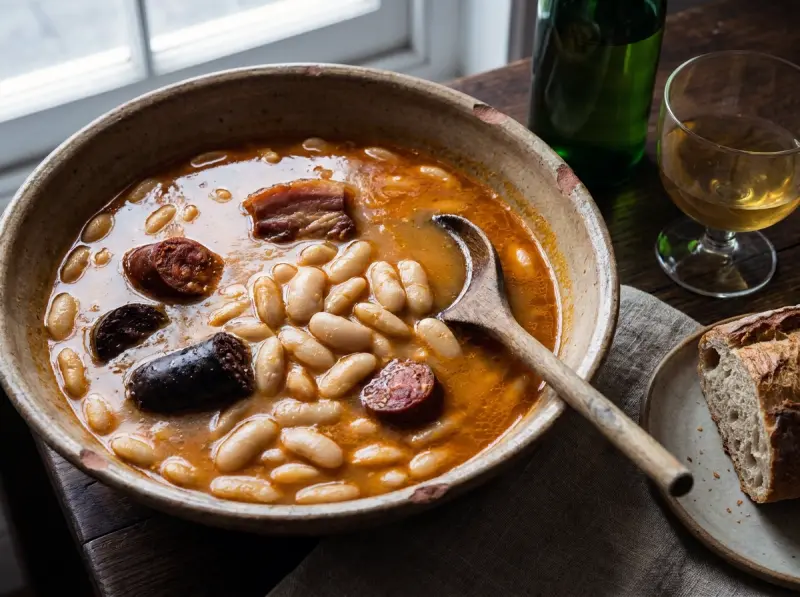
Ingredients
- fabes de la granja500 g
- chorizo asturiano2 pieces
- morcilla asturiana2 pieces
- cured pork shoulder200 g
- cured pork belly150 g
- saffron threads1 pinch
- extra virgin olive oil2 tbsp
- sweet paprika1 tsp
- onion1 piece
- fine sea salt1 tsp
- cold water2 l
Method
- 1Soak the beans 10 to 12 hours in plenty of cold water, keeping them covered as they swell. Do not go beyond 12 hours: the skins start to split and the pot will end up cloudy. Soak the cured pork shoulder separately in its own water, changing it twice, to draw out the salt.
- 2Drain the beans and put them in a wide heavy pot with the whole chorizo, the pork shoulder, the pork belly, the peeled onion and the olive oil. Lay the blood sausage on top rather than underneath, since it disintegrates if the beans press on it. Pour in cold water to about 3 cm above the surface.
- 3Bring to the boil slowly over medium heat, which should take around 20 minutes, and skim the grey foam off for the first 5 to 10 minutes. Skimming now is what keeps the broth clear later.
- 4Add the saffron and the paprika, then drop the heat until the surface only trembles and never rolls. Cover partly and cook 2.5 to 3 hours. Do not stir with a spoon at any point: to stop anything catching, take the pot by the handles and move it in circles.
- 5Three times during cooking, pour in a glass of cold water to stop the simmer dead. Asturian cooks call this asustar les fabes, shocking the beans, and it keeps the skins whole by slowing how fast the interior swells against them. Top up with hot water only if the beans become exposed.
- 6Salt only at the end. The beans are ready when one crushes against the roof of the mouth with no resistance while its skin stays in one piece; if some are still chalky, give them another 20 minutes rather than raising the heat. Once salted, cook 5 minutes more so the seasoning goes through.
- 7Take the pot off the heat and rest it at least 30 minutes, uncovered, before serving. The broth keeps thickening as it settles and the fat rises where you can lift some off. Remove the onion, slice the compango and serve it either on top or on a separate plate.