

Fabada Asturiana
Fabada is the bean stew of Asturias, in northern Spain: large flat white beans called fabes de la granja cooked for hours with the compango, the set of cured pork that flavours the pot. The standard compango is chorizo, cured Asturian blood sausage, salt-cured pork shoulder and cured belly, and the broth thickens on its own from starch released by the beans rather than from any flour or puree. Records of fabes being grown in Asturias go back several centuries, though the dish in its present form is usually dated to the nineteenth century. Two rules separate a good pot from a broken one: the liquid must never reach a rolling boil, and the beans must not be stirred with a spoon. Add the overnight soak to the cooking time.
Ingredients
- 500 gfabes de la granja
- 2 pieceschorizo asturiano
- 2 piecesmorcilla asturiana
- 200 gcured pork shoulder
- 150 gcured pork belly
- 1 pinchsaffron threads
- 2 tbspextra virgin olive oil
- 1 tspsweet paprika
- 1 pieceonion
- 1 tspfine sea salt
- 2 lcold water
Method
- Soak the beans 10 to 12 hours in plenty of cold water, keeping them covered as they swell. Do not go beyond 12 hours: the skins start to split and the pot will end up cloudy. Soak the cured pork shoulder separately in its own water, changing it twice, to draw out the salt.
- Drain the beans and put them in a wide heavy pot with the whole chorizo, the pork shoulder, the pork belly, the peeled onion and the olive oil. Lay the blood sausage on top rather than underneath, since it disintegrates if the beans press on it. Pour in cold water to about 3 cm above the surface.
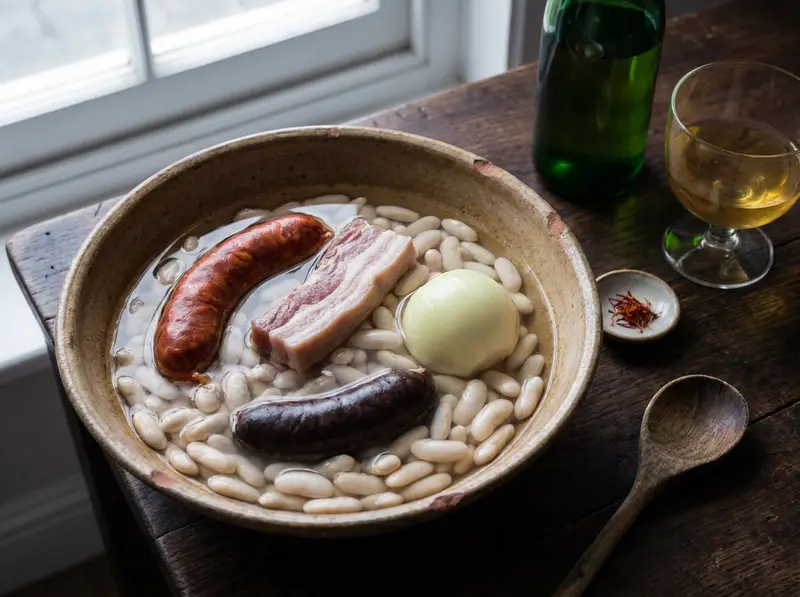
- Bring to the boil slowly over medium heat, which should take around 20 minutes, and skim the grey foam off for the first 5 to 10 minutes. Skimming now is what keeps the broth clear later.
- Add the saffron and the paprika, then drop the heat until the surface only trembles and never rolls. Cover partly and cook 2.5 to 3 hours. Do not stir with a spoon at any point: to stop anything catching, take the pot by the handles and move it in circles.
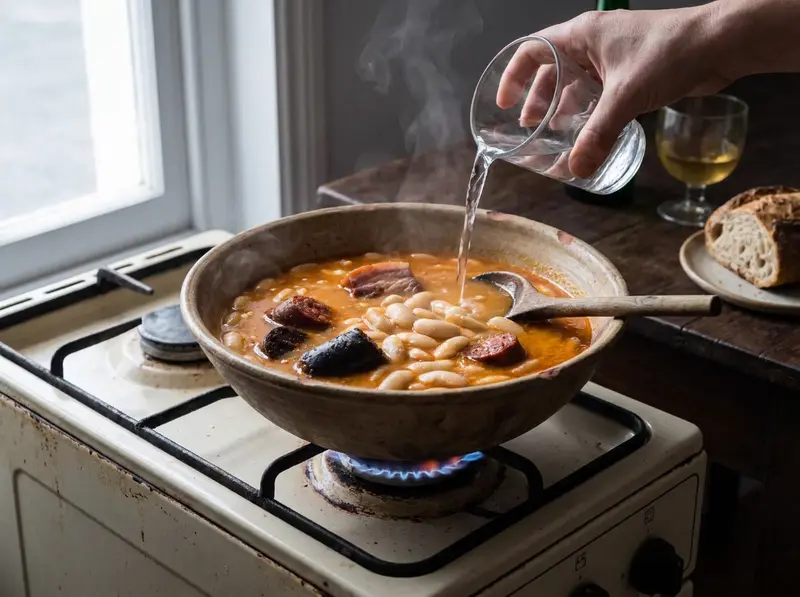
- Three times during cooking, pour in a glass of cold water to stop the simmer dead. Asturian cooks call this asustar les fabes, shocking the beans, and it keeps the skins whole by slowing how fast the interior swells against them. Top up with hot water only if the beans become exposed.
- Salt only at the end. The beans are ready when one crushes against the roof of the mouth with no resistance while its skin stays in one piece; if some are still chalky, give them another 20 minutes rather than raising the heat. Once salted, cook 5 minutes more so the seasoning goes through.
- Take the pot off the heat and rest it at least 30 minutes, uncovered, before serving. The broth keeps thickening as it settles and the fat rises where you can lift some off. Remove the onion, slice the compango and serve it either on top or on a separate plate.
FAQ
A boil that was too strong, salt added early, or a soak that ran well past twelve hours. Skins set in salted water and burst under a rolling boil, so keep the surface barely moving and salt only once the beans are tender.
Large dried white beans such as judión, corona or oversized cannellini come closest, though they are firmer and hold less broth. Note that Asturian morcilla is cured and smoked, not the fresh rice-filled blood sausage sold elsewhere, and a smoked ham bone is a workable stand-in for the salt-cured shoulder.
Three days in the fridge, and day two is the best point to eat it. Reheat over low heat with a little water, moving the pot rather than a spoon, and never let it boil, which is when leftover fabada falls apart.
A pressure cooker brings soaked beans to tenderness in 30 to 40 minutes, but the broth stays thinner because there is less evaporation, so finish it open for 10 minutes. Fabes con almejas is the lighter Asturian cousin built on clams instead of pork, with a much shorter cooking time.
As the single main course of a midday meal, in modest portions, with bread and a green salad after it rather than beside it. Asturian cider is the traditional drink, and a young red also works.
Rate this
Recipes by email
One letter a week: a recipe picked for your taste, plus whatever is new on the site. Unsubscribe in one click.
Welcome gift: Sergei's cookbook (e-book).
By subscribing you agree to the privacy policy.
Tell us what you like to cook (30 seconds) →Keep browsing
More dishes from the Spanish archive — picked by overlap with what you're cooking now.


Join the conversation
Comments
No comments yet — be the first!