

Gazpacho Andaluz (Classic Spanish Cold Tomato Soup)
Gazpacho is not a recipe — it is a summer habit in Andalusia. Ripe tomatoes, cucumber, green pepper, garlic, sherry vinegar, and a generous pour of olive oil go into the blender raw and come out as a cold, silky, bright-tasting soup that is consumed by the glass as much as by the bowl. The quality of the tomatoes decides everything. Needs at least two hours in the fridge before it tastes right.
Ingredients
- 900 gripe tomatoes
- 1 small cucumber
- 1 green bell pepper
- 1 garlic clove
- 60 mlextra virgin olive oil
- 2 tbspsherry vinegar
- 50 gstale white bread
- 80 mlcold water
- 1 tspsalt
Method
- Prepare the bread. Tear the stale bread into pieces, place in a bowl, and cover with cold water. Soak for 10 minutes, then squeeze out as much liquid as possible with your hands. Soaked bread thickens the gazpacho and smooths the texture without making it starchy.

- Prepare the vegetables. Core the tomatoes and cut into rough chunks. No need to peel, but remove the fibrous white core. Peel the cucumber, halve lengthways, and scrape out the seeds with a spoon. Halve the green pepper and remove seeds and membranes. Peel the garlic.
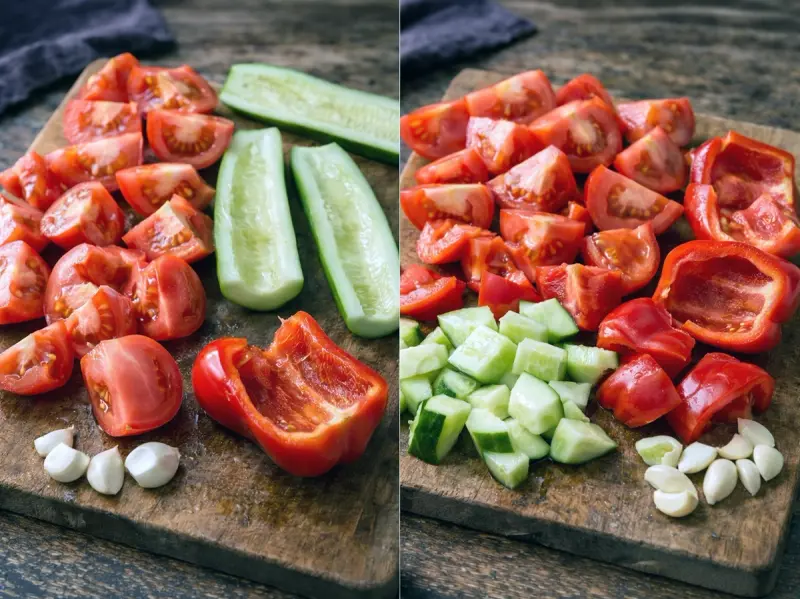
- Blend in stages. Place the tomatoes, cucumber, pepper, and garlic in a blender. Add the squeezed bread and salt. Blend on high speed for 2 minutes until completely smooth.

- Emulsify with olive oil. With the blender running on medium speed, pour in the olive oil in a slow, steady stream. The soup will lighten in colour and become creamier as the oil emulsifies into the tomato base. Add the sherry vinegar and the cold water. Blend for another 30 seconds. Taste: the soup should be bright, acidic, and faintly sweet with no raw vegetable sharpness.

- Strain and chill. Pour the gazpacho through a fine-mesh sieve, pressing gently with the back of a spoon to extract all liquid. Discard the solids. Transfer to a glass pitcher or jar and refrigerate for at least 2 hours, ideally 4 to 6. The flavour changes significantly in the fridge: the garlic mellows, the vinegar integrates, and the soup becomes noticeably more complex. Stir or shake before serving. Drizzle with olive oil to finish.

FAQ
The main cause is the tomatoes. Gazpacho depends entirely on ripe, meaty, in-season tomatoes. Greenhouse tomatoes grown for shelf life will produce a thin, flavourless result. Use Roma, plum, or vine-ripened tomatoes at peak ripeness. The second cause is not enough olive oil or low-quality oil: olive oil emulsifies with the tomato juice and creates the creamy body. Third: not enough refrigeration time. Gazpacho needs at least 2 hours in the fridge and tastes noticeably better after 4 to 6 hours. Also try adding a bit more sherry vinegar: acid brightens the tomato flavour significantly.
Yes, good quality canned whole tomatoes, such as San Marzano or Italian plum tomatoes in juice, are a workable substitute when fresh tomatoes are out of season. Drain off most of the juice before blending or the gazpacho will be too thin. The flavour will be slightly deeper and less fresh-tasting than summer tomatoes, which is a reasonable trade-off. A mixed approach also works well: two-thirds canned and one-third fresh cherry tomatoes for brightness.
In Andalusia, the traditional version is strained through a fine-mesh sieve to remove skins and seeds, giving a smooth, almost cream-like texture. This takes 2 to 3 minutes and makes a noticeable difference. Without straining, the soup is more rustic and fibre-rich. If you have a high-powered blender such as a Vitamix, straining is optional as the machine breaks everything down finely enough. A standard household blender benefits from straining for a properly smooth result. The American chunky version with unblended vegetable pieces is a different dish altogether.
Sherry vinegar is the traditional choice for Andalusian gazpacho. It is milder and rounder than most other vinegars with a faint nutty quality. The closest substitute is red wine vinegar used at about two-thirds of the quantity. Apple cider vinegar also works but shifts the flavour profile. White balsamic is too sweet. In an absolute pinch, lemon juice can be used, though the result will be less authentically Spanish. If vinegar in general is not to your taste, reduce the quantity significantly and compensate with more salt.
In a sealed glass container, gazpacho keeps for 3 to 4 days in the refrigerator. On the second day it often tastes better as the flavours integrate. The olive oil may rise to the surface during storage: stir or shake well before serving. Freezing is technically possible but not recommended: the emulsion breaks after thawing, and the texture becomes grainy and separated. Since gazpacho takes about 10 minutes to blend, making it fresh in small batches as needed is a much better option than freezing.
Rate this
Recipes by email
One letter a week: a recipe picked for your taste, plus whatever is new on the site. Unsubscribe in one click.
Welcome gift: Sergei's cookbook (e-book).
By subscribing you agree to the privacy policy.
Tell us what you like to cook (30 seconds) →Keep browsing
More dishes from the Spanish archive — picked by overlap with what you're cooking now.


Join the conversation
Comments (6)
Esattamente come quello che ho mangiato in un ristorante a Siviglia l'estate scorsa. Testura cremosa, non un succo. L'aceto di Jerez fa la differenza, l'ho preso in un negozio specializzato. Servito in bicchiere con cubetti di verdura tritati sopra.
Rafraîchissant et simple. J'ai fait fermenter le pain une nuit avec un peu d'eau avant de mixer, ça donne une texture encore plus crémeuse. Servi avec un filet d'huile d'olive AOP de Provence, magnifique.
Летом когда жара — спасение. Очень важно взять спелые помидоры, из супермаркетских зимних не выйдет ничего. Хересный уксус я не нашла в Пятёрочке, заменила красным винным + капля мёда. Результат отличный, муж попросил готовить каждые выходные.
Ricetta solida, ma se vuoi il vero sapore devi usare pomodori San Marzano o almeno varietà ben mature di stagione. Con pomodori industriali da supermercato viene piatto. E aggiungo sempre un cucchiaino di miele per bilanciare l'acidità — trucco di un amico andaluso.
Es la receta que hacía mi abuela en Córdoba, pero ella nunca medía. El truco del pan remojado es exactamente como me enseñó. Un consejo: dejarlo toda la noche en la nevera antes de servir, el sabor mejora muchísimo. Y yo añado un poquito de comino, prueba tradición familiar que no está en todas las recetas.
Гаспачо андалус — это не холодный томатный сок, а эмульсия. Правильный гаспачо имеет шелковистую текстуру как у крема, и без хереса винного уксуса вкус плоский. Хлеб замачивать в воде обязательно — это не архаизм, а технологическая необходимость: крахмал стабилизирует эмульсию. Подаю в стакане со льдом (не в тарелке) как делают в Севилье — проверено полевыми исследованиями в июле, когда +42°C.