
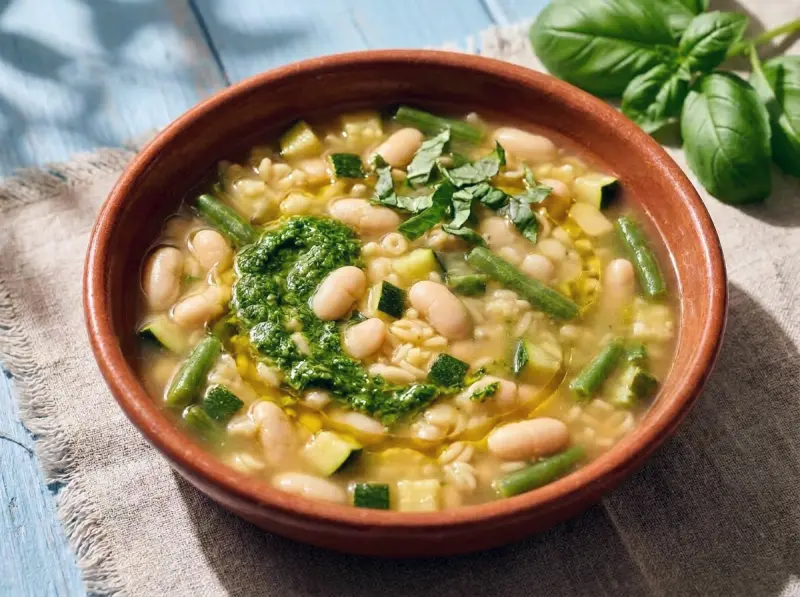
Soupe au Pistou (Provencal Summer Vegetable Soup with Basil Pistou)
Soupe au pistou is a Provencal summer vegetable soup with beans, crowned with a spoonful of pistou — the Provencal paste of basil, garlic, olive oil, and cheese. The dish comes from Provence in southeastern France, especially around Nice and the Cote d'Azur, and it is the essence of summer Mediterranean cooking: made at the peak of the season from the best vegetables at the market. Pistou is the Provencal cousin of Italian pesto; its name comes from the word for 'to pound,' just like pesto. The key difference: classic Provencal pistou traditionally contains no pine nuts — that is what sets it apart from Ligurian pesto. The soup is a close relative of Italian minestrone, since Provence borders Liguria, but the French version is finished with a big dollop of fragrant pistou that each guest swirls into their own bowl. That fresh pistou, added at the end, is what separates this from an ordinary vegetable broth. Technical keys: use summer vegetables at their peak; mash half the beans for body without flour; never cook the pistou (heat kills the basil aroma and turns it bitter); keep the garlic in the pistou raw; and use fragrant, room-temperature basil. In Provence the soup is made with plain water, not stock, so the vegetables shine, though vegetable broth is common. Serves 8 in about an hour with canned beans (dried beans need soaking overnight and about 45 minutes of simmering first), the pistou stirred in at the table, with crusty bread and a glass of Provencal rose.
Ingredients
- 400 gcannellini beans, cooked or canned and drained (or 200 g dried, see step 1)
- 2 zucchini
- 200 ggreen beans
- 3 tomatoes
- 2 potatoes
- 1 yellow onion
- 100 gsmall pasta
- 2 lwater
- 3 tbspextra virgin olive oil, for the soup base
- 1.5 tspsalt
- 40 gbasil
- 3 clovesgarlic
- 50 gParmigiano-Reggiano
- 5 tbspextra virgin olive oil, for the pistou and for serving
Method
- Prepare the beans. If using dried cannellini beans, soak 200 g overnight in cold water, then drain. (If using canned, use about 2 cans, 400–480 g drained, and skip the soaking.) Cover the soaked beans with fresh water and simmer for about 45 minutes, until tender, then drain, reserving the cooking liquid. The beans are the backbone of the soup, so cook them until creamy but not falling apart.
- Build the soup base. Heat 3 tablespoons of extra virgin olive oil in a large pot over medium heat. Add 1 finely chopped onion and cook for 4–5 minutes, until soft and translucent but not browned. Add 3 chopped tomatoes (peeled if you like) and cook 3–4 minutes more, until they break down and lose their raw edge. This light tomato-onion base gives the soup its quiet background warmth.
- Add the vegetables and water. Peel and dice 2 potatoes and add them to the pot with about 2 litres of water (the classic uses water, not stock, so the vegetables shine; use vegetable broth if you prefer). Bring to a boil, then lower the heat and simmer for 15 minutes. Trim and cut 200 g of green beans into short lengths, dice 2 zucchini, and add both. Season with salt and simmer another 15 minutes, until all the vegetables are tender but not mushy.
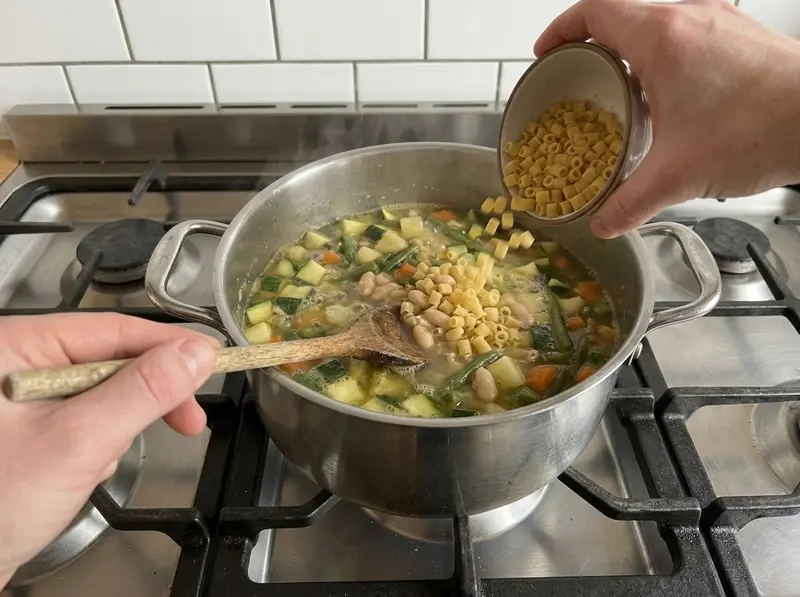
- Add the beans and pasta. Mash about half of the cooked cannellini beans with a fork — this gives the soup a creamy body with no flour at all — and add them to the pot along with the remaining whole beans. Pour in 100 g of small pasta or broken spaghetti and simmer just until the pasta is al dente, about 8–10 minutes. Do not overcook the pasta, or the soup turns gluey. Add a little of the reserved bean liquid or water if it gets too thick.
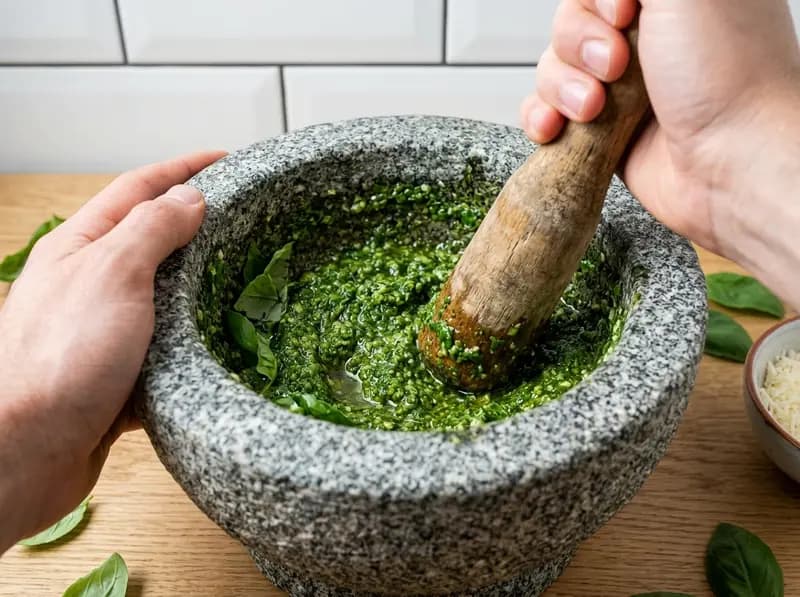
- Make the pistou. While the soup simmers, pound 3 cloves of garlic with a pinch of salt into a paste in a mortar (or use a food processor). Add 40 g of fresh basil leaves and pound until fairly smooth, then drizzle in 5 tablespoons (75 ml) of olive oil while pounding, and finally work in 50 g of grated Parmigiano-Reggiano. No pine nuts — that is the Provencal way, and what sets pistou apart from Genoese pesto. Keep the garlic raw; do not brown it, or the pistou turns bitter. Use fragrant basil at room temperature, so it releases its oils. These 5 tablespoons come on top of the 3 used for the soup base: add them a spoonful at a time until the pistou is a loose, glossy paste that slides slowly off the spoon.
- Serve with the pistou stirred in at the table. Taste the soup and adjust the salt. The pistou is never cooked — heat kills the basil aroma and makes it bitter — so place a generous spoonful of pistou in the bottom or center of each bowl and ladle the hot (not boiling) soup over it, or pass the pistou separately so each guest swirls in their own. Finish with extra grated Parmesan, a drizzle of olive oil, and black pepper. Serve with crusty bread and a glass of Provencal rose. Keep the soup and pistou separate when storing, so the pistou stays fresh.
FAQ
Soupe au pistou is a Provencal summer vegetable soup with beans, crowned with a spoonful of pistou — the Provencal paste of basil, garlic, olive oil, and cheese. The dish comes from Provence (southeastern France, especially around Nice and the Cote d'Azur), and it is the essence of summer Mediterranean cooking: made at the peak of the season from the best vegetables at the market. What is pistou: pistou is the Provencal cousin of Italian pesto. The name comes from a Provencal verb meaning 'to pound, to crush' (like the Italian pestare, the root of pesto). Basic pistou is basil, garlic, olive oil, and cheese (Parmesan or a local one) pounded into a paste, often with a tomato added. The key difference between pistou and Genoese pesto: classic Provencal pistou traditionally contains NO pine nuts — that is its main difference from Ligurian pesto. A few pine nuts are an optional extra in some Nicoise versions. Comparison with minestrone: soupe au pistou is very like Italian minestrone — the same ensemble of summer vegetables, beans, and pasta. The difference is in the finish: the French crown the soup with a big spoonful of fragrant pistou that each person swirls into their own bowl. It is the fresh pistou, added at the end, that distinguishes this soup from an ordinary vegetable broth — it brings the bright, peppery aroma of basil and the sharpness of raw garlic. The cheese varies too: in Nice the pistou is made with Parmesan or Sbrinz, and some Provencal cooks use Gruyère.
Soupe au pistou is above all a summer dish, and that is the whole point: use only vegetables that are in season in summer. The classic summer set (for 8 servings): white beans (cannellini, borlotti, flageolet — about 400–480 g cooked or canned and drained, or 200 g dried), zucchini, green beans, tomatoes, sometimes fresh peas, small potatoes. Seasonal additions: Romano beans, fennel, chard, pumpkin, turnip. Carrots, leeks, celery and turnip are common too: the Nice and Provence tourist boards both include carrots and leeks. The beans are an important element: white beans are used, and a common trick is to mash about half the beans with a fork to give the soup a creamy body with no flour at all, leaving the other half whole for texture. Pasta: optional — broken spaghetti, vermicelli, or small pasta, added near the end. Liquid: in Provence the soup is made with plain water, not stock, so the vegetable flavor shines at full strength. Others use vegetable broth or flavor the water with a piece of salt pork. For a clean vegetarian dish, water or a good vegetable broth is best. Can you make it in winter? Technically yes, but it is no longer the same dish — winter root vegetables give a different, heavier soup. The heart of soupe au pistou is fresh summer basil and young vegetables. In winter the basil is dull and the pistou loses its aroma. If you really want to, use frozen summer peas/beans and hothouse basil, but be aware of the compromise.
Pistou is the soul of this soup, and everything depends on it. The classic pistou recipe: in a mortar (or food processor), pound garlic with a pinch of salt into a paste, then add fresh basil and pound until smooth, drizzle in olive oil in a thin stream while pounding, and finally work in grated cheese (Parmesan or a local one) and, optionally, a peeled and puréed tomato. Salt to taste. No pine nuts — this is the Provencal classic, the difference from Genoese pesto. Why pistou is added only at the end / at serving: (1) Freshness of aroma — freshly made pistou has an intense, bright flavor that enhances all the ingredients of the soup. But if pistou stands, or worse, is cooked, it dulls and even turns bitter. The aroma of basil and the sharpness of garlic are volatile, and cooking kills them. (2) So pistou is never cooked — it is spooned into each bowl at serving (or served separately, so each person swirls in their own to taste). Main mistakes in making pistou: (a) Browning the garlic — in pistou the garlic is raw, pounded; fried or cooked garlic is bitter. (b) Dull basil — use only fragrant basil that smells like basil. If the basil has been in the fridge and the smell is faint, let it come to room temperature before pounding: cold basil releases its essential oils poorly. (c) Store-bought pesto instead of pistou — it rarely gives the same brightness of fresh garlic and basil; homemade pistou is essential. Recovery: if the pistou comes out bitter (over-pounded, old garlic), add more fresh basil and a little oil to rebalance.
Soupe au pistou vs minestrone: they are close relatives — both Mediterranean summer soups of vegetables, beans, and pasta. The similarity is no accident: Provence borders Liguria, and pistou is a direct reflection of the Italian influence on the cooking of southeastern France (especially Nice). Differences: (1) The finishing sauce is the main difference. Soupe au pistou is always crowned with fresh pistou at serving; minestrone is usually served as is (though sometimes also with pesto or Parmesan). (2) Pistou vs pesto — Provencal pistou is classically without pine nuts; Genoese pesto has nuts. (3) Liquid — classic soupe au pistou is often on plain water; minestrone is more often on broth. (4) Broth — minestrone often has a meat base; soupe au pistou in the Provencal tradition is often meat-free. How to make it vegetarian: the base recipe is already easily vegetarian — cook it on water or vegetable broth (not chicken), without the pancetta/salt pork that some versions have (Saveur). Parmigiano-Reggiano is made with animal rennet; for a strictly vegetarian soup, use a hard cheese made with microbial rennet in the pistou. How to make it vegan: (1) In the pistou, leave out the cheese or replace it with 1–2 tablespoons of nutritional yeast for umami plus a little more salt. (2) Make the soup on water/vegetable broth. (3) Check that the pasta is egg-free. You get a bright vegan soup — the beans provide protein, the cheese-free pistou is still fragrant from basil, garlic, and oil. Other dietary variations: for gluten-free, skip the pasta or use a gluten-free one (rice/corn); the beans give plenty of substance anyway. Soupe au pistou is a filling meat-free meal, with protein from the beans.
Serving is half the pleasure of this soup. How to serve: (1) The pistou — separate or spooned into the center. The classic Provencal way is to place a good spoonful of pistou in the bottom or center of each bowl and ladle the hot soup over it; guests are invited to swirl the pistou into their own portion. You can serve a bowl of pistou separately so each person adds to taste. (2) The soup should be hot but not boiling when it meets the pistou — too high a heat kills the basil aroma. (3) On top — a little more grated Parmesan, a drizzle of extra virgin olive oil, freshly ground pepper. What to pair it with: (a) Crusty country bread or baguette — a mandatory match. You can serve goat-cheese croutons (a Food Network touch) — spread thin slices of bread, dry them, melt the cheese. (b) Wine — a Provencal rose (Cotes de Provence, grenache-syrah) with a dry finish is ideal for a summer soup; or a light white. Storage: (a) The soup (without pistou) keeps 3–4 days in the fridge; the vegetable flavor even deepens. You can freeze it up to 3 months (but the pasta may go soft — better to add the pasta on reheating). (b) Store the pistou SEPARATELY from the soup — it should stay fresh. In the fridge pistou keeps 2–3 days under a layer of olive oil in a jar (the oil protects it from darkening); you can freeze it in portions in an ice-cube tray. Important: do not mix all the pistou into the pot in advance — it will dull. When reheating the soup, add fresh pistou to the bowl. Key principle: freshness. You can make the soup ahead, but the pistou as fresh as possible, stirred in at the last moment. This is a dish of summer, the market, and the aroma of basil — do not complicate it; let the vegetables and pistou shine.
Keep browsing
More dishes from the French archive — picked by overlap with what you're cooking now.
Recipes by email
One letter a week: a recipe picked for your taste, plus whatever is new on the site. Unsubscribe in one click.
Welcome gift: Sergei's cookbook (e-book).
By subscribing you agree to the privacy policy.
Tell us what you like to cook (30 seconds) →
Join the conversation
Comments
No comments yet — be the first!