Japan · Cereal and Pasta Dishes
Kuri Gohan (Japanese Chestnut Rice)
Kuri gohan (栗ご飯) is a Japanese rice dish cooked with fresh chestnuts, made in home kitchens from September through October when kuri come into season.
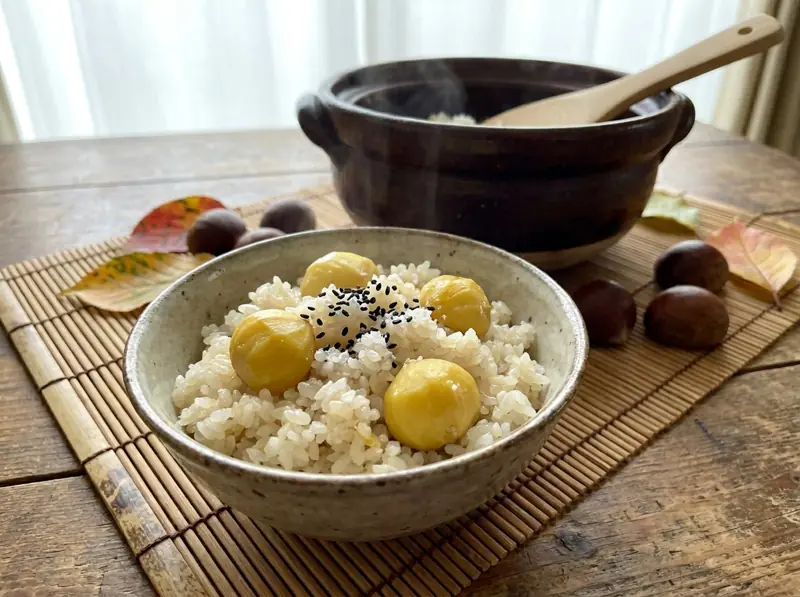
Ingredients
- short-grain rice225 g
- glutinous rice75 g
- chestnuts400 g
- kombu1 piece
- salt4 g
- sake1 tbsp
- black sesame seeds for serving1 tbsp
Method
- 1Rinse the chestnuts and soak them in hot water, around 50°C, for at least 20 minutes; plain room-temperature water works too if you soak for 2 hours instead. The heat softens the tough outer shell just enough that a paring knife can slide underneath it rather than skate across the surface. While the chestnuts soak, put the short-grain rice and glutinous rice in a bowl, rinse briefly, and change the water three or four times until it runs close to clear, then drain.
- 2Peel the chestnuts one at a time. Set each one flat-side down and slice a thin disc off the pointed bottom, where the two halves of the shell meet, to create a flat edge. Wedge the knife under that cut edge and peel the hard outer shell off in a single strip, then work the thinner, papery, tannin-bitter inner skin free the same way, from the cut bottom up toward the tip. Drop each peeled chestnut straight into a bowl of cold water as you go, since bare chestnut flesh starts to oxidize within minutes.
- 3Once every chestnut is peeled, drain the bowl and cover them again with fresh cold water, changing it two or three times over the next 30 minutes. This soak is what keeps the finished rice a clean pale yellow instead of a dull grey-brown; skip it and the surface starches darken before they ever hit the rice. Cut any chestnut larger than a walnut in half or into thirds so the pieces are close to bite-sized; small ones can stay whole.
- 4Drain the rice one more time and let it rest in the strainer for 10 minutes so the moisture inside the grains evens out. For a rice cooker: put the rice into the inner pot, pour in the sake, then fill with water up to the 2-gō line printed inside the pot, counting the sake as part of that liquid. Stir in the salt until it disappears, tuck the kombu against the side of the pot, then lay the chestnuts on top in a single layer, rounded side up, and let everything sit for 30 minutes before pressing start.
- 5For a heavy pot or donabe instead: combine the rinsed rice, sake, salt and 400 ml water in the pot, stir to dissolve the salt, and tuck in the kombu. Arrange the chestnuts on top rounded side up and let the pot sit uncovered for 30 minutes so the rice can soak. Cover, bring to a boil over medium heat, then drop to the lowest heat and cook for 12 to 13 minutes, until you can no longer hear bubbling and a quick peek shows the surface water gone.
- 6Take the pot off the heat, or let the rice cooker finish its cycle, and leave the lid shut for 15 minutes of steaming without opening it. This rest finishes cooking the centre of the grains and firms up the chestnuts; opening the lid early lets steam escape and leaves the bottom layer undercooked. Fish out the kombu, which has done its job by now.
- 7Uncover and mix the rice gently: slide a rice paddle straight down to the bottom, turn a scoop up and over, and repeat around the pot in a light slicing motion rather than stirring. Rough stirring mashes the chestnuts into starchy lumps, so aim to fold the rice under and around them instead. Serve warm, scattered with the black sesame seeds, or with a small pinch of gomashio (sesame salt) instead if you have it.