Italy · Soups
Ribollita (Tuscan Reboiled Bread and Bean Soup)
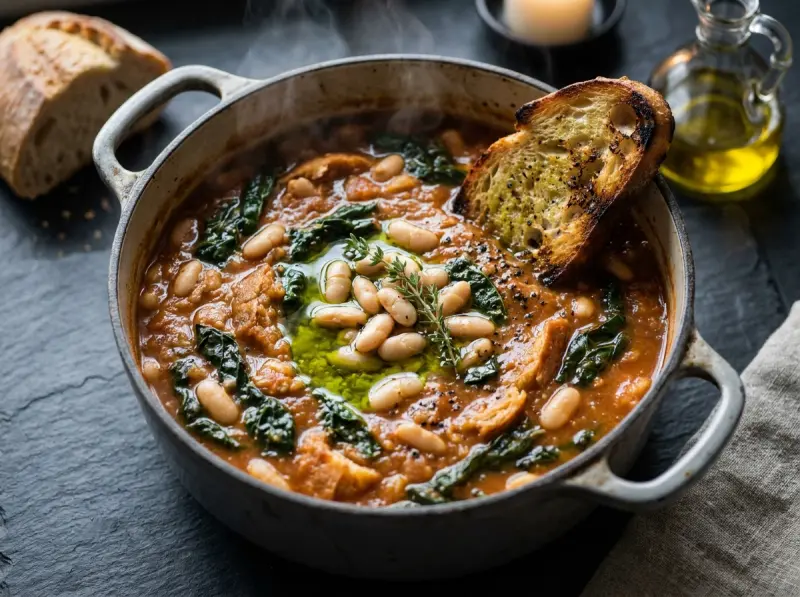
Ribollita is a thick Tuscan soup of cannellini beans, cavolo nero (black kale), and stale bread — one of the central symbols of cucina povera (peasant cooking).
Ingredients
- cannellini beans250 g
- cavolo nero300 g
- Savoy cabbage200 g
- stale bread250 g
- potatoes2
- yellow onion1.5
- carrots2
- celery stalks2
- garlic4 cloves
- canned whole tomatoes400 g
- vegetable broth1.5 l
- extra virgin olive oil5 tbsp
- rosemary1 sprig
- thyme2 sprig
- salt1 tsp
- black pepper0.5 tsp
Method
- 1Soak and cook the beans. The night before, cover 250 g dried cannellini beans with plenty of cold water and soak overnight. (If short on time, use the quick method: pour boiling water over them and let stand 1 hour.) Drain, then simmer in fresh salted water with half an onion, a clove of garlic, and a sprig of thyme for about 45 minutes, until just tender but not falling apart. Half an onion and one clove of garlic from the ingredient list go here; the rest goes into the soffritto. Drain, reserving the cooking liquid — that starchy water is liquid gold and goes back into the soup. If using canned beans, use 2 cans (about 800 g drained) and skip this step, but you lose the bean broth.
- 2Build the soffritto. Finely chop 1 onion, 2 carrots, and 2 celery stalks. Heat 4 tablespoons of extra virgin olive oil in a large heavy pot over medium heat and add the chopped vegetables with a pinch of salt. Cook for 8-12 minutes, stirring often, until soft and starting to take on golden color and a browned patina forms on the bottom of the pot. This fond is the flavor foundation. Add 3 cloves of minced garlic and the rosemary in the last minute, until fragrant.
- 3Add tomatoes and potatoes. Crush 400 g of canned whole tomatoes by hand and add them to the pot with their juices, along with 2 peeled and diced potatoes. Season with salt and pepper and cook for 5 minutes, stirring, so the tomatoes lose their raw edge and the soffritto and tomato meld. The potato is not just for flavor — it is a second thickener that, together with the bread, gives ribollita its dense, semi-solid texture.
- 4Add the greens. Strip the cavolo nero leaves from their tough stems and chop roughly (300 g). Shred half a small Savoy cabbage (200 g). Add both to the pot — they will look like too much, but they wilt down dramatically. Stir for 4-5 minutes until the greens collapse into the soup.
- 5Blend half the beans, then build the soup. Blend half the cooked cannellini beans with 2 cups of their reserved cooking liquid (or broth) until smooth — this creates the velvety base without any cream. Add the bean purée and the remaining whole beans to the pot, along with the thyme. Pour in enough vegetable broth (about 1.5 litres total liquid) to cover everything generously — you need plenty, because the bread will soak up a lot. Bring to a boil, lower the heat, cover, and simmer for about 1 hour 30 minutes, adding water if it gets too thick.
- 6Add the bread (day one). Tear 250 g of stale saltless bread into rough chunks by hand — do not cut it with a knife, torn bread dissolves better into the soup. Stir the bread into the pot and simmer 10-15 minutes more, until it begins to break down. At this point you have minestra di pane — a brothy bread soup that is already good. Taste and adjust salt and pepper. You can eat it now, but for true ribollita, do the next step.
- 7Reboil (day two). Let the soup cool, then refrigerate overnight. The next day the flavors will have deepened and the bread will have thickened the soup considerably. Reheat over medium heat, adding water or broth to loosen it back to a soupy (or thick semi-solid) consistency to your liking, and let it come back to a gentle boil — this is the ribollire, the reboiling that gives the dish its name and its character. Taste and re-season; reboiled soup often needs a little more salt.
- 8Serve. Place a slice or two of toasted bread rubbed with raw garlic in the bottom of each bowl, then ladle the hot ribollita over it. Finish each bowl with a generous pour of good extra virgin olive oil — ideally a peppery Tuscan one — and a few grinds of black pepper. The olive oil is not optional; it is part of the dish. Serve hot, with extra garlic toasts on the side for crunch, and a glass of Chianti. For very thick leftovers, form patties and pan-fry them in olive oil to make ribollita refritta.