Germany · Flour and Confectionery Products
Spekulatius (German Spiced Christmas Biscuits)
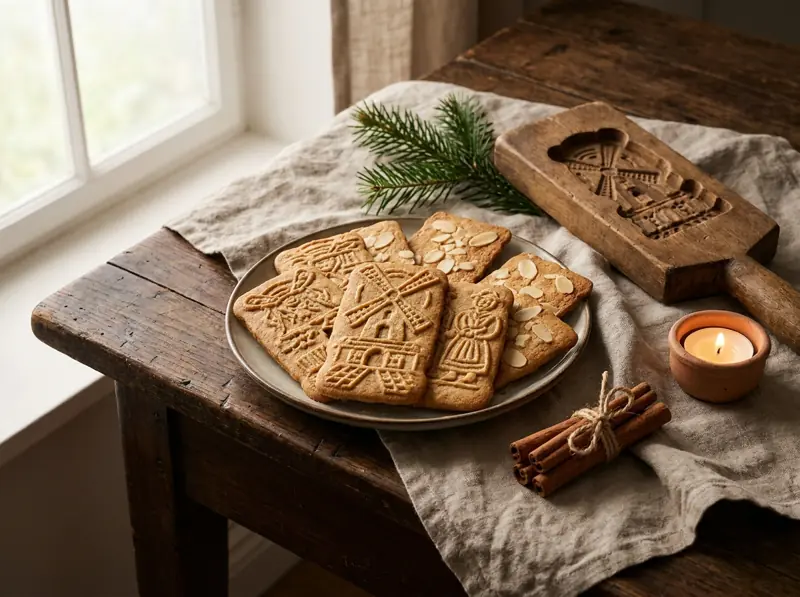
Spekulatius are thin, crisp spiced shortcrust biscuits stamped with a picture before baking, known in the Netherlands and Belgium as speculaas and baked across the Rhineland and Westphalia for Sankt Nikolaus on 6…
Ingredients
- plain flour300 g
- ground almonds60 g
- baking powder5 g
- salt1 pinch
- ground cinnamon6 g
- ground cloves1.5 g
- ground cardamom1.5 g
- ground nutmeg1.5 g
- ground ginger1 g
- ground allspice1 g
- ground white pepper0.5 g
- lemon zest1 tsp
- butter150 g
- brown sugar125 g
- egg1
- milk15 ml
Method
- 1Mix the spice blend and dry ingredients. In a small bowl, stir together the cinnamon, cloves, cardamom, nutmeg, ginger, allspice and white pepper: this is your Spekulatiusgewürz, and mixing it fresh gives a sharper aroma than a jar that has sat on a shelf since last Christmas. In a separate large bowl, whisk this spice blend into the flour, ground almonds, baking powder and salt.
- 2Cream the butter and sugar. Beat the softened butter with the brown sugar for 2 to 3 minutes until pale and fluffy, then beat in the egg and the lemon zest until fully combined. Working the butter and sugar properly here, rather than just stirring them together, gives the finished biscuit its short, sandy crumb instead of a dense one.
- 3Bring the dough together. Add the flour mixture to the butter mixture in two batches, mixing on low speed or with a wooden spoon just until no dry flour is visible and the dough holds in one mass. Stop as soon as it comes together: overworking a shortcrust dough builds gluten in the flour, and the biscuits turn tough instead of keeping their snap.
- 4Chill overnight. Divide the dough into two flat discs, wrap each tightly in plastic and refrigerate overnight, or for at least 8 hours. The rest lets the flour fully hydrate and the spices bloom into the fat, so the dough rolls out evenly instead of cracking, and the flavour is noticeably rounder than dough baked the same day.
- 5Shape the biscuits. With a wooden Model: dust the carved mould heavily with flour, press in a small ball of cold dough with your thumbs so it fills every groove, scrape off the excess flush with a knife, then turn the mould over the tray and rap it sharply on the counter to knock the biscuit free. Without a mould: roll the dough out on a lightly floured surface to 3 mm thick, run an embossed Spekulatiuswalze over it in one firm, steady pass, then separate the shapes with a small knife, or simply cut rounds and rectangles with an ordinary cookie cutter. Re-roll the scraps once and repeat; a second re-roll makes the dough tough.
- 6Rest the shaped biscuits. Arrange them on a baking-paper-lined tray, spaced 1 cm apart since they barely spread, and put the tray in the fridge for 15 to 20 minutes while the oven heats. This short second chill keeps thin, detailed shapes from softening and losing their pattern in the first few minutes in the oven.
- 7Bake and cool. Heat the oven to 190°C top and bottom heat (170°C fan), brush the biscuits very thinly with the milk for a light sheen, and bake one tray at a time for 9 to 11 minutes, until the edges are a shade darker than the centre. Watch the last two minutes closely, since thin Spekulatius go from golden to burnt fast, and let them firm up into their final crisp texture on the tray as they cool: a batch that still feels soft straight out of the oven is not underbaked.