
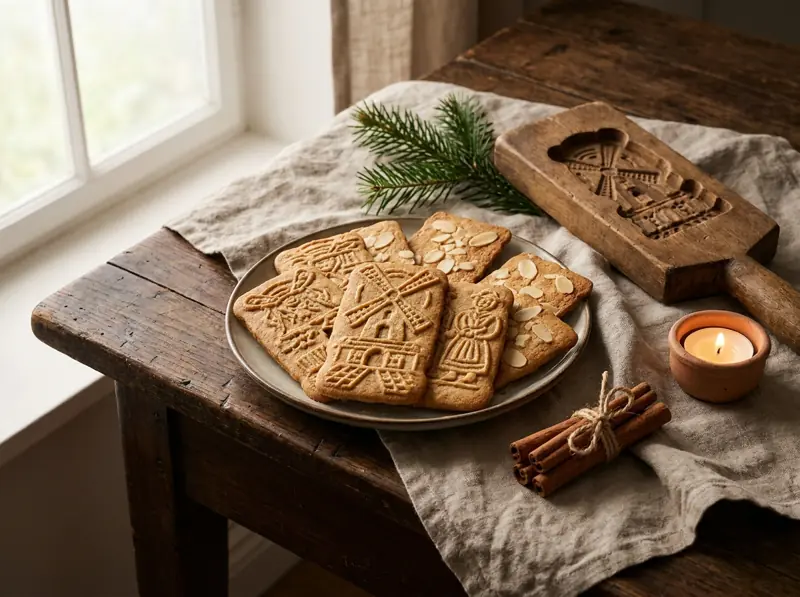
Spekulatius (German Spiced Christmas Biscuits)
Spekulatius are thin, crisp spiced shortcrust biscuits stamped with a picture before baking, known in the Netherlands and Belgium as speculaas and baked across the Rhineland and Westphalia for Sankt Nikolaus on 6 December. The dough is a butter shortcrust built around a home-mixed spice blend of cinnamon, clove, cardamom, nutmeg, ginger, allspice and white pepper, with ground almonds folded in for a short, sandy bite. Traditionally the picture comes from a carved wooden mould, a Model, but an embossed rolling pin or an ordinary cookie cutter gives the same biscuit without ever owning one. The 60 minutes here covers mixing, shaping and two trays in the oven; the dough itself needs to rest in the fridge overnight, and the biscuits only crisp up fully once they cool. Makes about 45 thin biscuits, five to a serving.
Ingredients
- 300 gplain flour
- 60 gground almonds
- 5 gbaking powder
- 1 pinchsalt
- 6 gground cinnamon
- 1.5 gground cloves
- 1.5 gground cardamom
- 1.5 gground nutmeg
- 1 gground ginger
- 1 gground allspice
- 0.5 gground white pepper
- 1 tsplemon zest
- 150 gbutter
- 125 gbrown sugar
- 1 egg
- 15 mlmilk
Method
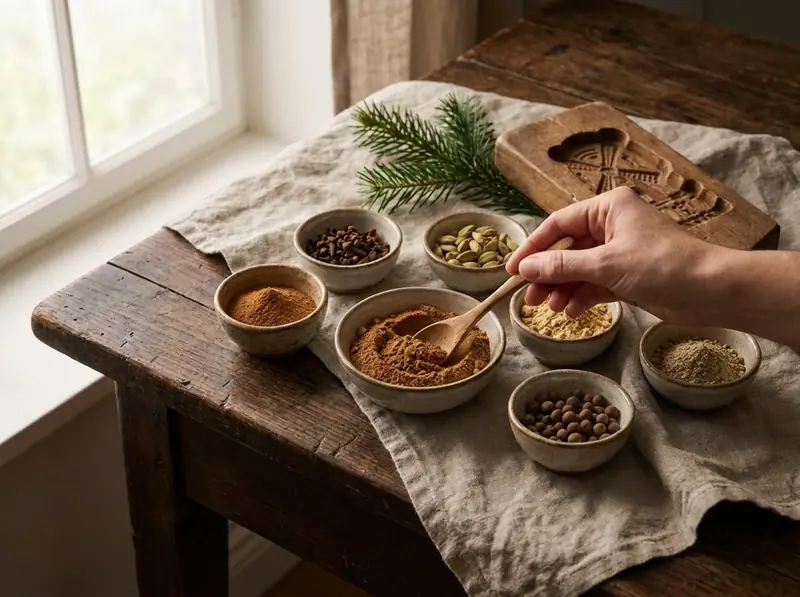
- Mix the spice blend and dry ingredients. In a small bowl, stir together the cinnamon, cloves, cardamom, nutmeg, ginger, allspice and white pepper: this is your Spekulatiusgewürz, and mixing it fresh gives a sharper aroma than a jar that has sat on a shelf since last Christmas. In a separate large bowl, whisk this spice blend into the flour, ground almonds, baking powder and salt.
- Cream the butter and sugar. Beat the softened butter with the brown sugar for 2 to 3 minutes until pale and fluffy, then beat in the egg and the lemon zest until fully combined. Working the butter and sugar properly here, rather than just stirring them together, gives the finished biscuit its short, sandy crumb instead of a dense one.
- Bring the dough together. Add the flour mixture to the butter mixture in two batches, mixing on low speed or with a wooden spoon just until no dry flour is visible and the dough holds in one mass. Stop as soon as it comes together: overworking a shortcrust dough builds gluten in the flour, and the biscuits turn tough instead of keeping their snap.
- Chill overnight. Divide the dough into two flat discs, wrap each tightly in plastic and refrigerate overnight, or for at least 8 hours. The rest lets the flour fully hydrate and the spices bloom into the fat, so the dough rolls out evenly instead of cracking, and the flavour is noticeably rounder than dough baked the same day.
- Shape the biscuits. With a wooden Model: dust the carved mould heavily with flour, press in a small ball of cold dough with your thumbs so it fills every groove, scrape off the excess flush with a knife, then turn the mould over the tray and rap it sharply on the counter to knock the biscuit free. Without a mould: roll the dough out on a lightly floured surface to 3 mm thick, run an embossed Spekulatiuswalze over it in one firm, steady pass, then separate the shapes with a small knife, or simply cut rounds and rectangles with an ordinary cookie cutter. Re-roll the scraps once and repeat; a second re-roll makes the dough tough.
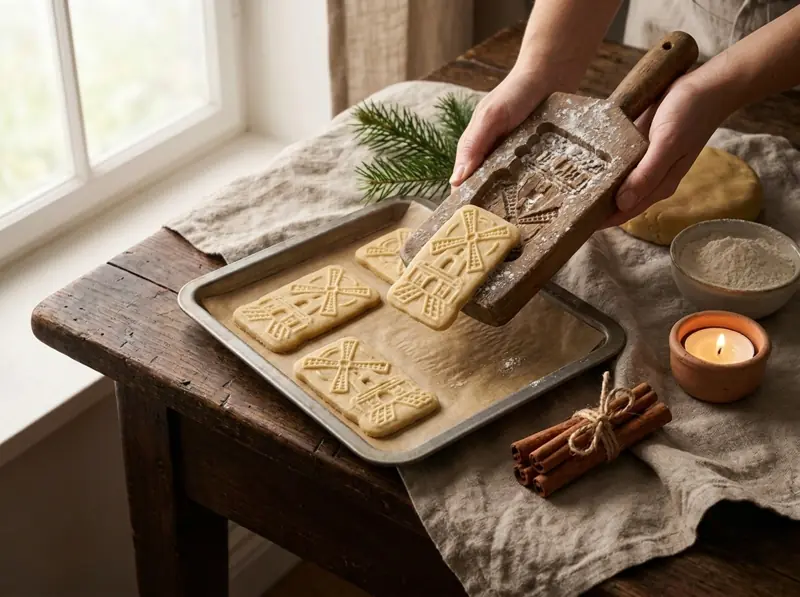
- Rest the shaped biscuits. Arrange them on a baking-paper-lined tray, spaced 1 cm apart since they barely spread, and put the tray in the fridge for 15 to 20 minutes while the oven heats. This short second chill keeps thin, detailed shapes from softening and losing their pattern in the first few minutes in the oven.
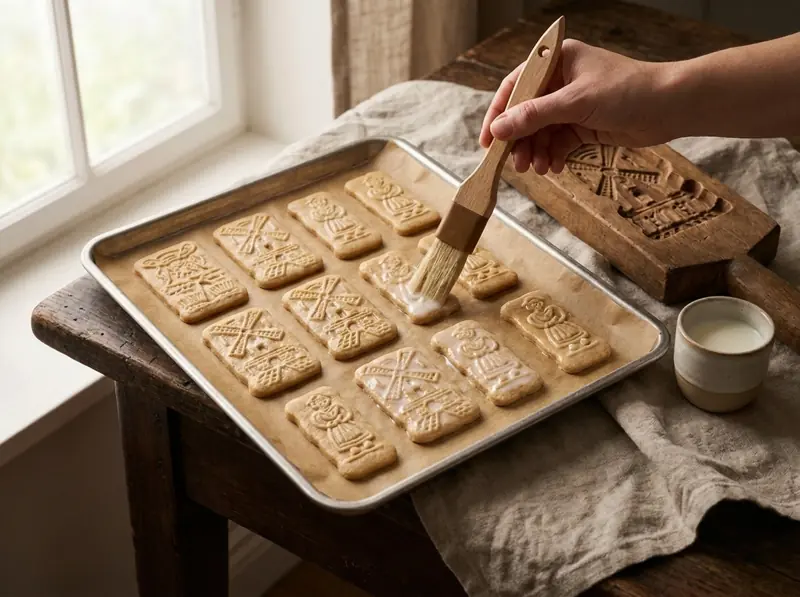
- Bake and cool. Heat the oven to 190°C top and bottom heat (170°C fan), brush the biscuits very thinly with the milk for a light sheen, and bake one tray at a time for 9 to 11 minutes, until the edges are a shade darker than the centre. Watch the last two minutes closely, since thin Spekulatius go from golden to burnt fast, and let them firm up into their final crisp texture on the tray as they cool: a batch that still feels soft straight out of the oven is not underbaked.
FAQ
The dough is either too warm or the mould wasn't dusted enough. Coat the carved side of the Model generously with flour or cornstarch before every single press, tapping out anything that pools in the deepest grooves, then push in a small, cold ball of dough with your thumbs so every detail fills. Trim the excess flush with the back of a knife or a length of thin wire, turn the mould face-down over the tray and rap it firmly on the edge of the counter, or knock the back with a wooden spoon handle, rather than trying to pry the biscuit out. If it still won't drop, the dough has warmed up in your hands: put the filled mould in the fridge for 10 minutes and try again.
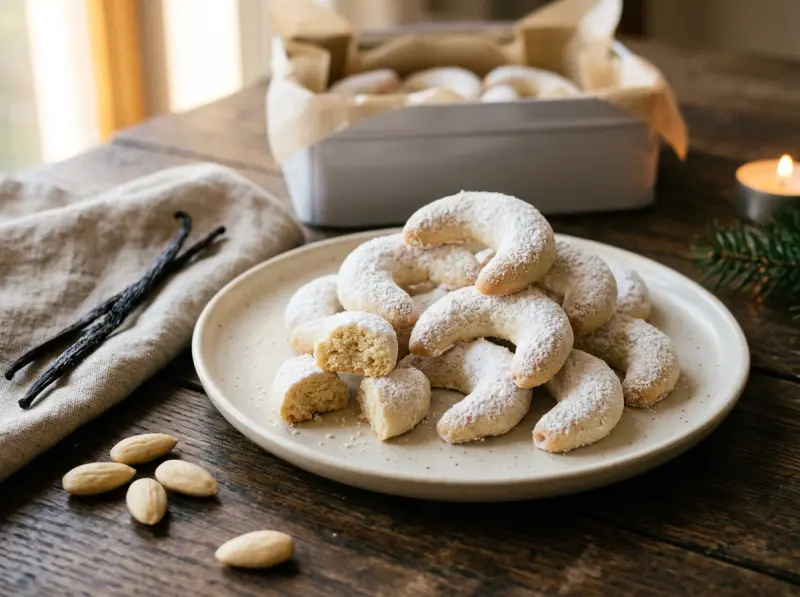
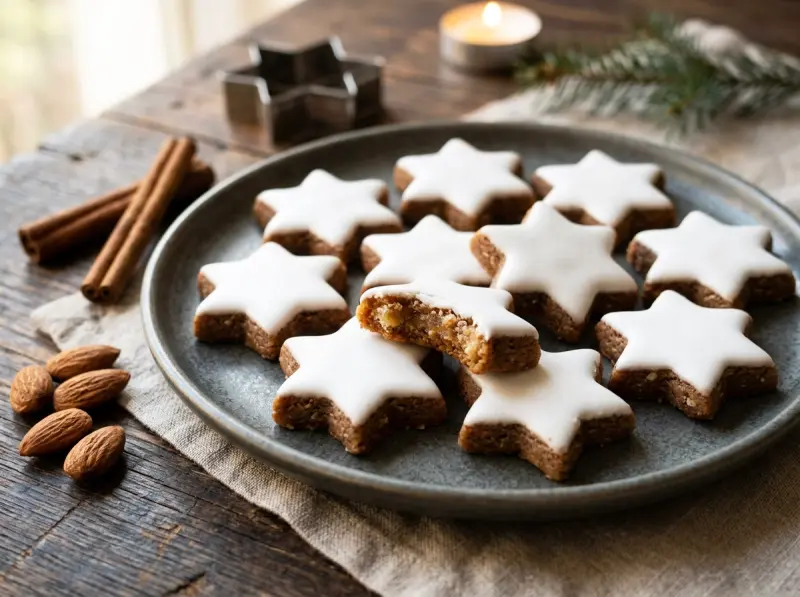
Gewürzspekulatius is the classic version and the one most people mean by the name: a firm, dark shortcrust built around the cinnamon-clove-cardamom spice blend, with ground almonds folded in for a shorter bite. Butterspekulatius drops most of the spice and pushes the butter ratio up instead, so the biscuit is pale, milder and more crumbly, closer to a plain Danish butter cookie in the same stamped shape. Mandelspekulatius sits between the two: a lighter spicing than the Gewürz version, almond flour worked through the dough, and often a layer of sliced almonds pressed onto the underside before baking, which toasts during baking and shows on the back of the finished biscuit. All three come from the same wooden moulds and the same 6 December tradition; the name on the packet just tells you the ratio of butter to spice to almond you are getting. On the Bunter Teller, the mixed plate of German Advent biscuits, Spekulatius sits alongside Vanillekipferl and Zimtsterne, with a mug of mulled wine to drink alongside.
Yes, and most home bakers do exactly this. Roll the chilled dough out to 3 mm between two sheets of baking paper, dusting lightly with flour if it sticks, then cut shapes with any ordinary biscuit cutter, or simply a knife into rectangles the way some German bakeries sell them plain. You lose the embossed picture, not the flavour or the texture, since the spice blend and the almonds are what make a Spekulatius a Spekulatius, not the shape stamped into the top. Gather the scraps, re-roll once and cut again; a second re-roll makes the dough tough, so bake anything left over as a slightly thicker, rustic-looking last batch instead.
Stored airtight in a tin at room temperature, baked Spekulatius stay crisp for 4 to 6 weeks, and the spice actually deepens after the first few days. Keep them away from soft, moist cookies like Lebkuchen or marzipan sweets in the same tin, or the Spekulatius will pull in moisture and lose their snap within a couple of days. The raw dough freezes well for up to 3 months, wrapped flat as a disc; thaw it overnight in the fridge before rolling, since dough that thaws at room temperature turns greasy and hard to work. Baked biscuits also freeze, layered between baking paper in a rigid container, and need nothing more than 10 minutes at room temperature before serving.
German supermarkets sell Spekulatiusgewürz ready-mixed, and it works fine if loose cardamom or white pepper are hard to find; look for it near the baking spices in autumn, usually sold in a small paper packet. Making your own from cinnamon, clove, cardamom, nutmeg, ginger, allspice and white pepper gives a fresher, sharper aroma than most jarred blends, since the spices have not been sitting pre-ground for months. If cardamom pods are not in the cupboard, extra ground ginger and a touch more cinnamon cover most of the gap; white pepper is the one ingredient nobody expects, but it keeps the blend from tasting purely sweet, and a pinch of ordinary black pepper does the same job if that is what you have. Skip the anise some bakers add on top: it is optional, and it pulls the flavour toward Lebkuchen instead of Spekulatius.
Rate this
Recipes by email
One letter a week: a recipe picked for your taste, plus whatever is new on the site. Unsubscribe in one click.
Welcome gift: Sergei's cookbook (e-book).
By subscribing you agree to the privacy policy.
Tell us what you like to cook (30 seconds) →Keep browsing
More dishes from the German archive — picked by overlap with what you're cooking now.

Join the conversation
Comments
No comments yet — be the first!