
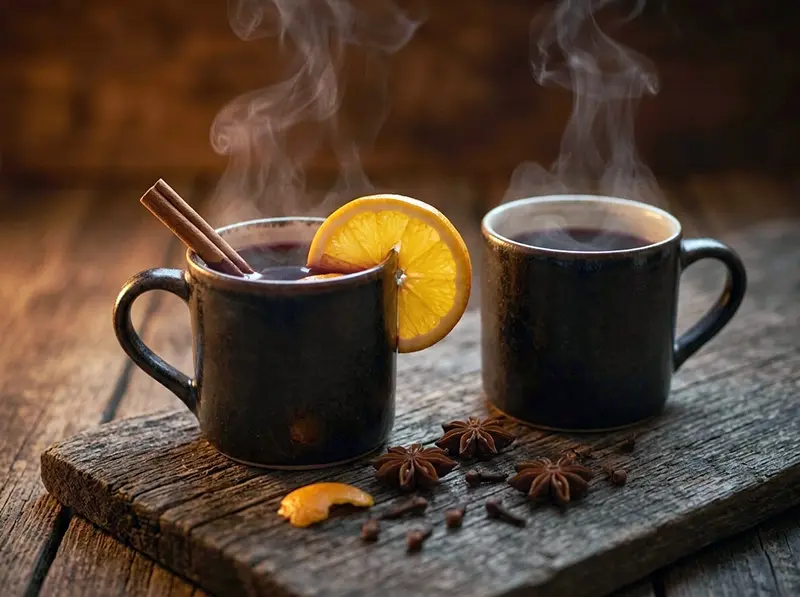
Mulled Wine
Glühwein is the hot spiced red wine poured from wooden huts at German Christmas markets: wine, sugar, orange and whole spices, and under EU rules nothing else — not even water. Orange and cinnamon carry the top of it, while cloves and star anise sit underneath and keep the drink from reading as syrup. Heat is the whole job here: hold the pot near 70°C and never let it bubble, or the wine browns and goes flat. Active work is about fifteen minutes, after which the pan sits on the lowest flame for another twenty to thirty while the spices open up.
Ingredients
- 750 mlred wine
- 1 orange
- 3 cinnamon sticks
- 8 whole cloves
- 2 star anise
- 4 cardamom pods
- 40 grock sugar
Method
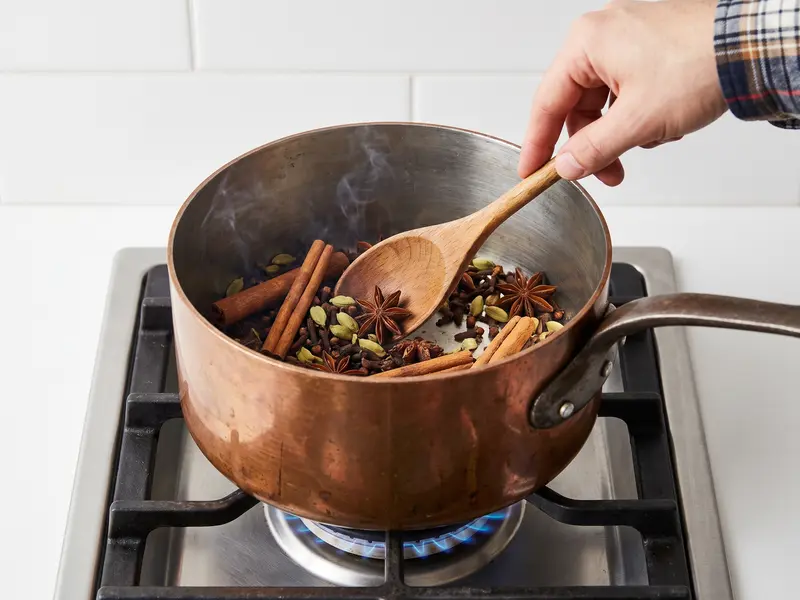
- Put the cinnamon sticks, cloves, star anise and lightly cracked cardamom pods into a dry pan over medium heat and stir them for about half a minute, until the smell lifts off the pan. Dry heat brings the aromatic oils to the surface of the bark and the pods, so they move into the wine faster and at a lower temperature. Pull the pan off while the spices are still pale — scorched cloves turn medicinal, and nothing later in the recipe takes that back.
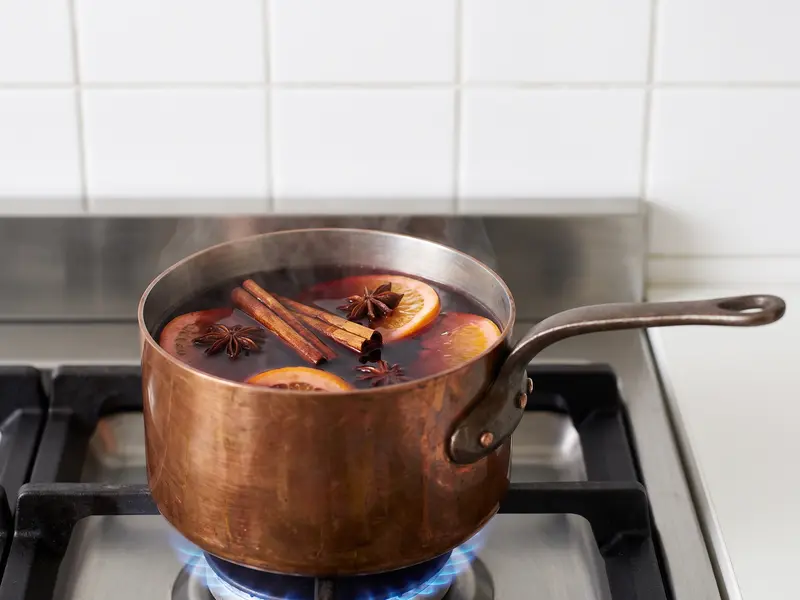
- Wash the orange and cut it into rounds about 5 mm thick, then drop them in with the spices. Pour in the wine, add the rock sugar and set the pan over low heat. You are heading for 70°C, which is a long way short of a simmer: steady steam off the surface, at most a few bubbles clinging to the rim. Ethanol boils at 78.3°C, so once bubbles rise in the middle of the pan you are driving off the part you paid for.
- Cover the pan and drop the heat as low as your stove goes, then leave it 20 to 30 minutes. The spices need that long to give anything up, and the lid matters more than it looks; uncovered, a good share of the volume walks out as steam. Do not push past 45 minutes with the spices still in: cinnamon bark starts handing over tannin and bitterness instead of sweetness.
- Strain into a second pot or a warmed jug through a fine sieve, and throw the spices and orange rounds away rather than returning them to the wine. Spent spices left sitting in hot liquid keep extracting, and by the second glass the bitterness shows. Taste here and add a little more rock sugar if the bottle turned out drier than expected.
- Pour into thick-walled mugs, because thin glass loses the heat inside a minute. To keep a batch running through an evening, hold it between 60 and 70°C on the smallest burner or in a slow cooker set to warm; below 60°C it stops smelling of anything. Anyone who wants it stronger takes a 20 ml shot of dark rum in their own mug, off the heat, rather than into the pot.
FAQ
Regulation (EU) 251/2014 defines Glühwein as a drink obtained exclusively from red or white wine, flavoured mainly with cinnamon and cloves, at 7% abv or above, and it states plainly that the addition of water is forbidden; the wider category it belongs to also has to stay under 14.5% abv. That governs what may be sold under the name rather than what you do at home, but it points at the real issue: wine cut with water or juice loses body long before it loses alcohol, and the spices then sit on top of nothing. A squeeze of orange juice at the end is a different matter — that goes in for acidity, not to stretch the pot.
Aim at 70°C and treat 75°C as the ceiling. German consumer testers at ÖKO-TEST put the pleasant drinking temperature nearer 60°C and say it should never be allowed to boil. Ethanol boils at 78.3°C, and while some alcohol leaves at any temperature, that is the point where the losses turn steep. Boiling also does visible damage: the sugar caramelises, the wine takes on a brown cast and the spices turn bitter, so it tastes cooked rather than warm. Without a thermometer, look for steady steam and a few bubbles at the rim only.
A dry, medium-bodied red between 11 and 12.5% is the useful range: Dornfelder, Spätburgunder, Merlot, Grenache. Heat flattens tannin and pushes alcohol forward, so a heavily oaked 14.5% bottle comes out hot and harsh, and whatever you paid for its subtlety vanishes under the cinnamon. Very light, low-tannin wines go the other way and turn watery once hot. A bottle you would drink without complaining but would not open for guests is the right target.
Weißer Glühwein is the same drink built on white wine; the EU regulation permits it but requires the sales name to carry a word indicating white wine, and it is usually spiced lighter, with lemon and vanilla in place of a pile of cloves. Feuerzangenbowle hangs a rum-soaked sugar loaf on tongs above the pot and sets it alight so caramel drips into the wine, and the rum has to be 54% or higher or it will not catch. Kinderpunsch contains no wine at all — spiced fruit juice, which puts it outside the Glühwein definition entirely; homemade apple cider makes a better base for it than most shop cartons.
Salty and fatty things, to stand against the sugar. Soft pretzels from the next stall are the default, and Obatzda, the paprika-orange Bavarian cheese spread, is what goes on them. Roasted almonds and a grilled sausage cover the same ground. Sweet pastry next to sweet wine flattens both, so keep the cake for afterwards.
Rate this
Recipes by email
One letter a week: a recipe picked for your taste, plus whatever is new on the site. Unsubscribe in one click.
Welcome gift: Sergei's cookbook (e-book).
By subscribing you agree to the privacy policy.
Tell us what you like to cook (30 seconds) →Keep browsing
More dishes from the German archive — picked by overlap with what you're cooking now.
Join the conversation
Comments (3)
Perfekt für kalte Abende. Ich nehm immer noch ne Stange Zimt extra rein und weniger Zucker. Schmeckt nicht so künstlich dann
Perfekt für den Weihnachtsmarkt zuhause! Ich nehme immer etwas mehr Orangenschale als angegeben und dafür weniger Zucker. Die Nelken bitte nicht vergessen sonst schmeckt es nicht rund.
Water temperature is everything for mulled wine. Too hot and you destroy the delicate aromatics in the dry red wine. I use a thermometer and aim for 75°C — the difference between good and bitter is just 10 degrees.