
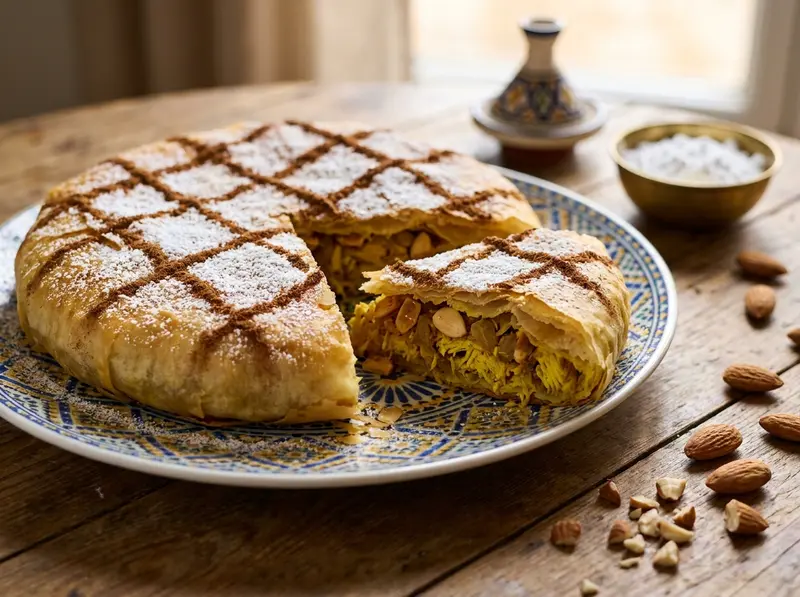
Chicken Pastilla (Moroccan Sweet-Savory Pie)
Pastilla is Morocco's most extravagant pie — a crisp, golden pastry of paper-thin warqa (or phyllo) concealing three layers: saffron-spiced shredded chicken, a soft egg-and-onion custard set in the reduced cooking juices, and a sweet crunch of fried almonds scented with orange blossom. Dusted with powdered sugar and cinnamon, it plays sweet against savoury in a way few dishes dare. Born of Arab-Andalusian heritage, it's a celebration centrepiece served at weddings and feasts.
Ingredients
- 800 gchicken thighs
- 10 sheetsphyllo
- 150 galmonds
- 4 pcsegg
- 3 pcsonion
- 120 gbutter
- 2 tspground cinnamon
- 1 pinchsaffron
- 2 tbsporange blossom water
- 3 tbsppowdered sugar
Method
- Simmer the chicken thighs with the sliced onion, saffron, half the cinnamon, salt, pepper, and a little water, covered, 40–45 minutes until very tender. Lift out the chicken, cool, and shred, discarding skin and bones.
- Reduce the onion and cooking juices in the pan until thick and jammy. Beat the eggs, pour them in, and stir over low heat until softly set into a moist scramble. Stir the shredded chicken back in and cool.
- Fry the almonds in a little butter until golden, then blitz with 1 tablespoon powdered sugar, the remaining cinnamon, and the orange blossom water to a coarse sweet crumb.
- Brush a round baking dish with melted butter. Layer in 5–6 phyllo sheets, brushing each with butter and letting the edges overhang.
- Spread the chicken-and-egg mixture over the base, then scatter the sweet almond crumb evenly on top.
- Fold the overhanging phyllo over the filling, then cover with 3–4 more buttered sheets, tucking the edges under to seal into a neat parcel. Brush the top with butter.
- Bake at 190°C for 30–40 minutes until deep golden and crisp. Cool 5 minutes, then dust generously with powdered sugar and lines of cinnamon. Serve warm.
FAQ
Warqa (also spelled ouarka) is a paper-thin Moroccan pastry, made by dabbing a wet batter onto a hot surface to build gossamer sheets. It's the traditional wrapping for pastilla and gives an especially delicate, crisp shell. It's hard to find and tricky to make, so most cooks outside Morocco use phyllo (filo), which is widely available and works very well. Spring roll wrappers are another common substitute. Whatever you use, brush every layer with butter for that shatteringly crisp result.
It surprises newcomers, but the sweet-savoury interplay is the entire point of pastilla and a hallmark of Moroccan and Arab-Andalusian cuisine. The savoury saffron chicken and soft egg are balanced by the sweet almond layer and the cinnamon-sugar dusting on top, so each bite moves between the two. Far from clashing, they heighten each other. If you're hesitant, use a lighter dusting of sugar at first — but the contrast is what makes the dish special, so it's worth trying as intended.
Yes. The traditional and most prestigious version of pastilla is made with squab (young pigeon), which has a rich, tender, slightly gamey meat. Because pigeon is hard to source and expensive in many places, chicken has become the common everyday and restaurant substitute, and it works beautifully with the same spices and method. Some cooks use a mix of chicken and pigeon. There's also a popular seafood pastilla made with fish, shellfish, and vermicelli, which is savoury rather than sweet.
Yes, and it's a great make-ahead dish for entertaining, which is partly why it's a feast centrepiece. You can prepare the chicken-egg filling and the almond mixture a day or two in advance and keep them refrigerated. You can even assemble the whole pie, cover it, and refrigerate or freeze it unbaked, then bake straight from chilled (adding a few minutes) or from frozen. Bake it fresh for serving, as the pastry is at its best crisp and warm from the oven.
Sogginess almost always comes from a filling that's too wet. Reduce the onion and cooking juices right down to a thick, jammy base before adding the eggs, and cook the egg mixture until it's a soft but set scramble, not runny — excess liquid soaks into the pastry. Let the filling cool before assembling. Butter each phyllo layer well and bake until deep golden and fully crisp. If the top browns before the base sets, that's usually a sign the filling was too moist.
Keep browsing
More dishes from the Moroccan archive — picked by overlap with what you're cooking now.
Recipes by email
One letter a week: a recipe picked for your taste, plus whatever is new on the site. Unsubscribe in one click.
Welcome gift: Sergei's cookbook (e-book).
By subscribing you agree to the privacy policy.
Tell us what you like to cook (30 seconds) →
Join the conversation
Comments
No comments yet — be the first!