
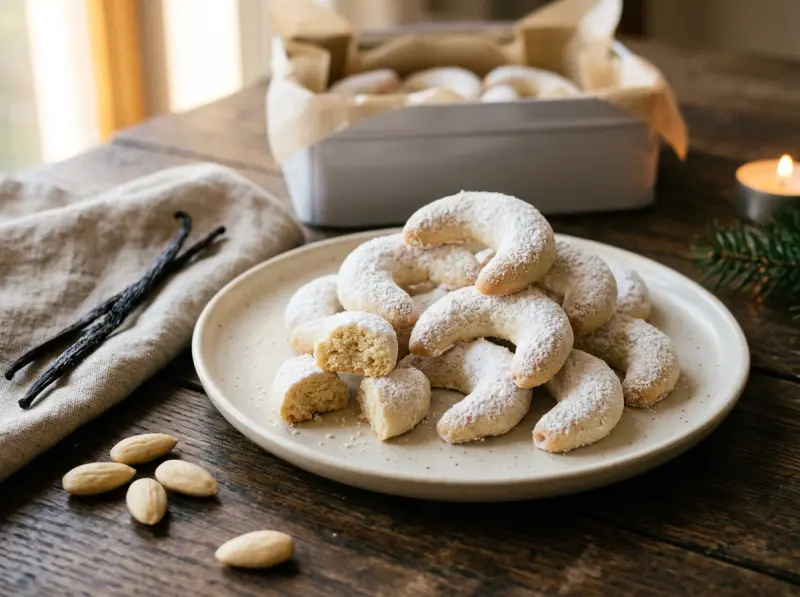
Vanillekipferl (German Vanilla Crescent Cookies)
Vanillekipferl are small crescent-shaped shortbread cookies made with ground almonds and rolled in vanilla sugar while still warm. They were first baked in Vienna, and today no Advent cookie tin in Germany or Austria is complete without them. The dough has no baking powder and only two egg yolks, so the crumb is sandy and melts on the tongue instead of crunching. The 75 minutes cover mixing, shaping and baking three trays; the dough also needs an hour in the fridge before shaping, and the cookies are at their best after two or three days in a tin. Makes about 60 pieces, five to a serving.
Ingredients
- 280 gplain flour
- 100 gground almonds
- 80 gpowdered sugar
- 1 pinchsalt
- 1 vanilla pod
- 220 gcold unsalted butter
- 2 egg yolks
- 80 gpowdered sugar
- 16 gvanilla sugar
Method
- Mix the dry ingredients. Put the flour, ground almonds, the first 80 g of powdered sugar and the salt into a wide bowl. Split the vanilla pod lengthwise, scrape out the seeds with the back of a knife and rub them into the flour with your fingertips so they do not stay in clumps. Keep the empty pod: it goes into the sugar jar later.
- Bring the dough together fast. Cut the cold butter into 1 cm cubes and add it with the egg yolks. Rub and press everything together with your hands for 2 to 3 minutes, only until no dry flour is left and the dough holds in one piece. Stop there. Every extra minute warms the butter, and warm butter gives greasy dough and crescents that spread flat in the oven.
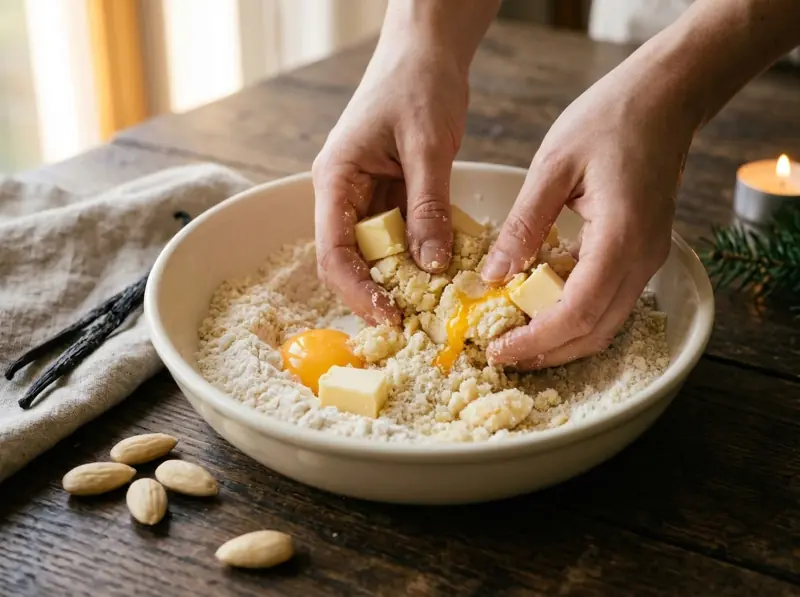
- Chill. Divide the dough in two, roll each half into a log about 3 cm thick, wrap and refrigerate for at least 1 hour, or overnight. The cold is what lets you bend the crescents without cracking them and keeps their shape in the heat.
- Heat the oven to 180°C top and bottom heat (160°C fan). Line two or three baking trays with paper. Stir the second 80 g of powdered sugar with the vanilla sugar in a shallow dish and set it next to the stove.
- Shape. Take one log out of the fridge and leave the other inside. Slice it into discs 1 cm thick, about 10 g each. Roll each disc under your fingers into a finger 5 to 6 cm long with thinner, tapered ends, then bend it into a crescent straight on the tray, 2 cm apart. If the dough cracks as you bend it, it is too cold: hold the piece in your palm for a few seconds. If it sticks and smears, it is too warm: back into the fridge for 10 minutes.
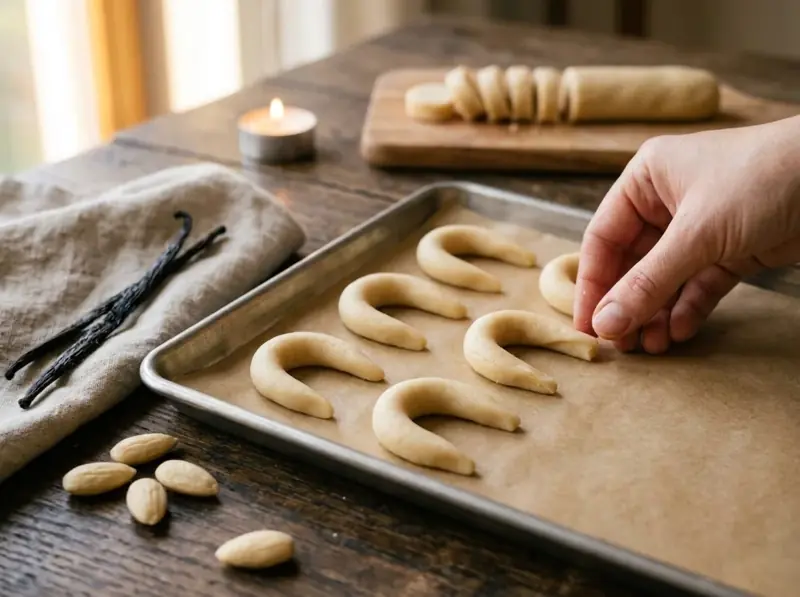
- Bake one tray at a time on the middle rack for 11 to 13 minutes. The crescents must stay pale: only the tips should turn light gold. Browned Vanillekipferl taste of toasted nuts and lose the melting texture they are made for.
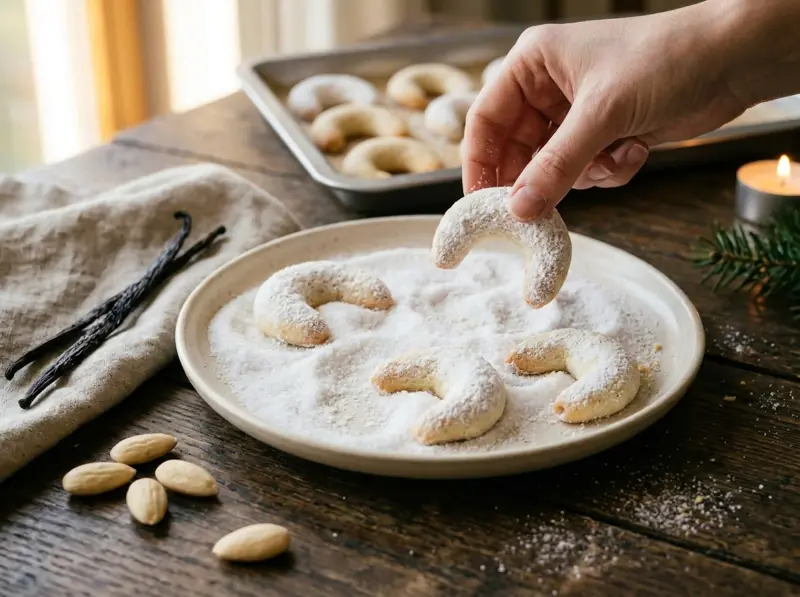
- Sugar them at the right moment. Leave the tray to stand for 2 to 3 minutes. Straight from the oven the cookies break at a touch; after ten minutes the sugar no longer sticks. Then roll them gently, a few at a time, in the vanilla sugar, or sift the sugar thickly over them on the tray if they feel fragile. Cool completely on a rack, dust once more and layer in a tin with baking paper between the layers.
FAQ
They were either too hot or handled too firmly. Straight from the oven the butter in the crumb is still liquid and the cookie has no structure, so it snaps at the thinnest point, usually the tips. Wait 2 to 3 minutes, until you can lift one with two fingers without it bending, then roll only three or four at a time in a shallow dish. If a batch still feels fragile, leave the cookies on the tray and sift the sugar over them through a fine sieve; you lose a little coating on the underside and keep every crescent whole.
The dough was too warm when it went in. Kneading longer than 2 to 3 minutes, shaping with warm hands or leaving the shaped tray standing in a hot kitchen all soften the butter, and it runs before the flour has set. Keep the second log in the fridge while you shape the first, and if the kitchen is warm, put the filled tray in the fridge for 10 minutes before baking. Too much sugar or butter measured by eye has the same effect, so weigh both.
Yes, swap them gram for gram. Ground hazelnuts give a darker, more strongly flavoured cookie that many German families prefer; walnuts are the traditional choice in parts of Austria and Bohemia and make the crumb even shorter, because they carry more oil. Grind the nuts fine but stop before they turn pasty, and chill the dough 30 minutes longer with walnuts. For a nut-free version replace the nuts with the same weight of flour plus 20 g of cornstarch; the taste is plainer but the texture holds.
In a tin in a cool room they keep 3 to 4 weeks, and they are better on day three than on day one. Store them on their own: next to Zimtsterne or gingerbread they pick up moisture and spice and go soft. The raw dough freezes well for up to 3 months as wrapped logs; thaw it overnight in the fridge and slice as usual. Baked Vanillekipferl can be frozen too, but freeze them without the sugar coating and roll them in fresh vanilla sugar after a few minutes in a 150°C oven.
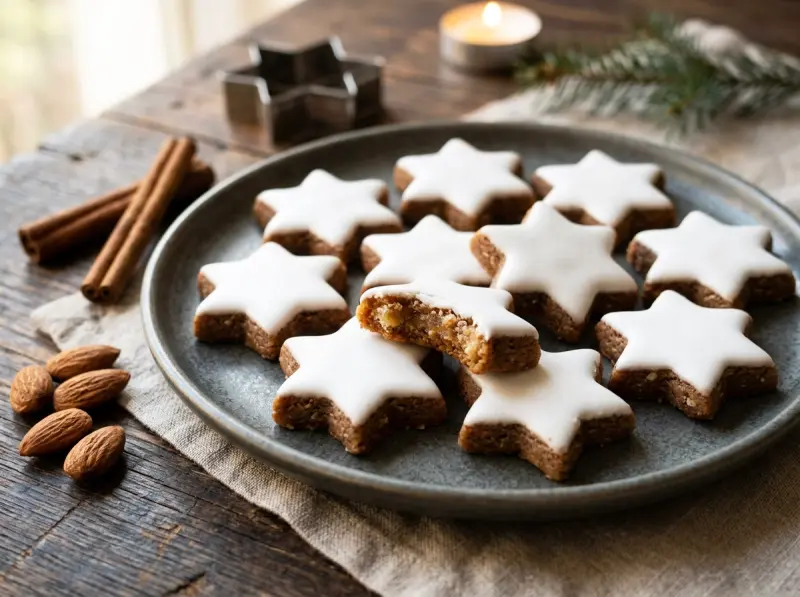
Vanillekipferl are a butter shortbread: flour, butter, nuts, almost no egg, shaped by hand and coated in vanilla sugar. Zimtsterne are the opposite, a flourless dough of almonds and meringue with a white glaze; Lebkuchen are honey and spice cakes, Spekulatius are thin spiced biscuits pressed in a mould. On a German Advent plate, the Bunter Teller, they sit side by side with a mug of mulled wine. The kipferl is the quickest of them to make and the first to disappear.
Rate this
Recipes by email
One letter a week: a recipe picked for your taste, plus whatever is new on the site. Unsubscribe in one click.
Welcome gift: Sergei's cookbook (e-book).
By subscribing you agree to the privacy policy.
Tell us what you like to cook (30 seconds) →Keep browsing
More dishes from the German archive — picked by overlap with what you're cooking now.

Join the conversation
Comments
No comments yet — be the first!