
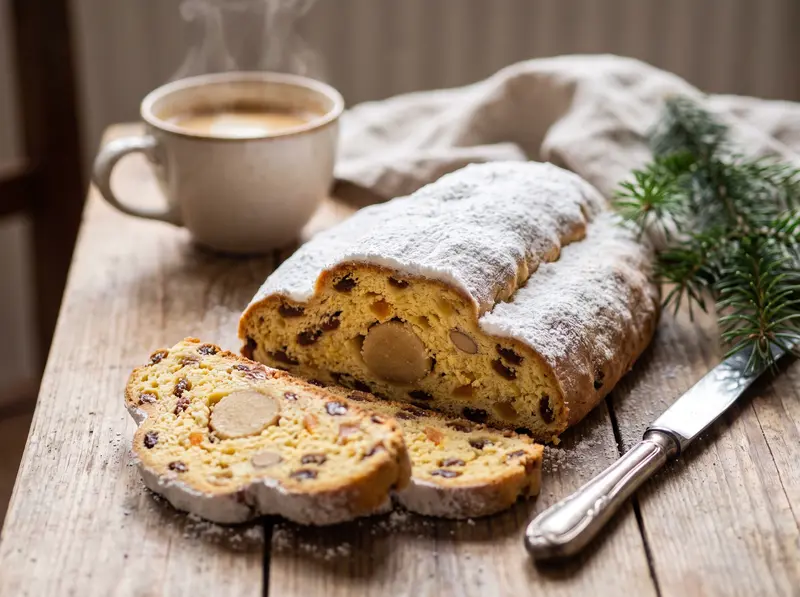
Christstollen (German Christmas Stollen)
Christstollen, also called Weihnachtsstollen or simply Stollen, is a German Christmas yeast loaf: a buttery Hefeteig packed with rum-soaked raisins, candied orange and lemon peel (Orangeat and Zitronat) and almonds, then soaked in melted butter and buried under powdered sugar. You knead the dough, fold it into the traditional ridge and bake it about 50 minutes, 10 at 200°C and the rest at 170°C; the loaf makes 16 slices. It is baked a few weeks before Christmas and left wrapped in foil in a cool place for two to three weeks so the fruit, rum and butter settle into the crumb, and neither the rising nor that maturing is counted in the time. Only loaves from Dresden and about a dozen nearby towns may be sold as Dresdner Stollen, so this is the home version.
Ingredients
- 500 gwheat flour (type 550)
- 100 mlmilk, lukewarm
- 30 gfresh yeast
- 60 gsugar
- 1 tbspvanilla sugar
- 1 pinchsalt
- 1 tsporganic lemon zest, finely grated
- 1 tspground cinnamon
- 0.5 tspground cardamom
- 0.5 tspground ginger
- 0.25 tspground nutmeg
- 200 gbutter, soft
- 1 egg, medium
- 200 graisins
- 75 gcandied orange peel (orangeat)
- 75 gcandied lemon peel (zitronat)
- 100 gblanched almonds, chopped
- 4 tbspdark rum
- 100 gbutter, for brushing
- 150 gpowdered sugar
Method
- The evening before (or at least an hour ahead), put the raisins, Orangeat, Zitronat and chopped almonds in a bowl, pour over the rum and stir. Cover and stir once or twice more. Dry fruit would pull moisture out of the dough and leave the crumb dry, while soaked fruit stays plump and stays juicy through weeks of storage.
- Warm the milk until lukewarm, crumble the fresh yeast into it and stir in 1 tablespoon of the sugar and 100 g of the flour. Cover and leave for 15 minutes until the surface is bubbly. This small starter (Vorteig) proves the yeast is alive before you commit 200 g of butter to the dough, which slows yeast down.
- Add the remaining 400 g flour, the rest of the sugar, vanilla sugar, salt, lemon zest, cinnamon, cardamom, ginger and nutmeg to the starter, then the egg and the soft butter. Knead with a dough hook for 8 to 10 minutes, until the dough is smooth, shiny and pulls away from the bowl; at least 5 minutes is the minimum. Cover and leave in a warm spot for about 1 hour. Because of the butter it rises slowly and will grow noticeably but not double.
- Tip the soaked fruit and almonds into a sieve for a minute to drain the excess rum, then knead them into the dough by hand for only 1 to 2 minutes, until spread through. Longer kneading smears the fruit and turns the dough grey and wet. Cover and rest another 30 minutes.
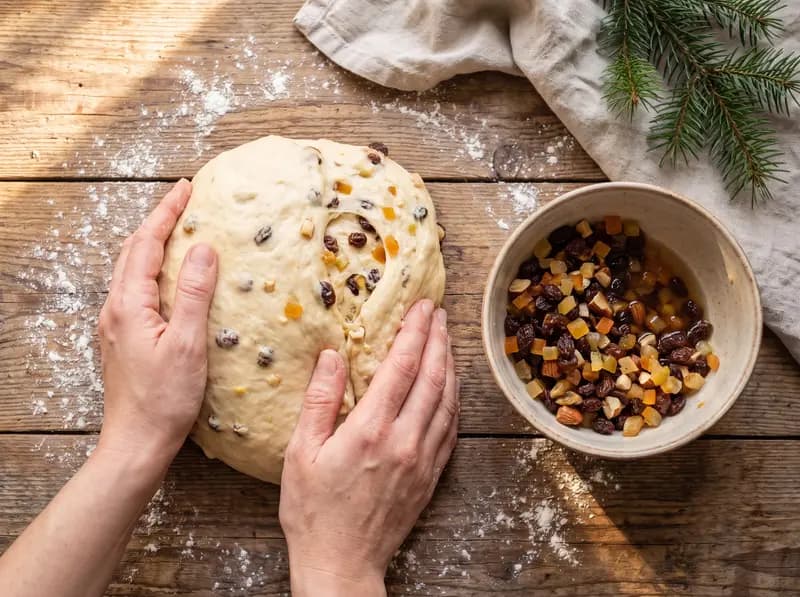
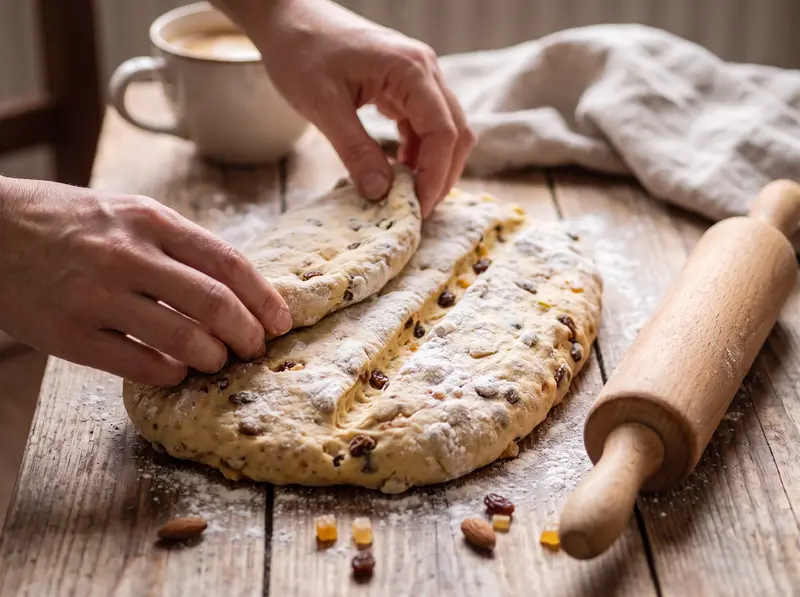
- On a floured surface pat the dough into an oval of about 30 × 22 cm. Press a groove lengthwise with a rolling pin, slightly off centre, then fold the smaller side over the larger, stopping about a finger's width short of the far edge, so the loaf keeps its typical ridge. Press the seam lightly, lift onto a baking tray lined with baking paper and leave 30 minutes. If any raisins poke out of the surface, tuck them in: they burn first.
- Heat the oven to 200°C (180°C fan) with the rack in the lower third. Bake 10 minutes, turn the oven down to 170°C (150°C fan) and bake 40 minutes more, until the crust is deep golden and a wooden skewer pushed in from the side comes out with no wet dough. If the top darkens before that, lay foil on loosely for the last 15 minutes.
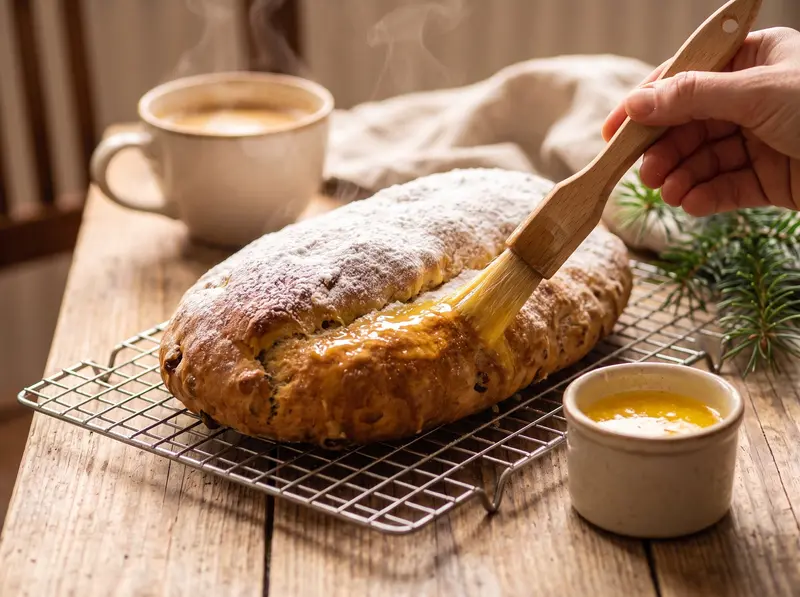
- Melt the 100 g butter. As soon as the stollen leaves the oven, brush it all over, sides and underside included, with about half; wait 5 minutes for it to soak in, then brush on the rest. Sift half the powdered sugar over the hot stollen so it sticks to the butter, let it cool completely, then sift the rest thickly over the top. Wrap in aluminium foil and keep in a cool, dark place for 2 to 3 weeks before cutting: the butter-and-sugar crust seals in moisture while the flavours spread through the crumb.
FAQ
You can eat it the day it is baked, but it will taste like a plain sweet fruit bread, because the butter and sugar coat has not yet worked into the crumb and the rum-fruit flavour has not spread. German recipes ask for at least 2 weeks of resting, wrapped in foil in a cool place; Stollen keeps for 3 to 4 weeks, and the flavour improves the longer it lies. So bake it around the end of November if you want to cut it at Christmas. Do not put it in a warm room while it rests.
Usually the dough was too soft or the fruit too wet. Drain the soaked fruit in a sieve before kneading it in, and add flour a tablespoon at a time if the dough sticks to your hands: it should be soft but hold its shape. Also do not skip the 30-minute rest after shaping, and bake on baking paper on a tray, because a Stollen has no pan to hold it. A hot start of 200°C for the first 10 minutes sets the crust before the butter in the dough melts and lets the loaf slump.
Yes, with small changes. Instead of rum, soak the raisins and almonds in the same amount of warm orange juice or apple juice; the fruit softens the same way, though the flavour is less deep. If you cannot find Zitronat, use 150 g Orangeat in total, or replace it with chopped dried apricots. For a Christstollen without any candied peel, use extra raisins, but it then tastes more like a fruit loaf than a traditional Stollen.
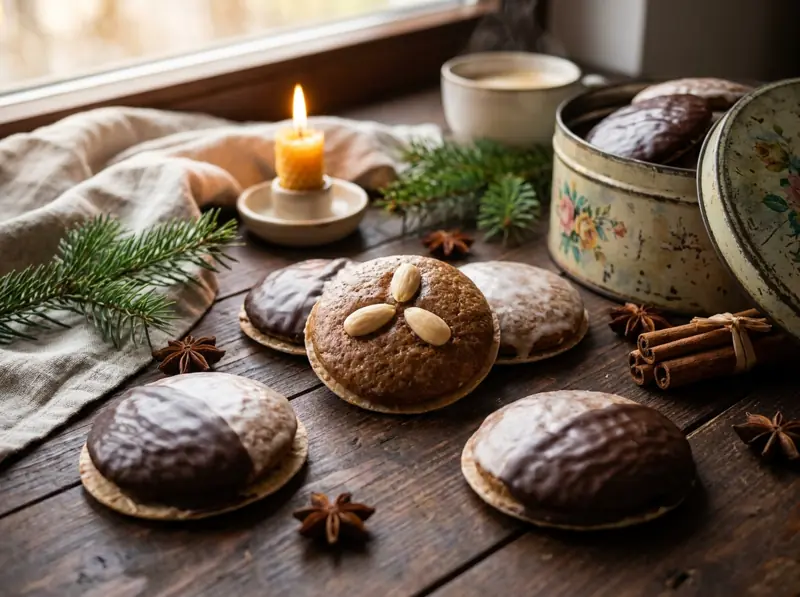
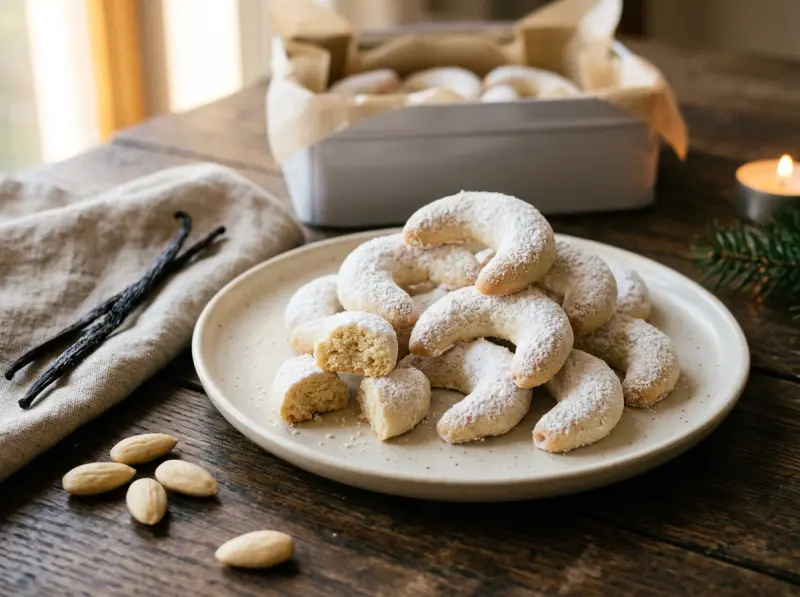
Let the sugar coat cool completely, then wrap the whole loaf in aluminium foil, or in cling film and foil, and store it in a cool, dark place. It keeps 3 to 4 weeks that way. After cutting, wrap the cut end back up and slice from the same end each time. Plan the Advent baking backwards: Stollen first, because it needs the longest rest, then Christmas cookies such as Lebkuchen, and Vanillekipferl a few days before you need them, since they taste best after two or three days in a tin.
No: the names Dresdner Stollen, Dresdner Christstollen and Dresdner Weihnachtsstollen are protected geographical indications (since 2010) and may only be used for loaves baked in Dresden and about twelve surrounding towns under the rules of the Schutzverband Dresdner Stollen, which also awards a golden seal showing August the Strong on horseback. The rules require per 100 parts flour at least 50 parts butter, 65 parts raisins or sultanas, 20 parts Orangeat and Zitronat, and 15 parts almonds, and forbid margarine. This recipe has 40 parts butter and 40 parts raisins, so it is a home Christstollen in the same family, not a Dresdner.
Rate this
Recipes by email
One letter a week: a recipe picked for your taste, plus whatever is new on the site. Unsubscribe in one click.
Welcome gift: Sergei's cookbook (e-book).
By subscribing you agree to the privacy policy.
Tell us what you like to cook (30 seconds) →Keep browsing
More dishes from the German archive — picked by overlap with what you're cooking now.

Join the conversation
Comments
No comments yet — be the first!