Japan · Cereal and Pasta Dishes
Toshikoshi Soba (Japanese New Year's Eve Noodles)
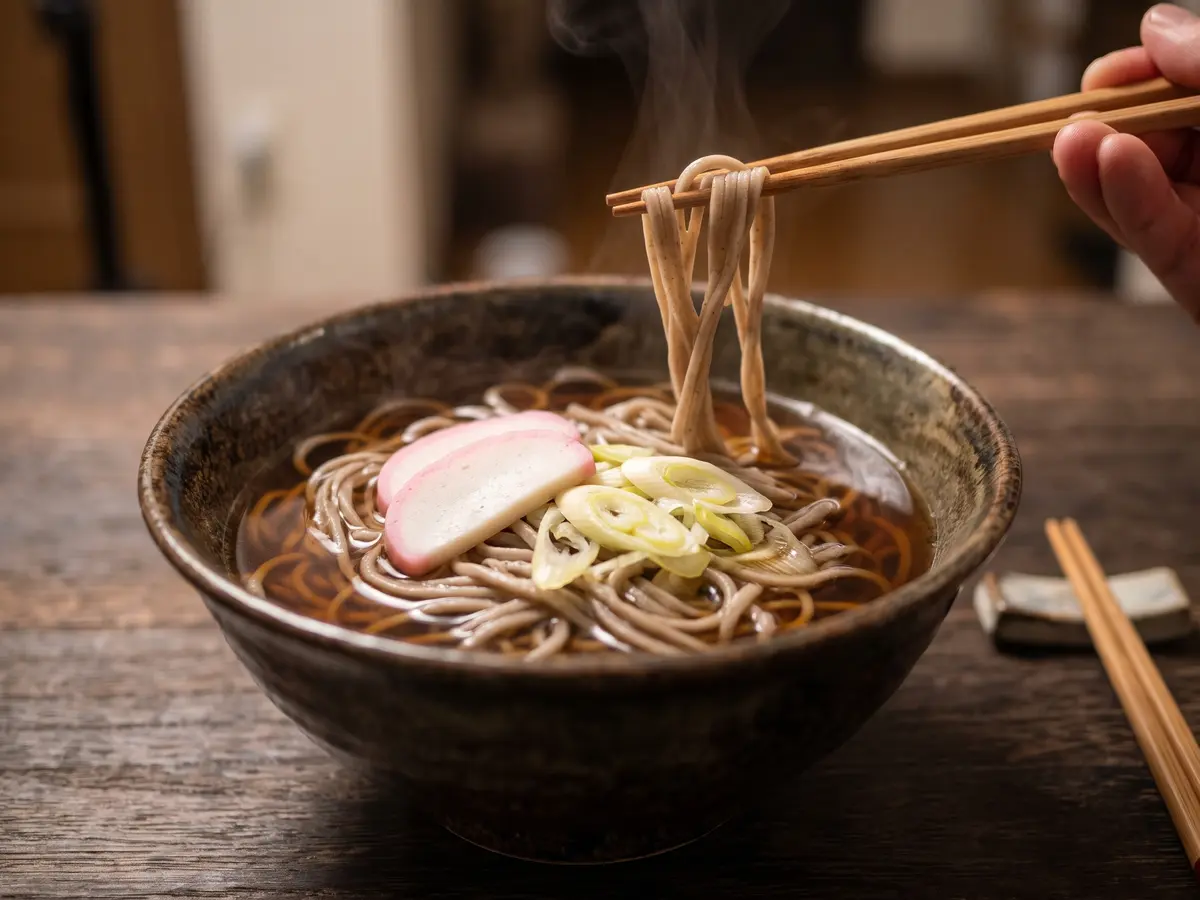
Toshikoshi soba (年越しそば, "year-crossing soba") is the bowl of buckwheat noodles Japanese families eat on New Year's Eve, 31 December, before the new year begins.
Ingredients
- water5200 ml
- kombu10 g
- bonito flakes20 g
- kamaboko80 g
- negi100 g
- soy sauce100 ml
- mirin100 ml
- soba noodles360 g
Method
- 1Pour 4000 ml of the water into your largest pot, one that holds about 6 litres, cover it and set it over high heat. That much water takes a while to boil, so it goes on first and heats while you make the dashi and the broth.
- 2Put the 10 g of kombu and the remaining 1200 ml of cold water in a 20 cm saucepan and heat it slowly on medium-low, about 10 minutes. Slow heating draws the flavour out of the kelp. When small bubbles start rising from the bottom of the pan, just before it boils, lift the kombu out. Bring the water to the boil, add the 20 g of bonito flakes and turn the heat down to low, so the flakes only just move about in the water, for 4 to 5 minutes. Line a fine sieve with a paper towel, set it over a large bowl and pour the dashi through. Don't press the flakes, because squeezing them adds off flavours. You should have about 1 litre of clear amber dashi.
- 3While the dashi simmers, prepare the toppings. Slide a knife under the 80 g of kamaboko to free it from its little wooden board and cut it into 8 slices. Cut the 100 g of negi in half lengthwise, then on the diagonal into pieces 5 to 6 mm wide. Cut like this, the negi keeps a little bite and clings to the noodles.
- 4Rinse the saucepan, pour the dashi back in and add the 100 ml of soy sauce and the 100 ml of mirin. Heat it on medium. When it starts to bubble, add all the negi. Once it boils again, turn the heat to low and let it bubble gently for 1 to 2 minutes, which also cooks off the alcohol in the mirin. The negi should be soft and still bright. Turn off the heat. The broth is made before the noodles because soba cooks fast and shouldn't sit around waiting for it.
- 5Check that the big pot is at a full rolling boil. Add the 360 g of dried soba noodles, spreading them out as they go in, and loosen them straight away with long chopsticks so they don't clump. Don't salt the water. Keep it boiling for the time printed on the package. If the package gives a separate time for hot soba, use that one. If the water foams up towards the rim, turn the heat down a little instead of adding cold water, so the temperature stays steady. When the time is up, bite a strand: it should be cooked through, with no hard white core.
- 6Lift the noodles out with a large mesh strainer into a colander, and leave the pot of water on high heat with the lid on. Rinse the noodles under cold running water, rubbing them gently with your hands until they no longer feel slippery, then drain them well. Rinsing washes off the surface starch, so the broth stays clear and the strands don't stick together.
- 7Bring the broth back to the boil. Put a quarter of the noodles in the mesh strainer, dip them into the boiling noodle water for a few seconds until they are hot again, shake off the water and tip them into a large noodle bowl. Do the same with the rest. Pour about 300 ml of hot broth with its negi over each bowl, loosen the noodles at once with chopsticks so they don't stick together, lay 2 slices of kamaboko on top and serve straight away. Afterwards, pour the noodle water away. Buckwheat allergen dissolves into the water and survives boiling, so never cook udon or anything else in it for someone with a buckwheat allergy.