
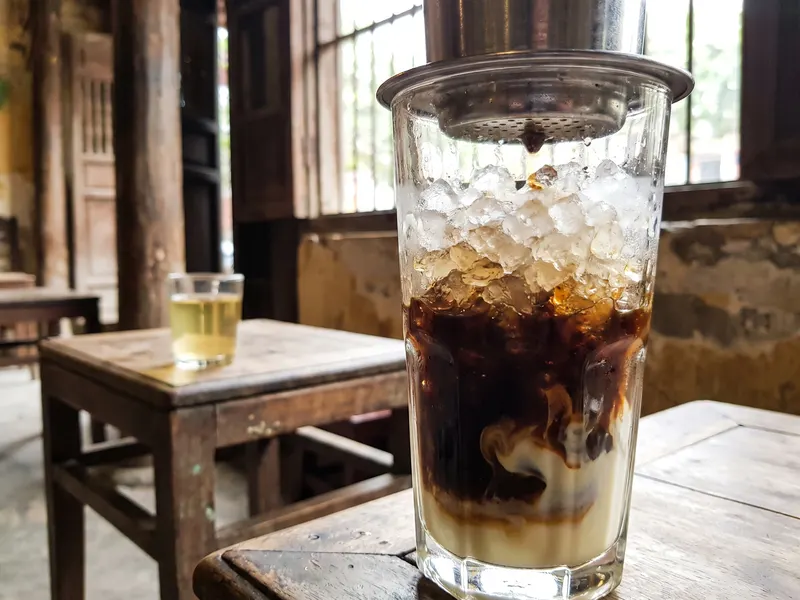
Caffè Ghiacciato Vietnamita (Cà Phê Sữa Đá)
Cà phê sữa đá — caffè, latte, ghiaccio — è il risultato dell'incontro tra la cultura del filtro coloniale francese e il pragmatismo vietnamita. Il latte fresco scarseggiava così il latte condensato divenne lo standard. I chicchi di robusta, abbondanti negli Altopiani Centrali, danno al caffè la sua caratteristica forza e leggerezza amara. Il filtro phin rallenta l'infusione a un gocciolio deliberato concentrando il sapore.
Ingredienti
- 20 gcaffè vietnamita tostato scuro
- 90 mlacqua molto calda
- 2 cucchiaiolatte condensato zuccherato
- 1 filtro phin
- 1 bicchiereghiaccio
Preparazione
- Prepara il phin. Sciacqua il filtro con acqua calda — questo scalda il metallo e aiuta il caffè a sbocciare. Metti il caffè macinato nella camera del phin. Batti delicatamente per livellare e posiziona la piastra premitore sopra. La piastra poggia sul caffè sotto il proprio peso — non avvitarla stretta ma non lasciarla libera.

- Aggiungi il latte condensato. Metti il latte condensato in un bicchiere resistente al calore. Il caffè gocciolerà direttamente sopra. Questo è l'ordine tradizionale: prima il latte, poi il caffè. Gli strati si vedono nel bicchiere mentre il caffè gocciola sul latte condensato. Due cucchiai è il punto di partenza; il caffè di strada vietnamita è spesso molto più dolce.
- Bloom e infusione. Posiziona il phin sul bicchiere con il latte condensato. Versa circa 20 ml di acqua calda (un cucchiaio abbondante) sul caffè e aspetta 30 secondi. Questo è il bloom. Poi versa lentamente i 70 ml rimanenti fino al bordo della camera. Metti il coperchio. Il caffè inizierà a gocciolare. Un phin ben calibrato gocciola circa una goccia al secondo — l'infusione completa richiede 4–6 minuti.

- Mescola e versa sul ghiaccio. Quando il gocciolio si ferma, rimuovi il phin. Mescola energicamente il caffè e il latte condensato finché non sono ben combinati — il latte condensato è denso e si deposita sul fondo, mescola bene. Riempi un bicchiere alto di ghiaccio. Versa la miscela calda sul ghiaccio.

- Servi e bevi subito. Il caffè ghiacciato vietnamita si beve freddo e senza indugio — il ghiaccio lo diluisce leggermente sciogliendosi ed è parte dell'equilibrio. Un bicchiere d'acqua fredda a lato è la tradizione. Per la versione calda (cà phê sữa nóng): salta il ghiaccio e bevi direttamente dal bicchiere di infusione.
Domande
Tre cose: il chicco, il metodo di infusione e il dolcificante. Il caffè vietnamita usa la robusta, più forte e amara dell'arabica. Il phin produce un concentrato a goccia lenta — non espresso, non filtro, qualcosa nel mezzo. Il latte condensato sostituisce il latte fresco e lo zucchero aggiungendo una dolcezza caramellata che il latticino fresco non dà.
Il phin è un piccolo filtro a goccia in acciaio inox per una tazza — camera, piastra premitore e coperchio. Costa circa 5–10€, facile da trovare online, dura a lungo. Non è obbligatorio — va bene la French press o l'espresso — ma il phin dà un carattere di infusione leggermente diverso.
Tecnicamente sì, ma non sarà caffè vietnamita. Il latte condensato si caramella nel processo di produzione — quel sapore non si ottiene mescolando latte evaporato con zucchero. Se vuoi meno dolcezza usa meno latte condensato invece di sostituirlo. Il latte condensato di cocco è una buona alternativa senza latticini.
In ordine di preferenza: Trung Nguyen (in supermercati asiatici e online), Café du Monde (miscela con cicoria di New Orleans, ottimo sostituto), qualsiasi robusta o miscela tostatura scura, infine arabica tostatura scura.
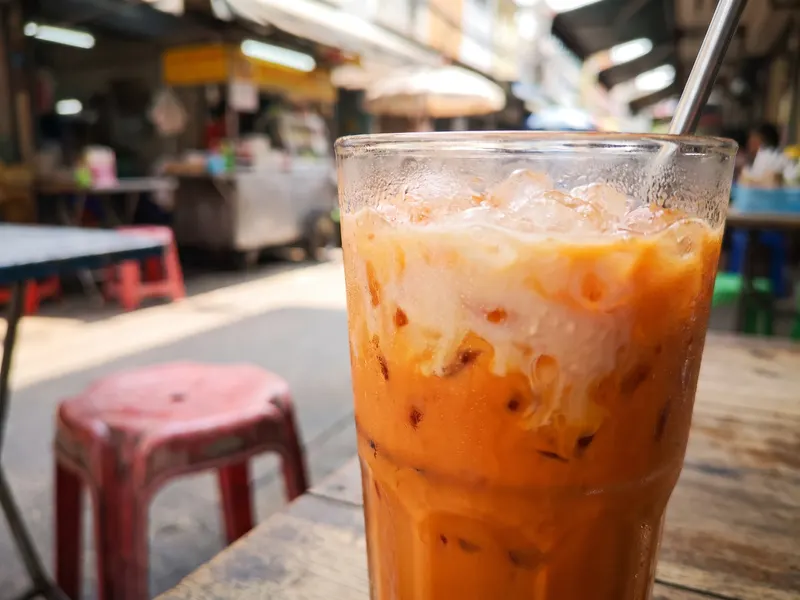
Cà phê sữa nóng: versione calda senza ghiaccio. Cà phê đen đá: caffè nero ghiacciato senza latte condensato. Cà phê trứng (caffè all'uovo): caffè con densa spuma di tuorlo d'uovo montato con zucchero — simile al tiramisù. Cà phê cốt dừa: caffè al cocco. Tutti partono dalla stessa base concentrata. Se ti piace la dolcezza del latte condensato in un'altra forma, prova il tè freddo thailandese, un'altra bevanda ghiacciata del Sud-Est asiatico a base di latte condensato.
Vota
Ricette via email
Una lettera a settimana: una ricetta scelta per i tuoi gusti e le novità del sito. Puoi disattivarla con un clic.
In regalo: il libro di ricette di Sergei (e-book).
Premendo il pulsante accetti l’informativa sulla privacy.
Dicci cosa ti piace cucinare (30 secondi) →Continua a sfogliare
Altri piatti dall’archivio — scelti per sovrapposizione con quello che stai cucinando ora.

Partecipa alla discussione
Commenti (1)
練乳の甘さとコーヒーの苦みのバランスが絶妙。暑い日にぴったり。フィルターはAmazonで買えます