
Pistachio Lemon Bars
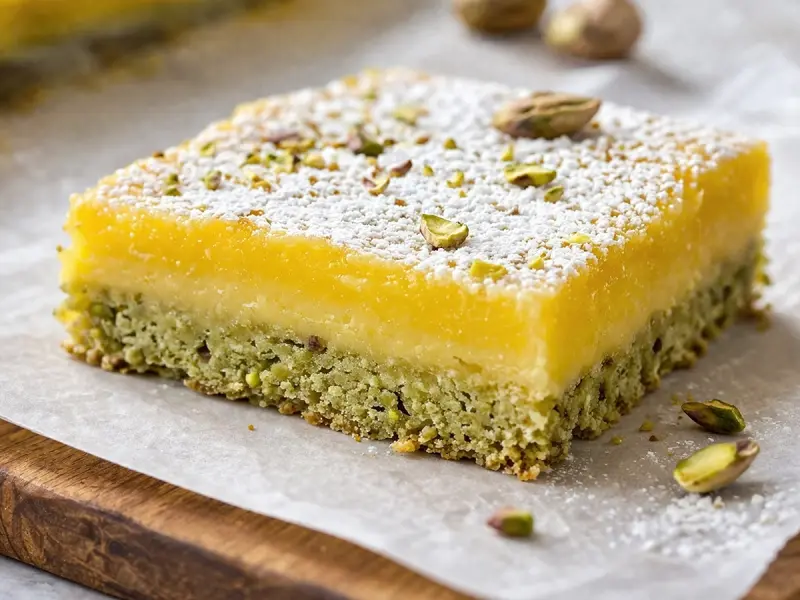
Lemon bars are already one of the better things you can do with eggs and citrus. The pistachio shortbread crust makes them something else. Ground pistachios replace part of the flour, giving the base a nutty, slightly green quality and a more interesting texture than plain shortbread — sandy but with more flavor, and with a subtle saltiness that works against the bright lemon filling. The filling is a simple lemon curd baked directly over the prebaked crust: eggs, sugar, fresh lemon juice, a little flour to help it set. It sets to a glossy, slightly wobbly layer that cuts cleanly once cold. Powdered sugar dusted over the top just before serving, and a few chopped pistachios for contrast. These are spring dessert food, but they'd make sense any time of year.
Ingredients
- 100 graw unsalted shelled pistachios
- 180 gall-purpose flour
- 60 gicing sugar
- 0.5 tspfine salt
- 0.25 tspground cardamom
- 170 gunsalted butter
- 4 large eggs
- 300 gcaster sugar
- 120 mlfresh lemon juice
- 2 tbsplemon zest
- 30 groughly chopped pistachios
- 2 tbspicing sugar
Method
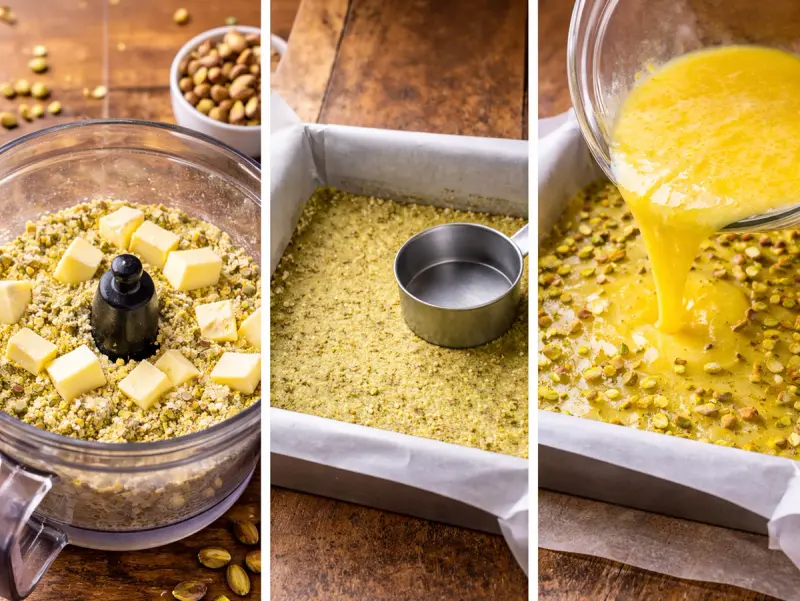
- Make the pistachio shortbread crust. Toast the pistachios in a dry pan over medium heat for 3 to 4 minutes, shaking occasionally, until fragrant and barely darker. Let them cool completely — hot nuts will melt the butter and produce a greasy dough. Preheat the oven to 175°C (350°F). Line a 23 cm (9-inch) square baking tin with two strips of parchment paper going in opposite directions, with overhang on all sides — this makes lifting the bars out later easy. In a food processor, pulse the cooled pistachios with the icing sugar until they're finely ground — stop before they turn into a paste. Add the 150 g of flour, salt, and cardamom and pulse to combine. Add the cold butter pieces and pulse until the mixture looks like damp sand and clumps when you press it between your fingers. Do not over-process. Tip the mixture into the lined tin and press it firmly and evenly into the base — the flat bottom of a measuring cup or glass works well for getting the surface even.
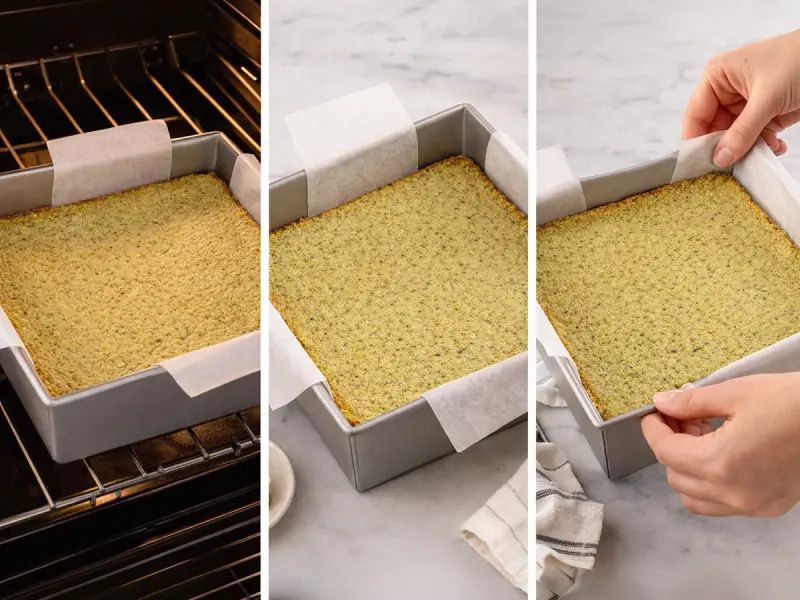
- Blind bake the crust. Bake the crust at 175°C for 18 to 22 minutes until it is pale golden at the edges and feels dry and just set in the center. It won't be deeply browned — that's fine, it will continue cooking when the filling goes in. While the crust bakes, make the filling so it's ready to pour on as soon as the crust comes out.
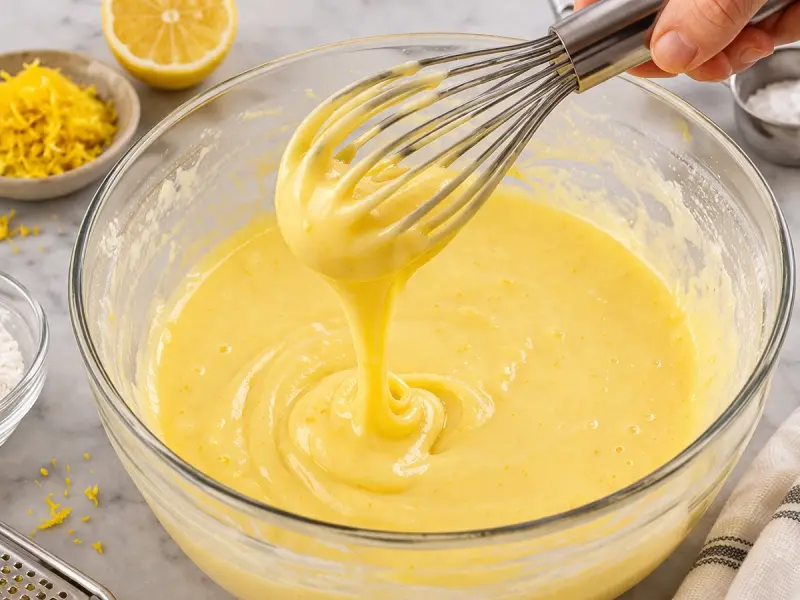
- Make the lemon filling. In a large bowl, whisk the eggs and caster sugar together vigorously for 1 minute until pale and well combined. Whisk in the lemon juice and lemon zest. Finally, add the remaining 30 g of flour and whisk until completely smooth — no lumps. The filling will be liquid and quite runny; this is correct. Do not use a blender or food processor for the filling — over-mixing creates bubbles that will bake to a pitted surface.
- Bake the bars. As soon as the crust comes out of the oven, pour the lemon filling directly over the hot crust. Scatter the roughly chopped pistachios evenly over the surface of the filling. Immediately return to the oven and bake for 20 to 25 minutes, until the filling is just set — it should have a very slight wobble in the very center when you gently shake the tin, but the edges should be firm and the surface should no longer look liquid or shiny-wet. It will set more as it cools.
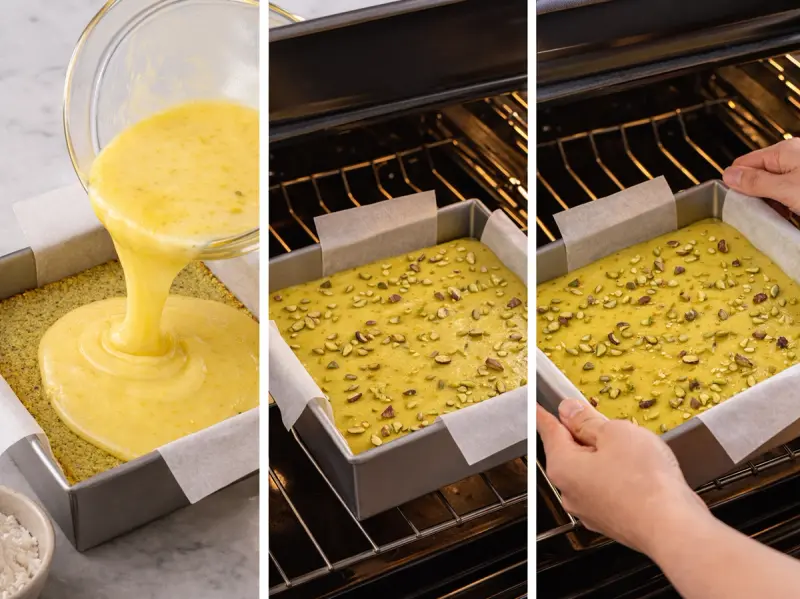
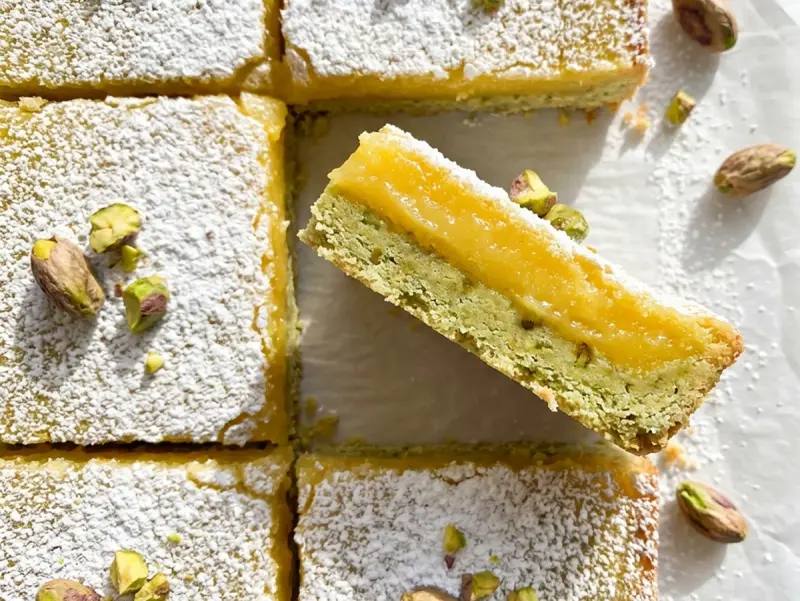
- Cool, chill, cut and serve. Allow the bars to cool completely in the tin at room temperature, then refrigerate for at least 2 hours — ideally overnight. Cold bars cut cleanly. Use the parchment overhang to lift the slab out of the tin and place on a cutting board. Dust generously with icing sugar just before serving (dusting too early causes the sugar to dissolve into the surface). Cut into 16 squares with a large, sharp knife, wiping the blade clean between cuts for neat edges. Store covered in the refrigerator for up to 4 days.
FAQ
Lumps in lemon bar filling are almost always caused by one of two things: cooking the filling before baking (this recipe pours it raw over the crust and bakes it, which avoids curdling), or not whisking the eggs and sugar thoroughly before adding the lemon juice. If egg yolk is not fully dispersed in the sugar before acid is added, the proteins can coagulate into visible lumps. Whisk eggs and sugar together for a full minute until pale before adding anything else. If small lumps appear in the final filling, passing it through a fine-mesh sieve before pouring will catch them.
You can, but reduce the salt in the crust to a pinch rather than 1/2 teaspoon, and be aware that the overall saltiness will be harder to control. The specific character of unsalted pistachios — their mild, slightly sweet, green flavor — comes through better in the crust when you can control the salt separately. Roasted pistachios also work, but skip the toasting step if they're already roasted. Avoid brightly coloured, artificially flavoured pistachio products.
Hot crust = immediate contact heat that begins setting the bottom of the liquid filling the moment it touches. This prevents the filling from slowly absorbing into the shortbread, which would make the base soggy rather than crisp. The principle is similar to par-baking a pie crust before adding a wet filling: you want the barrier between crust and filling to be as set as possible before they meet. Pull the crust from the oven, pour the filling, put it straight back in — the transition should take 30 seconds or less.
Three things: make sure the bars are completely cold from the refrigerator before cutting; use a large, sharp chef's knife rather than a serrated knife or thin knife; and wipe the blade clean between every single cut with a damp cloth. The cold temperature keeps the lemon curd firm enough not to smear. The clean blade means each cut is fresh rather than dragging the previous cut's residue. For very neat bars, score all the cut lines lightly with the knife first, then make the full cuts. The icing sugar should go on last — after cutting.
The pistachio shortbread crust and lemon filling are a flexible base. Replace lemon with lime for a slightly more tropical, slightly more bitter version. Use Meyer lemon juice for a sweeter, more floral result. Add a tablespoon of rosewater to the filling for a Middle Eastern-inflected bar. Replace the cardamom in the crust with vanilla — subtler but still good. For the topping: a scattering of dried rose petals with the pistachios, or a drizzle of white chocolate over the cooled bars before the icing sugar. The bars also work in a 23 x 33 cm (9 x 13 inch) pan at the same temperatures, baking the crust for 20 to 22 minutes and the filled bar for 22 to 28 minutes.
Rate this
Recipes by email
One letter a week: a recipe picked for your taste, plus whatever is new on the site. Unsubscribe in one click.
Welcome gift: Sergei's cookbook (e-book).
By subscribing you agree to the privacy policy.
Tell us what you like to cook (30 seconds) →Keep browsing
More dishes from the American archive — picked by overlap with what you're cooking now.
Join the conversation
Comments (1)
The pistachio in the shortbread crust is what makes these different from regular lemon bars. Grind the nuts fine but not to butter — you want sandy texture, not paste. The lemon curd layer should jiggle slightly when you pull them from the oven; it sets as it cools. Dust with powdered sugar only after they're completely cold.