

Patatas Bravas
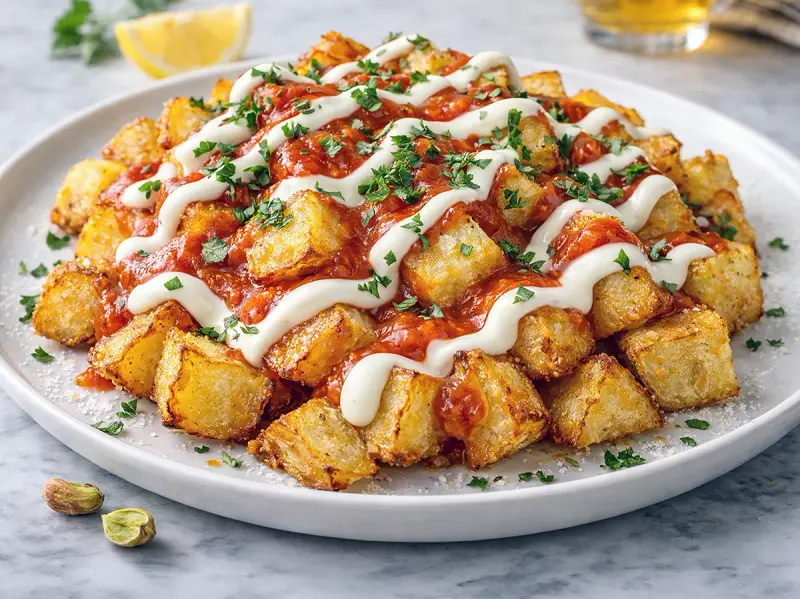
Le patatas bravas — letteralmente 'patate coraggiose' — sono uno dei tapas più ordinati in Spagna. Il concetto è semplice: patate croccanti fritte o arrostite con una salsa affumicata e speziata chiamata salsa brava e un filo di aioli all'aglio. Le patate necessitano di due cose: un interno soffice e una crosta croccante che regga sotto la salsa. Il trucco del bicarbonato nell'acqua di cottura rende la superficie ruvida e migliora drasticamente la croccantezza.
Ingredienti
- 800 gpatate ceroso o tutto uso tagliate a pezzi da 3 cm
- 1 cucchiainobicarbonato di sodio
- 5 cucchiaioolio d'oliva (2 cucchiai per la salsa, 3 per arrostire)
- 1 cucchiainosale fino più a piacere
- 1 cipolla media finemente
- 3 aglio 2 per la salsa 1 per l'aioli
- 2 cucchiainopaprika dolce affumicata
- 0.5 cucchiainopaprika piccante affumicata o cayenna
- 400 gpomodori pelati in scatola
- 1 cucchiainoaceto di Jerez o di vino rosso
- 0.5 cucchiainozucchero
- 120 gbuona maionese
- 1 cucchiaiosucco di limone fresco
- 2 cucchiaioprezzemolo fresco a foglia piatta
- facoltativoolio d'oliva in più per friggere in padella, uno strato di 1 cm
Preparazione
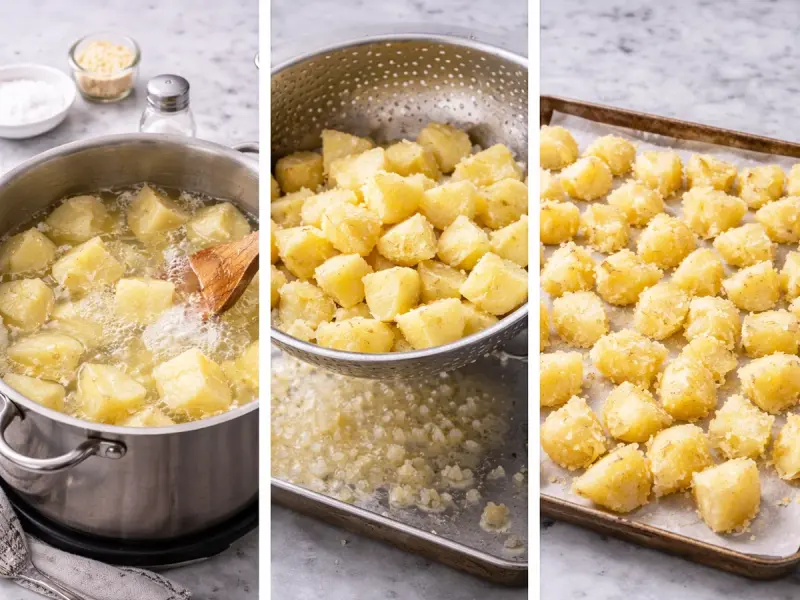
- Sbollentare le patate con il bicarbonato. Tagliare a pezzi grandi irregolari di circa 3 cm. Portare a ebollizione acqua ben salata con il bicarbonato. Aggiungere le patate e cuocere 5–7 minuti — devono essere tenere ai bordi ma sode al centro. Scolare in un colino, rimettere nella pentola calda e scuotere vigorosamente per 30 secondi. Questo rende ruvida la superficie esterna creando uno strato amidaceo che si croccantizza spettacolarmente in forno. Stendere su un piatto e lasciare asciugare al vapore 5 minuti.
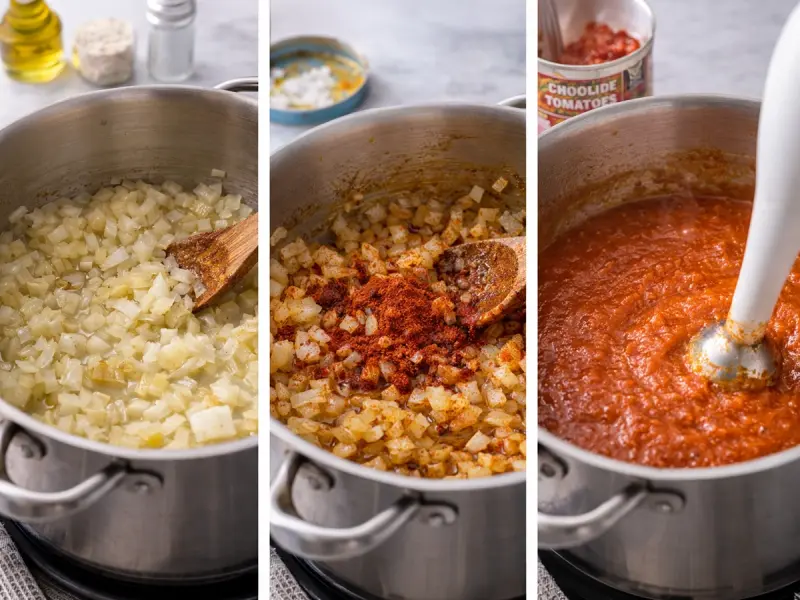
- Fare la salsa brava. Scaldare 2 cucchiai d'olio in una casseruola a fuoco medio. Aggiungere la cipolla con un pizzico di sale e cuocere 7–8 minuti fino a che è morbida e leggermente dorata. Aggiungere 2 spicchi d'aglio tritati e cuocere 1 minuto. Aggiungere entrambe le paprika e mescolare per 30 secondi. Aggiungere i pomodori, l'aceto e lo zucchero. Portare a ebollizione e cuocere 15 minuti senza coperchio fino ad addensarsi. Frullare con frullatore a immersione. Assaggiare e regolare.
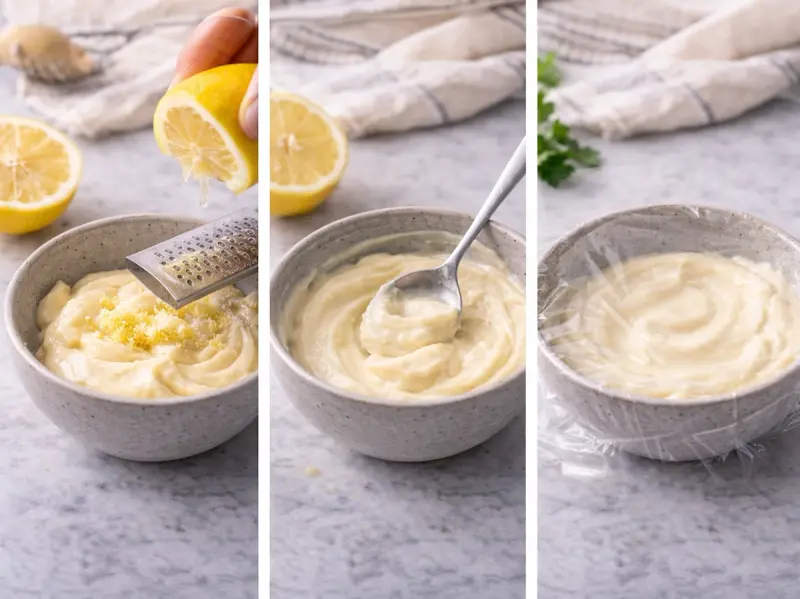
- Fare l'aioli all'aglio. Mescolare la maionese con lo spicchio d'aglio rimasto (finemente grattugiato), il succo di limone e un pizzico di sale. Coprire e refrigerare. Si può fare fino a 3 giorni prima.
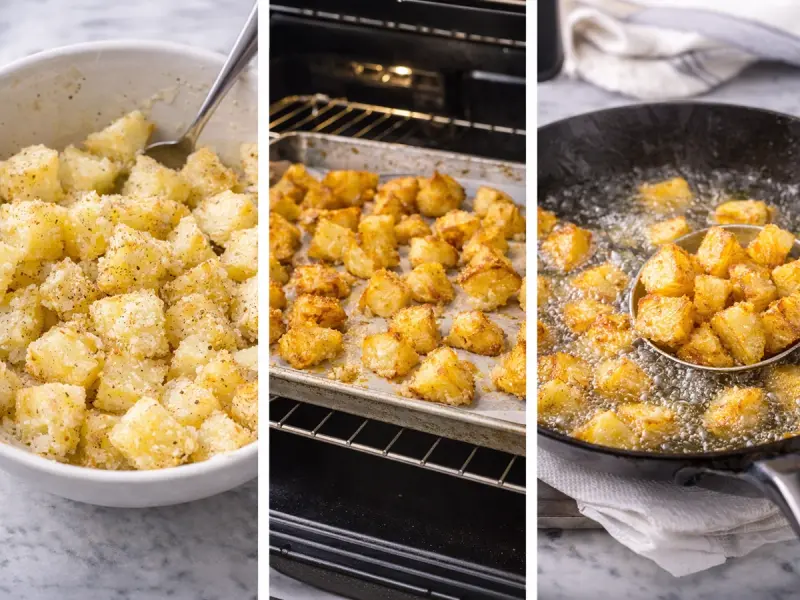
- Arrostire o friggere le patate. In forno: preriscaldare a 220°C. Condire le patate con i 3 cucchiai d'olio rimasti e sale. Stendere in un unico strato su una grande teglia — senza sovraffollare. Arrostire 30–35 minuti girando a metà. In padella: al posto dei 3 cucchiai usare l'olio in più; scaldare uno strato di 1 cm d'olio in una padella pesante a fuoco alto. Friggere in porzioni 8–10 minuti. Scolare su carta assorbente e salare subito.
- Servire. Trasferire le patate calde e croccanti in un piatto. Coprire generosamente con la salsa brava calda. Aggiungere l'aioli a zigzag o a cucchiaiate. Cospargere il prezzemolo. Servire immediatamente. Mettere altra salsa a parte. Tradizionalmente è un tapas — condiviso a tavola con le bevande.
Domande
La salsa brava deve la sua profondità affumicata quasi interamente al pimentón de la Vera — prodotto in Extremadura dove i peperoni vengono essiccati al fumo di quercia. La paprika normale darà una salsa piatta. Ci sono due tipi: dolce e piccante. Questa ricetta usa principalmente dolce con controllo separato del piccante. Conservare in contenitore ermetico.
Tradizionalmente si friggono. La frittura dà il risultato più autentico: una crosta uniformemente dorata e croccante. Arrostire è un'alternativa pratica con meno olio. Con la tecnica del bicarbonato il risultato arrostito è notevolmente più croccante del normale. Se conta la croccantezza: friggere. Se conta la comodità: arrostire ad alta temperatura senza sovraffollare.
C'è un vero dibattito. A Madrid la salsa brava classica spesso si fa senza pomodoro: olio, farina, paprika, aglio e brodo — più simile a una salsa addensata. A Barcellona e in Catalogna la versione con pomodoro è più comune. Entrambe sono autentiche regionalmente.
Le salse sì — fino a 2 giorni. La salsa brava migliora il giorno dopo. Scaldare prima di servire. Le patate sono meglio fresche: sbollentare fino a 2 ore prima, lasciare asciugare a temperatura ambiente scoperte, arrostire o friggere appena prima. Con la salsa sopra la croccantezza dura circa 20 minuti.
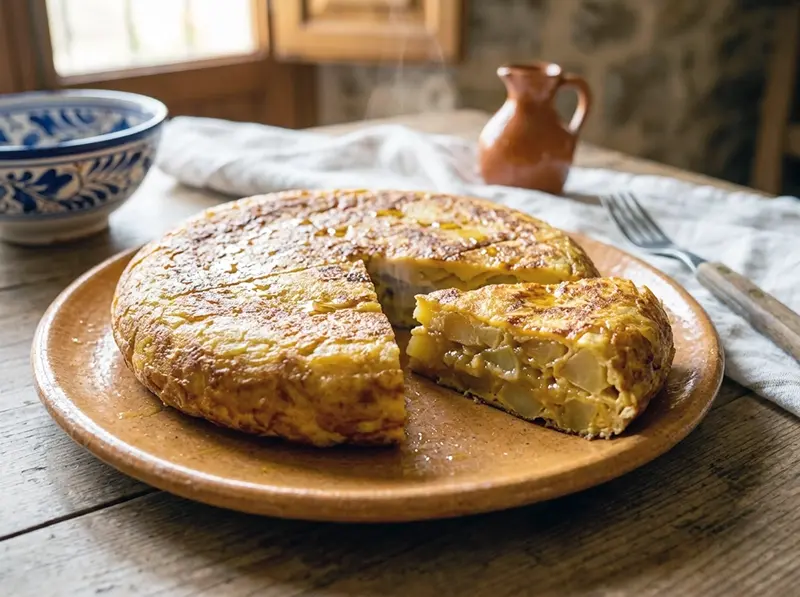
Insalate fresche contrastano bene con la ricchezza. Salumi (jamón, chorizo) sono compagni naturali. Pan con tomate è uno dei tapas più semplici e buoni. Tortilla española è sostanziosa. Olive marinate e manchego non richiedono preparazione. Da bere: jerez fino freddo, birra fredda o vermut con ghiaccio e arancio.
Vota
Ricette via email
Una lettera a settimana: una ricetta scelta per i tuoi gusti e le novità del sito. Puoi disattivarla con un clic.
In regalo: il libro di ricette di Sergei (e-book).
Premendo il pulsante accetti l’informativa sulla privacy.
Dicci cosa ti piace cucinare (30 secondi) →Continua a sfogliare
Altri piatti dall’archivio — scelti per sovrapposizione con quello che stai cucinando ora.

Partecipa alla discussione
Commenti (3)
Las patatas bien pero la salsa brava le falta un poco de picante para mi gusto. Le eche mas pimenton y quedo mucho mejor
Las patatas salen perfectas si las coces primero con bicarbonato como dicen. La salsa brava podria llevar un poco mas de piment picante en mi opinion
I spent a week in Barcelona eating bravas at different bars and the best ones all had one thing in common: the potatoes were parboiled with baking soda before frying. It breaks down the surface starch and gives you that shattering crisp exterior. The bravas sauce should be smoky, slightly sweet, and just a bit spicy — not a ketchup.