
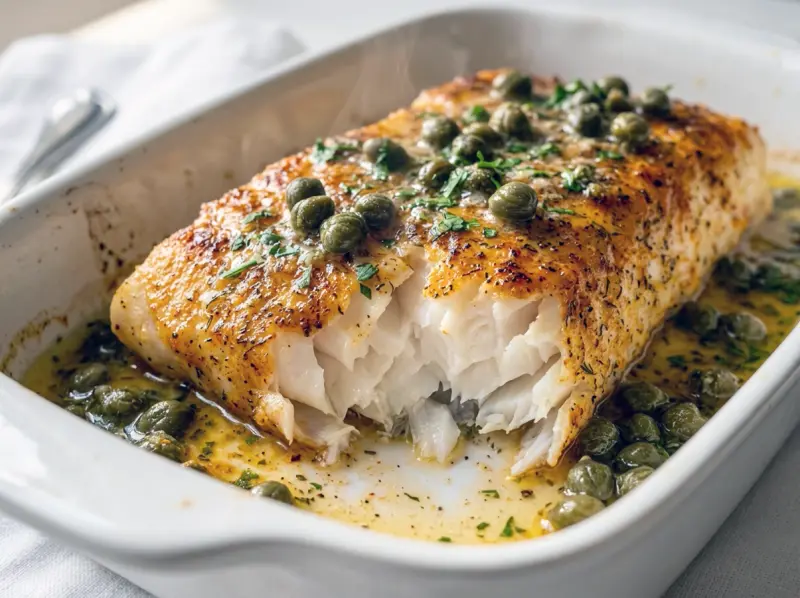
Baked Cod
Cod fillets baked at high heat with garlic butter, capers, and lemon. Flaky inside, golden on top, done in under 30 minutes.
Ingredients
- 700 gcod fillets, about 2.5 cm thick
- 60 gunsalted butter
- 4 garlic cloves
- 2 tbspolive oil
- 3 tbsplemon juice
- 2 tbspcapers
- 1 tspsmoked paprika
- 0.5 tspred pepper flakes
- 3 tbspfresh parsley
- 1 tspsalt
- 0.5 tspblack pepper
Method
- Preheat oven to 200°C (400°F). Pat cod fillets completely dry with paper towels — this is the single most important step.
- Mix together softened butter, garlic, olive oil, lemon juice, smoked paprika, red pepper flakes, salt, and pepper in a small bowl.
- Place cod in a baking dish in a single layer. Spoon the butter mixture over each fillet and scatter capers on top.
- Bake uncovered for 12–15 minutes, until the flesh turns opaque and flakes easily with a fork. A 2.5 cm thick fillet takes about 13 minutes.
- For a golden top, switch to broil for 2 minutes at the end — watch closely, it browns fast.
- Spoon the pan juices over the fish, scatter fresh parsley, and serve immediately with lemon wedges.
FAQ
Almost always overcooked. Cod has almost no fat to buffer the heat — a few extra minutes and it's gone. At 200°C, a 2.5 cm thick fillet needs 12–15 minutes, no more. Test with a fork at the thickest part: if it flakes and looks opaque all the way through, pull it out. Also check whether you dried the fish first — a wet fillet steams in the oven rather than baking, and the texture goes soft and watery.
12 to 15 minutes at 200°C for fillets around 2.5 cm thick. The rule of thumb is 10 minutes per 2.5 cm of thickness. If you have a thermometer, pull the fish at 63°C internal temperature. Don't cover with foil — it traps steam and turns the bake into a poach. Leave it uncovered and you get better texture and a proper top.
You can, but the fish releases a lot of water into the pan as it thaws in the oven. That water pools around the fillet and prevents even cooking. If you go this route, add 7–10 minutes to the bake time and drain the liquid halfway through. Use olive oil instead of butter — butter solidifies on a frozen fillet and never really absorbs. Thawing overnight in the fridge gives noticeably better results.
Haddock and pollock are the closest — same texture, same cook time. Tilapia runs thinner, so cut 2–3 minutes off. Halibut is denser and fattier — add 3–5 minutes and expect a firmer bite. Sea bass works well too. Any thick white fillet around 2.5 cm will go through this recipe without changing anything else.
Two things work. First, smoked paprika in the butter mixture — it gives a warm golden color without the broiler and adds a faint smokiness that goes well with the fish. Second, switch to broil for the last 2 minutes — the top browns quickly, so stay close. Panko breadcrumbs pressed lightly on top before baking also give a proper crust even without broiling.
Rate this
Recipes by email
One letter a week: a recipe picked for your taste, plus whatever is new on the site. Unsubscribe in one click.
Welcome gift: Sergei's cookbook (e-book).
By subscribing you agree to the privacy policy.
Tell us what you like to cook (30 seconds) →Keep browsing
More dishes from the American archive — picked by overlap with what you're cooking now.
Join the conversation
Comments (2)
Треска запечённая — лёгкий и полезный ужин, готовлю когда на диете сижу. Рыба нежная, не разваливаеться. Я ещё лимон сверху кладу и травы прованские, аромат по всей кухне стоит.
Cook the fish skin-side down for 70% of the time for baked cod. The skin renders its fat and creates a natural barrier that keeps the flesh incredibly moist. One confident flip for the final 30% is all you need.