
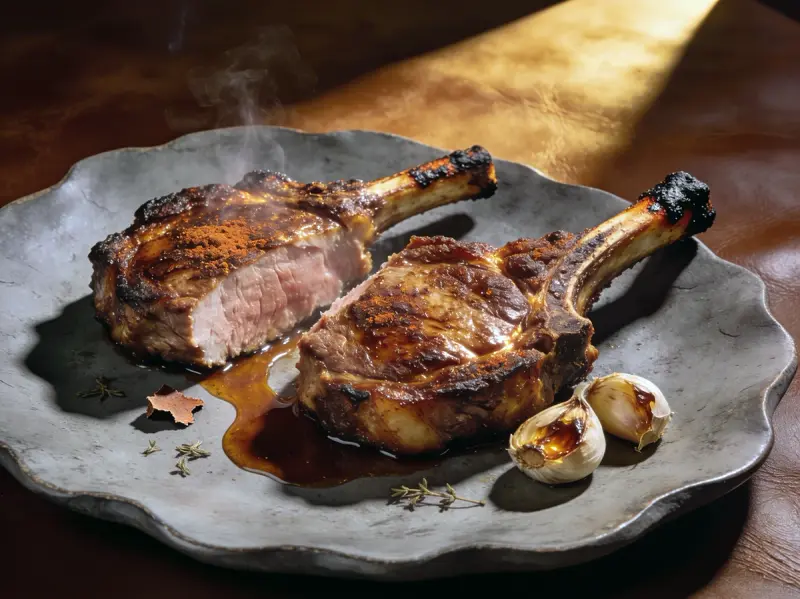
Baked Pork Chops
Bone-in pork chops rubbed with smoked paprika, garlic and a touch of brown sugar, then roasted at high heat until the edges caramelize and the inside stays juicy. Ready in 30 minutes — the resting step at the end is non-negotiable.
Ingredients
- 4 bone-in pork chops
- 4 garlic cloves
- 2 tbspolive oil
- 1 tspsmoked paprika
- 1 tspbrown sugar
- 1 tspgarlic powder
- 0.5 tspdried thyme
- 1 tspsalt
- 0.5 tspblack pepper
Method
- Take the pork chops out of the fridge 20 minutes before cooking — cold meat goes into the oven unevenly. Pat both sides completely dry with paper towels. Preheat the oven to 220°C (425°F).
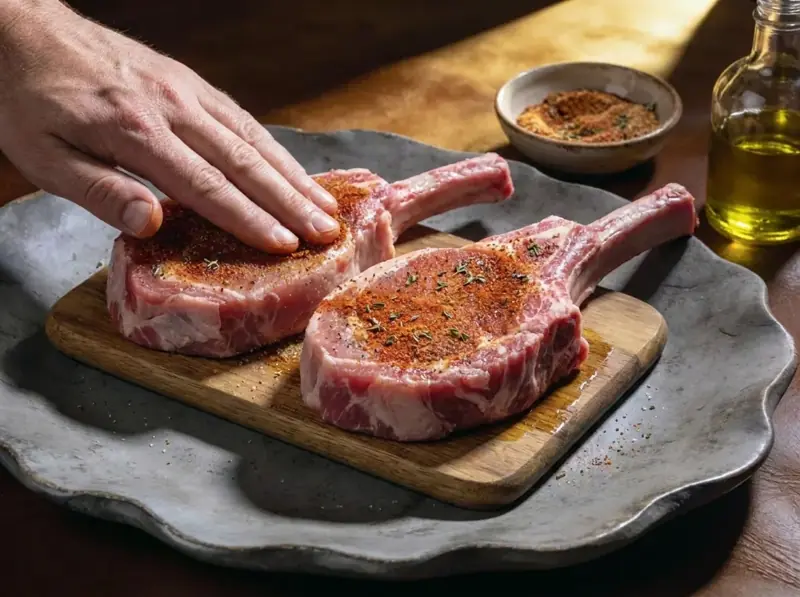
- Mix the smoked paprika, brown sugar, garlic powder, thyme, salt and pepper in a small bowl. Rub the olive oil over both sides of each chop, then press the spice mix firmly onto both sides.
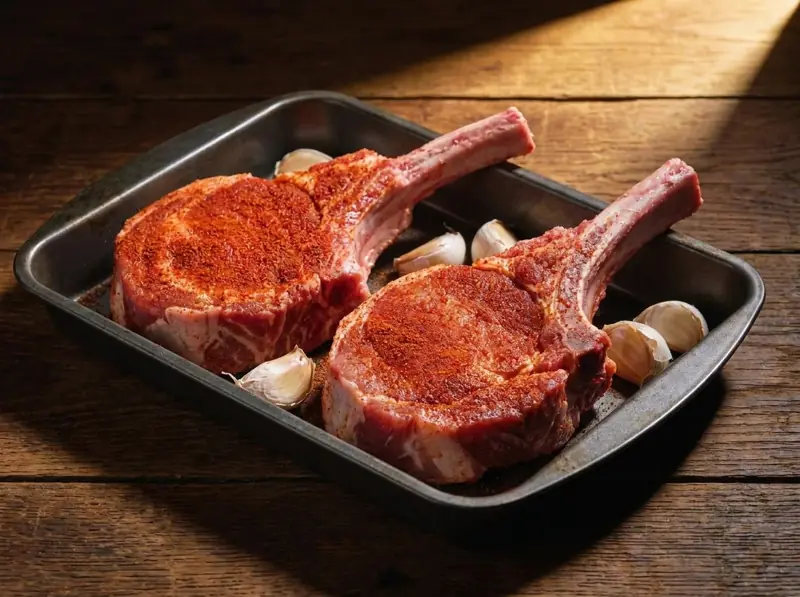
- Place the chops in a baking dish or on a rimmed baking sheet with enough space between them. Tuck the crushed garlic cloves around the chops — they'll roast alongside and perfume the pan juices.
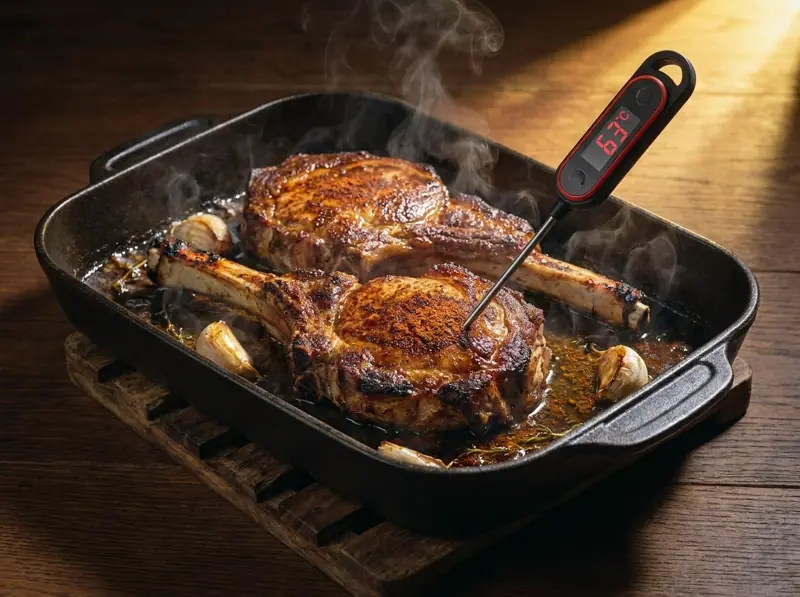
- Roast for 18–22 minutes for 2.5 cm thick chops, or 22–26 minutes for 3 cm. The most reliable check is an instant-read thermometer inserted into the thickest part away from the bone: pull them at 63°C (145°F). The meat can look slightly pink at this temperature — that is correct and safe.
- Switch the oven to broil (grill) on maximum for the last 2–3 minutes to brown the surface if it hasn't coloured. Watch closely — it goes from golden to burnt in under a minute.
- Transfer to a plate, tent loosely with foil and rest for 5 minutes before serving. Spoon the pan juices over each chop. Serve with roasted potatoes or a simple green salad.
FAQ
Pork dries out faster than almost any other meat, and the main reason is overcooking. The safe internal temperature for pork chops is 63°C (145°F) — not the 74°C (165°F) that older guidelines suggested. At 63°C the meat can still look slightly pink in the center, which is completely safe and significantly juicier. At 200°C (400°F), a 2.5 cm thick chop takes 18–22 minutes; a 3 cm chop takes 22–26 minutes. Without a thermometer it's easy to overshoot. After removing from the oven, rest under foil for 5 minutes — the temperature rises another 3–5 degrees during that time and the juices redistribute.
Searing 2 minutes per side in a very hot cast-iron skillet before the oven creates a deep brown Maillard crust that the oven alone cannot achieve — that savory, caramelized bark is the most flavourful part of a pork chop. Without searing the chop will be juicy but pale and noticeably less aromatic. For the best result: sear on the hob, finish in the oven. If you want to skip it: start the oven at 230°C (450°F) for the first 5 minutes, then drop to 200°C — the blast of heat approximates a crust. The brown sugar in the rub also helps with color if you go straight into the oven.
The most effective method is a dry brine: rub the chops with coarse salt (1 tsp per 500 g of meat) 1–8 hours before cooking and leave them uncovered in the fridge. The salt penetrates the fibres, helps retain moisture during roasting, and produces a better crust. If you don't have time, even 20 minutes at room temperature with salt makes a difference. A wet marinade (oil + acid + spices) adds flavor but does less for moisture than salt alone. Never put cold chops straight from the fridge into the oven — the cold center doesn't reach temperature before the edges dry out.
Bone-in is consistently better: the bone slows heat transfer to the meat next to it, keeping that section juicier, and it contributes flavor to the pan juices. Boneless is easier to eat but has a narrower margin for error. Ideal thickness is 2.5–3 cm. Thin chops (1–1.5 cm) dry out before a crust can form — if that's what you have, reduce the temperature to 190°C and check the internal temperature at 12 minutes. Center-cut loin chops are the best balance: lean meat with a thin strip of fat along the edge that bastes the chop as it roasts.
A brown crust requires dry surface and high heat. Three rules. First: pat the chops completely dry — moisture on the surface steams instead of browns. Second: add 1 tsp of brown sugar to the spice rub — it caramelizes in the oven and produces a golden-amber color. Third: switch the oven to broil (grill mode) at maximum for the last 2–3 minutes. Watch it: under a broiler, the transition from golden to burnt takes less than a minute. If your oven has no broil function, raise the temperature to 240°C for the final 5 minutes instead.
Rate this
Recipes by email
One letter a week: a recipe picked for your taste, plus whatever is new on the site. Unsubscribe in one click.
Welcome gift: Sergei's cookbook (e-book).
By subscribing you agree to the privacy policy.
Tell us what you like to cook (30 seconds) →Keep browsing
More dishes from the American archive — picked by overlap with what you're cooking now.
Join the conversation
Comments (1)
Score the pork skin or fat cap before cooking this baked pork chops. Shallow cuts every centimeter let the fat render properly and create those crispy edges everyone fights over at the table.