
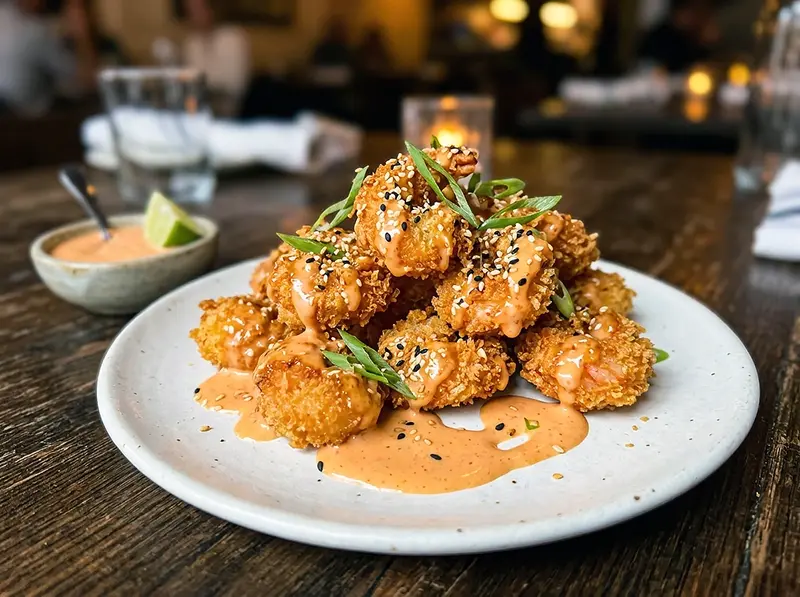
Bang Bang Shrimp
Crunchy panko-coated shrimp under a creamy, spicy sauce of mayonnaise, sweet chili and sriracha, a popular American appetizer. This version is cooked in the air fryer with a fraction of the usual oil: 8 minutes per batch for a shatteringly crisp coating, then the sauce goes on right before serving. With breading and two batches it takes about 30 minutes.
Ingredients
- 400 glarge shrimp, peeled and deveined, tails on or off
- 100 gpanko breadcrumbs
- 1 egg
- 3 tbspcornstarch
- 1 tspgarlic powder
- to tastesalt
- to tasteblack pepper
- cooking spray
- 3 tbspmayonnaise
- 2 tbspsweet chili sauce
- 1 tbspsriracha
- 1 tsphoney
- 1 tbsplime juice
- for servingsesame seeds
- for servinggreen onions, sliced
Method
- If the shrimp are not peeled yet, peel them and remove the dark vein along the back. Pat the shrimp very dry with paper towels — this is critical. Any moisture on the surface will prevent the panko from sticking properly. Let them sit on a paper towel for 5 minutes after patting.
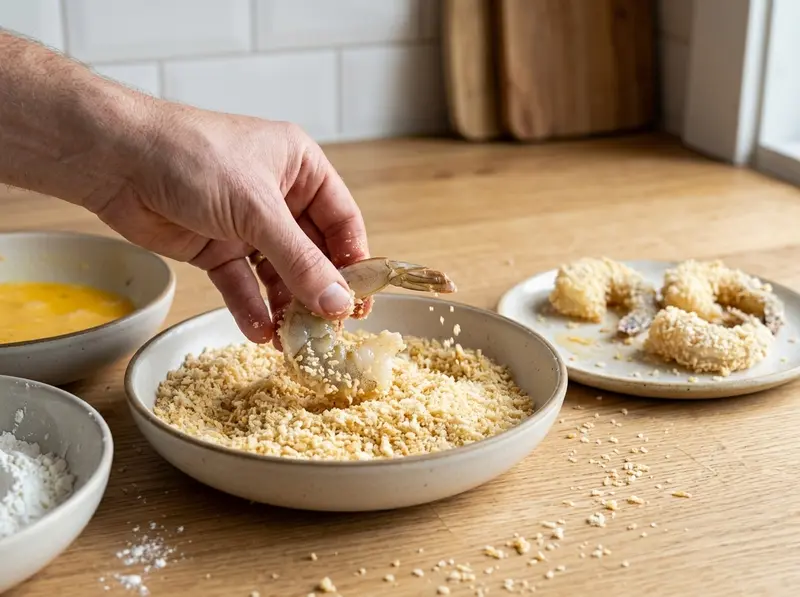
- Set up a breading station: cornstarch mixed with garlic powder, salt, and pepper in one bowl; beaten egg in a second bowl; panko breadcrumbs in a third bowl.
- Coat each shrimp in cornstarch first (shake off excess), dip into the beaten egg, then press firmly into the panko on all sides. Place on a plate.
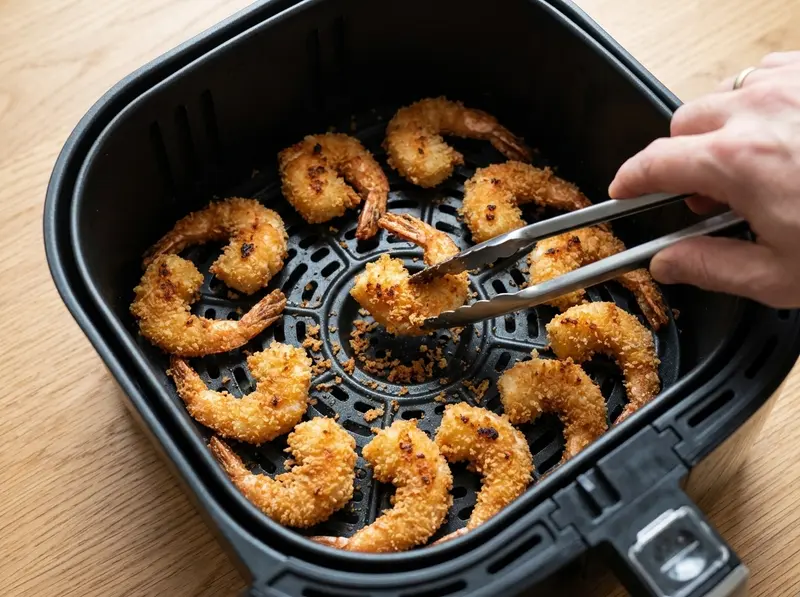
- Preheat the air fryer to 200°C (400°F) for 3–5 minutes. Arrange half of the coated shrimp in a single layer in the air fryer basket — don't crowd them; 400 g is two batches in most baskets. Spray generously with cooking spray on all sides. Air fry at 200°C (400°F) for 8 minutes per batch, flipping halfway through, until the coating is golden and the shrimp are pink and opaque (63°C/145°F in the thickest part). Repeat with the second batch.
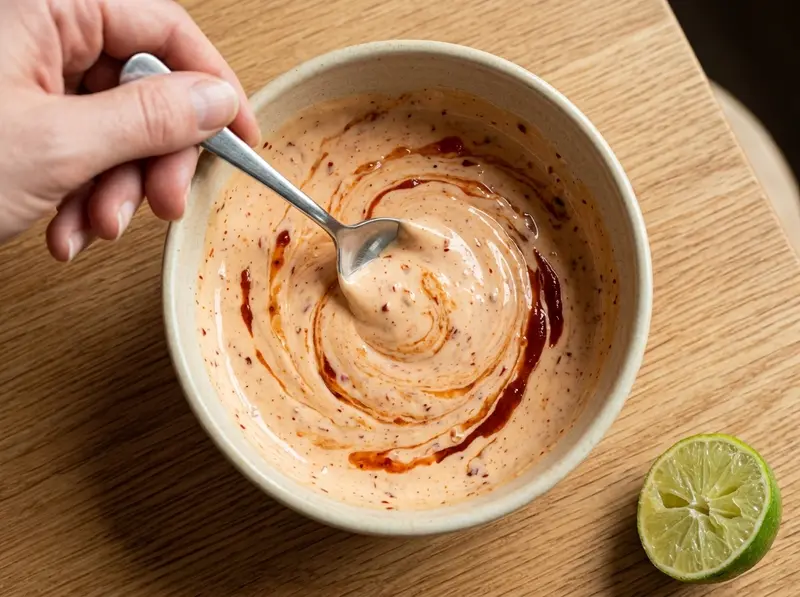
- While the shrimp cook, make the bang bang sauce: mix together mayonnaise, sweet chili sauce, sriracha, honey, and lime juice until smooth. Taste and adjust heat with more sriracha if you like it spicier.
- Pile the crispy shrimp on a plate and drizzle with the bang bang sauce, or serve the sauce on the side for dipping. Garnish with sesame seeds and sliced green onions.
FAQ
Set your oven to 220°C (425°F). Place a wire rack over a baking sheet lined with foil. Arrange the coated shrimp on the rack in a single layer and spray well with cooking spray. Bake for 12–15 minutes, flipping once at the halfway point. The wire rack is key — it allows hot air to circulate under the shrimp so the bottom gets crispy too. Without the rack they'll steam on the bottom and you'll get a soggy underside.
Almost always a moisture problem. If the shrimp are wet, the cornstarch turns into slippery paste instead of a dry adhesive layer. Pat the shrimp completely dry, let them sit on paper towels for 5 minutes, then start the cornstarch coating. Also, press the panko firmly onto each shrimp rather than just rolling through it. If you have time, refrigerate the coated shrimp for 10 minutes before cooking — this helps the coating set and bond. A similar breading sequence is used in panko shrimp.
Absolutely. Reduce or eliminate the sriracha entirely, and increase the sweet chili sauce to 3 tablespoons. Sweet chili sauce has only mild warmth. Add an extra teaspoon of honey to push it sweeter. You can also stir in a tablespoon of plain yogurt or sour cream to mellow the heat further. The sauce should still taste creamy and tangy from the lime, just without the burn. Leftover sauce also goes well with air fryer chicken wings.
Jumbo shrimp (21/25 or 16/20 count per pound) work best — they're big enough to stay juicy inside while the coating crisps. Frozen shrimp work perfectly and are often better quality than "fresh" (which was usually frozen and thawed at the store anyway). Thaw them in cold water for 15 minutes, then dry them extremely well. The drying step is even more important with frozen shrimp because they release extra moisture.
The air fryer is the best tool for reheating: 180°C (350°F) for 3–4 minutes and they'll re-crisp nicely. A regular oven works too — 200°C (400°F) on a wire rack for 5 minutes. Either way, heat them until hot all the way through (74°C/165°F). The microwave will destroy the crunch completely, so avoid it. Leftover shrimp keep for 3 days in the fridge in a closed container. Keep the sauce separate when storing leftovers and add it fresh after reheating. The coating stays crispiest if you reheat without the sauce and drizzle it right before serving.
Keep browsing
More dishes from the American archive — picked by overlap with what you're cooking now.
Recipes by email
One letter a week: a recipe picked for your taste, plus whatever is new on the site. Unsubscribe in one click.
Welcome gift: Sergei's cookbook (e-book).
By subscribing you agree to the privacy policy.
Tell us what you like to cook (30 seconds) →
Join the conversation
Comments
No comments yet — be the first!