
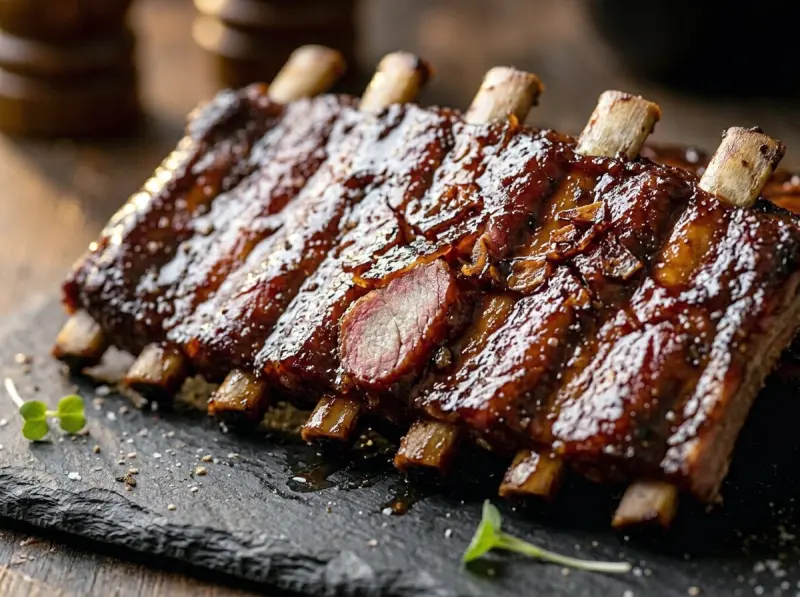
BBQ Baby Back Ribs (2-2-1 Method)
Baby back ribs are the most tender and lean rack cut in American barbecue — they come from where the pork loin meets the spine, producing shorter, curved bones with a generous layer of back loin meat. The 2-2-1 method — a modification of the classic 3-2-1 for the smaller baby back rack — divides the cook into three stages: 2 hours of open smoking to build bark and absorb smoke, 2 hours wrapped tightly in foil with butter, brown sugar, and apple juice to braise the collagen into gelatin until the meat pulls cleanly from the bone, and 1 final hour unwrapped to set the BBQ sauce glaze into a lacquered, sticky finish. Temperature is 225°F (107°C) throughout. The result is ribs where the meat pulls cleanly from the bone with a gentle tug, carrying deep smoke ring, complex bark, and the sweet-savory caramelized BBQ glaze.
Ingredients
- 2 racks baby back ribs
- 3 tbspyellow mustard
- 3 tbspbrown sugar
- 2 tbspsmoked paprika
- 1 tbspcoarse kosher salt
- 1 tbspgarlic powder
- 1 tbsponion powder
- 1 tspblack pepper
- 1 tspcayenne pepper
- 4 tbspcold unsalted butter, for the foil pouches (2 tbsp per rack)
- 120 mlapple juice, for the foil pouches (60 ml per rack)
- 2 tbsphoney, for the foil pouches (1 tbsp per rack)
- 240 mlBBQ sauce
- 1 tbspapple cider vinegar
- 120 mlapple juice, for the spray bottle
Method
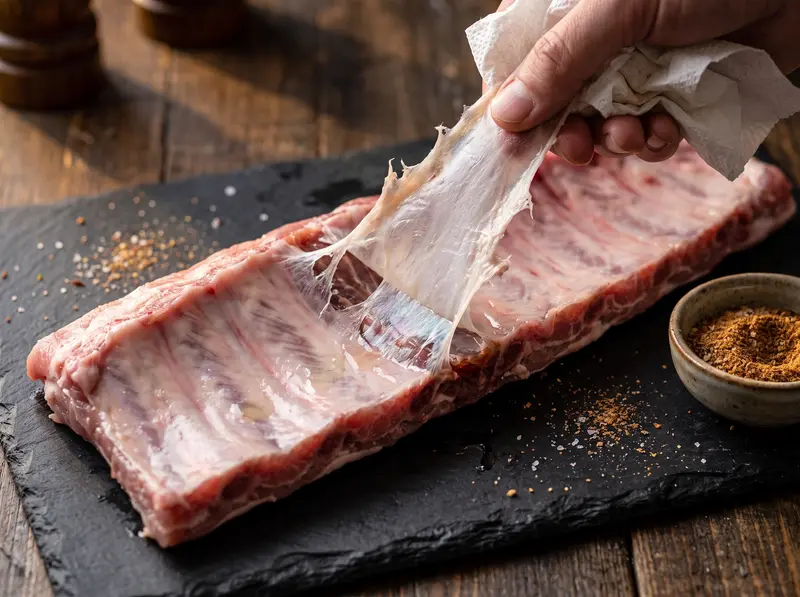
- Remove the membrane and apply the rub. Flip each rack bone-side up. Slide a butter knife under the thin silver membrane (silverskin) at one end of the rack, work it loose, then grip firmly with a paper towel and pull the entire membrane away in one piece. Discarding it allows smoke and seasoning to penetrate the underside. Mix all dry rub ingredients (brown sugar through cayenne). Coat both sides of each rack with a thin smear of yellow mustard. Press the dry rub generously over both surfaces — the mustard acts as a binder and will not impart a flavor. Allow the rubbed racks to rest at room temperature for 30 minutes, or refrigerate uncovered overnight for deeper flavor.
- Smoke 2 hours — build bark and smoke ring. Set up your smoker, grill, or oven to 225°F (107°C). For a grill: set up a two-zone fire (indirect side only) and add soaked wood chips (apple, cherry, or hickory) in a foil pouch over the coals or burner. Place ribs bone-side down, meat-side up on the indirect side. Close the lid and smoke undisturbed for the first hour. Mix the 120 ml of spray apple juice with the apple cider vinegar in a spray bottle. From the second hour onward, spritz the surface every 30 minutes to keep the bark moist and prevent it from hardening too fast. After 2 hours the ribs should have a dark, dry-looking bark and an internal temperature of 71 to 77°C (160 to 170°F).
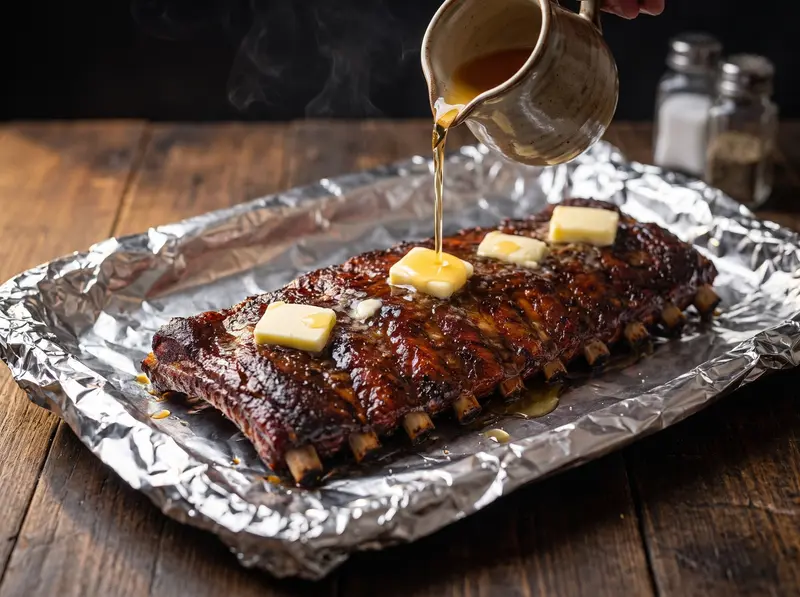
- Wrap and braise 2 hours — achieve tenderness. Tear a large sheet of heavy-duty aluminium foil per rack. Lay the rack meat-side up on the foil. On each rack, scatter 2 tablespoons of cold butter in pats across the meat, then drizzle 60 ml of the pouch apple juice and 1 tablespoon of honey over the surface — the listed amounts cover both racks. Wrap the foil tightly, folding the seams to create a sealed pouch. Return the pouches to the smoker/grill bone-side down. The ribs will now steam-braise inside the foil — the collagen in the connective tissue converts to gelatin, the meat pulls away from the bone ends, and the interior becomes yielding and moist. After 2 hours the internal temperature should read 88 to 93°C (190 to 200°F).
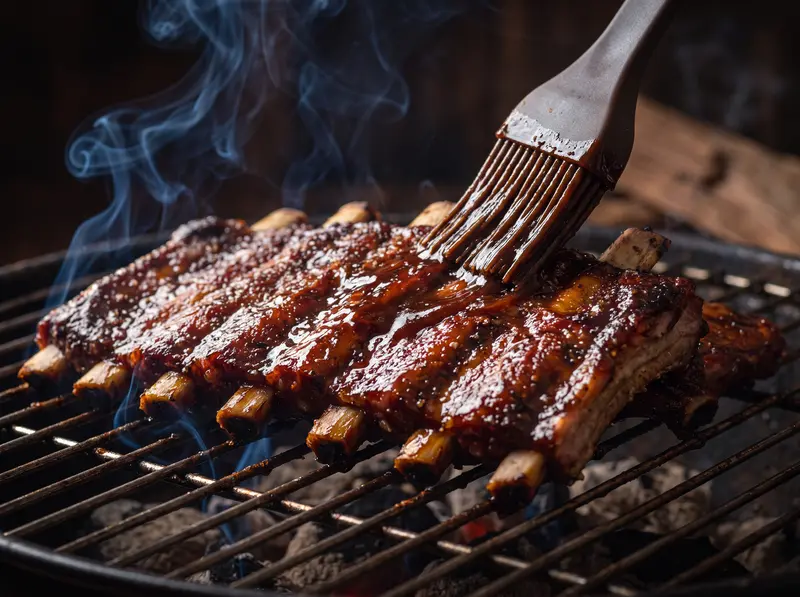
- Unwrap, sauce, and finish 1 hour — set the glaze. Carefully open the foil pouches — hot liquid and steam will escape. The bones will have pulled back from the meat by 1 to 2 cm, which is the visual indicator of correct tenderness. Transfer the racks meat-side up back onto the grill grates (unwrapped). Brush generously with BBQ sauce. Close the lid and cook for 30 minutes. Open, brush a second coat of sauce, and cook for a final 30 minutes. The sauce will caramelize and set into a glossy, slightly sticky glaze. Do not add sauce in the first hour — sugar burns at low temperature if exposed too long to smoke.
- Rest and slice. Remove the ribs from the heat and rest for 10 minutes tented loosely with foil. Do not skip the rest: the internal juices redistribute during this time. Slice between each bone with a sharp knife — the knife should pass through the meat with minimal resistance. The meat should tug cleanly from the bone with a gentle pull, not fall off completely (fall-off-the-bone indicates overcooked ribs that have lost their structural integrity and most of their flavor). Serve immediately with additional sauce on the side.
FAQ
Baby back ribs are cut from where the pork loin connects to the spine — the top of the rib cage, furthest from the belly. They are shorter, curved, and leaner, with more loin meat attached. A full rack typically weighs 1.2 to 1.5 kg with 10 to 13 bones. Spare ribs come from the lower belly area, are flatter, longer, and significantly fattier, with more connective tissue. St. Louis-style ribs are spare ribs with the sternum bone, cartilage, and flap meat trimmed off, producing a rectangular shape ideal for even cooking. Baby backs cook faster and are more tender out of the gate; spare ribs require longer cooking but reward with more fat-derived flavor. The 2-2-1 method in this recipe is for baby backs; spare ribs use 3-2-1.
The silverskin (periosteum) is a dense connective tissue membrane on the bone side of the rack. Unlike other connective tissue in ribs, it does not render or soften during cooking — it remains a tough, rubbery sheet that blocks smoke from penetrating the meat from below and creates an unpleasant chewy layer in the final rib. Removing it takes 30 seconds and dramatically improves both flavor penetration and eating texture. Technique: slide a butter knife under the edge of the membrane at the second bone in from one end, work it loose enough to grip, then clamp it firmly with a paper towel (the towel provides grip on the slippery membrane) and pull steadily in one piece. It should come away cleanly.
Pork is food-safe at 63°C (145°F), but safety temperature is not the goal for ribs. Ribs contain significant collagen in the connective tissue between bones, and collagen converts to gelatin only at temperatures above 71°C (160°F), which takes time at low temperatures. For properly tender ribs the target internal temperature is 88 to 96°C (190 to 205°F) — the collagen has fully converted, the fat has rendered, and the meat pulls cleanly from the bone. Use a thermometer probe inserted horizontally between the bones to check, avoiding bone contact. The bend test (see tips) is a reliable secondary check.
Yes — the oven produces excellent braised ribs, though without the smoke ring and smoke flavor. Apply the rub, place the ribs bone-side down on a foil-lined baking sheet, and roast at 120°C (250°F) for 2.5 hours. Then wrap tightly in foil with the butter, apple juice, and honey, return to the oven for 2 more hours. Unwrap, brush with sauce, and return for 30 minutes until glazed. To add smoke flavor without a smoker: add 1 teaspoon of smoked paprika to the rub (already included in this recipe), add ½ teaspoon of liquid smoke to the BBQ sauce, and use a smoked BBQ sauce. The result is deeply flavoured, tender, and glazed — lacking only the true hardwood smoke character.
Baby back ribs have a more delicate, lean flavor than spare ribs, so lighter, sweeter woods complement them better. Apple wood is the most versatile choice: mild, sweet smoke that complements pork without overpowering it, produces a beautiful mahogany bark color. Cherry wood is similar in sweetness but adds a slightly deeper, fruitier note and a darker red-mahogany color. Pecan is excellent — medium smoke intensity with a natural sweetness and nuttiness. Hickory is the classic American BBQ wood — assertive, earthy, and bold. Use hickory at a small ratio with apple (60/40 apple to hickory) for baby backs so the smoke does not overpower the meat. Avoid mesquite for long cooks over 4 hours — it becomes harsh and acrid with extended exposure.
Rate this
Recipes by email
One letter a week: a recipe picked for your taste, plus whatever is new on the site. Unsubscribe in one click.
Welcome gift: Sergei's cookbook (e-book).
By subscribing you agree to the privacy policy.
Tell us what you like to cook (30 seconds) →Keep browsing
More dishes from the American archive — picked by overlap with what you're cooking now.

Join the conversation
Comments
No comments yet — be the first!