
Homemade BBQ Sauce (Sweet, Smoky & Tangy)
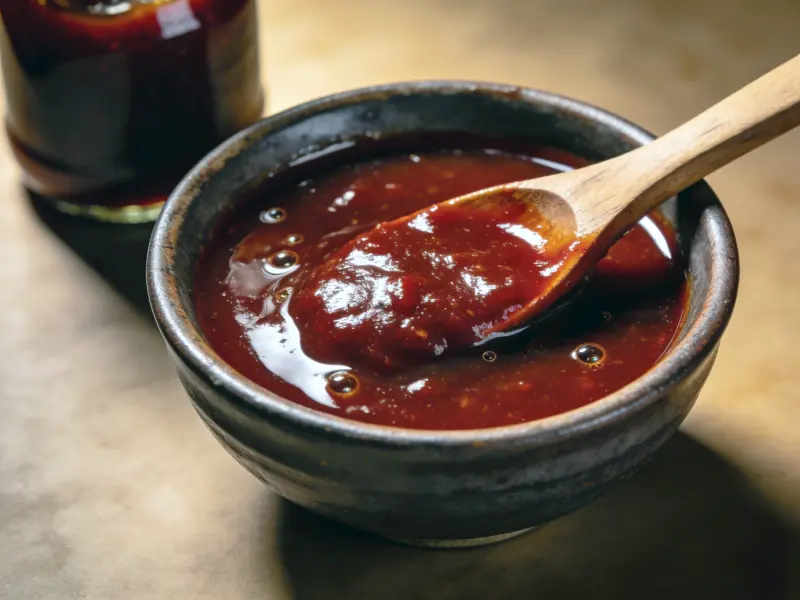
Kansas City-style BBQ sauce is a thick, sweet and tangy American sauce made from ketchup, molasses, brown sugar and cider vinegar, simmered for 15 to 20 minutes. It balances four flavors: sweet (brown sugar and molasses), sour (apple cider vinegar), savory (Worcestershire sauce and garlic), and smoky (smoked paprika). Unlike most sauces, which are built by reducing a complex stock, BBQ sauce is assembled from pantry staples and simmered just long enough for the flavors to merge and the raw edge of the vinegar to round out. The result is a thick, glossy, mahogany-coloured sauce that clings to ribs, glazes chicken, and tastes of concentrated American summer. The key adjustable levers: more brown sugar for sweetness, more vinegar for tang, more smoked paprika (or a small amount of liquid smoke) for smokiness, cayenne for heat. This recipe makes approximately 480 ml (2 cups) — enough for one full rack of ribs with extra for dipping.
Ingredients
- 240 mlketchup
- 60 mlapple cider vinegar
- 60 mlwater
- 3 tbspbrown sugar
- 2 tbspmolasses
- 2 tbspWorcestershire sauce
- 1 tbspyellow mustard
- 2 tspsmoked paprika
- 1 tspgarlic powder
- 1 tsponion powder
- 0.5 tspfine salt
- 0.5 tspblack pepper
- 0.25 tspcayenne pepper
Method
- Combine all ingredients in a saucepan. Measure all ingredients directly into a medium heavy-bottomed saucepan. No pre-mixing is necessary — everything will come together during simmering. Whisk until the brown sugar and molasses are distributed into the liquid. The sauce will look thin, separated, and unappetising at this stage — that is correct. The transformation happens during the simmer.
- Bring to a simmer over medium heat. Place the saucepan over medium heat and bring the mixture to a simmer, stirring occasionally. Watch the heat: you want a steady, gentle simmer with small bubbles — not a rolling boil, which would reduce the sauce too aggressively and can scorch the sugars, causing bitterness. Once simmering, reduce heat to medium-low.
- Simmer 15 to 20 minutes. Allow the sauce to simmer uncovered for 15 to 20 minutes, stirring every few minutes to prevent the bottom from catching. During this time the sharp raw vinegar edge softens, the sugar caramelizes slightly, and the flavors merge into a coherent whole. The sauce will thicken noticeably — it should coat the back of a spoon and hold a line when you run a finger through it. If it is too thick, add a splash of water. If too thin, simmer 5 minutes longer.
- Taste and adjust the balance. Remove from heat. Taste the sauce critically and adjust each element: if it tastes flat, add a pinch of salt; if too sweet, add a splash of vinegar; if too sharp, add a teaspoon of brown sugar; if not smoky enough, add another ½ teaspoon of smoked paprika or a drop of liquid smoke; if you want heat, add a pinch more cayenne or a few dashes of hot sauce. Allow the sauce to cool for 10 minutes — it will thicken further as it cools, and flavors will appear to change slightly from hot to cool (the vinegar sharpness mellows).
- Store and use. Transfer to a clean glass jar or bottle. The sauce keeps in a clean, closed jar in the refrigerator for up to 2 weeks. It improves significantly after 24 hours as the flavors marry. For grilling: apply the sauce only in the final 10 to 15 minutes of cooking — the sugars in the sauce will burn black if applied too early over high heat. Brush on a thin coat, allow it to caramelize for 5 minutes, brush a second coat, cook 5 more minutes. Two coats produce the characteristic sticky, lacquered glaze. For ribs cooked low and slow in a smoker or oven, brush on the sauce after the foil wrap and finish uncovered for the last 30 to 60 minutes; the low heat lets it set without burning.
FAQ
BBQ sauce contains a high proportion of sugar — brown sugar, molasses, and the sugar already present in ketchup. Sugar caramelizes and then scorches quickly over direct, high heat, long before a thick piece of meat is cooked through. Sauce applied at the start of grilling will burn before the meat is done. Applied in the final 10 to 15 minutes, with the grill at medium heat or on indirect heat, the sugar caramelizes into the characteristic sticky, slightly charred glaze without burning. The same rule holds for ribs: in BBQ baby back ribs the sauce goes on only in the last hour.
Both smoked paprika and regular paprika are ground from dried red peppers, but they undergo different drying processes. Regular paprika is made from peppers that are dried in kilns or the open air — the flavor is mild, sweet, and slightly fruity. Smoked paprika (pimentón de la Vera, from Spain) is made from peppers dried over smoldering oak before they are ground, which gives the spice a deep, lasting smokiness. In BBQ sauce, where the goal is to create the flavor of wood smoke without an actual smoker, smoked paprika is the ingredient that does this work. Regular paprika in its place gives color and mild pepper flavor but none of the characteristic smokiness. They are not interchangeable in this recipe.
Yes — ketchup provides tomato, sweetness, vinegar, and body all in one, so substituting requires compensating for each component. Replace the 240 ml of ketchup with: 120 ml of tomato paste plus 120 ml of water plus 2 extra tablespoons of brown sugar plus 2 extra tablespoons of apple cider vinegar. This produces a richer, more intensely tomato-flavoured sauce with less of the commercial sweetness that ketchup contributes. Tomato paste gives a deeper, less sweet flavor.
In a sealed glass jar in the refrigerator, this sauce keeps for up to 2 weeks. The apple cider vinegar acts as a mild natural preservative. The sauce actually improves after the first 24 hours as the flavors marry and the raw edge of the vinegar mellows. It also freezes well in sealed containers; thaw it overnight in the refrigerator. Pour what you need into a separate bowl for brushing, and never dip a brush that has touched raw meat back into the storage jar.
American BBQ sauce varies dramatically by region, each reflecting the dominant meat and cooking tradition. Kansas City style (this recipe): thick, very sweet, tomato and molasses-based, used primarily as a finishing sauce and dipping sauce on pork ribs. Texas style: thinner and less sweet, built on tomato, vinegar, and black pepper, designed to complement smoked beef brisket rather than coat it — in Texas tradition, brisket is often served with sauce on the side rather than on the meat. North Carolina Eastern style: thin vinegar-and-pepper sauce with little or no tomato, used to baste whole hog during cooking. South Carolina Mustard style: yellow mustard base with vinegar, brown sugar, and spices — no tomato. Alabama White sauce: mayonnaise-based with cider vinegar, black pepper, and horseradish, served almost exclusively with smoked chicken. A sauce like this is also what gets tossed through BBQ pulled pork.
Keep browsing
More dishes from the American archive — picked by overlap with what you're cooking now.
Recipes by email
One letter a week: a recipe picked for your taste, plus whatever is new on the site. Unsubscribe in one click.
Welcome gift: Sergei's cookbook (e-book).
By subscribing you agree to the privacy policy.
Tell us what you like to cook (30 seconds) →
Join the conversation
Comments
No comments yet — be the first!