
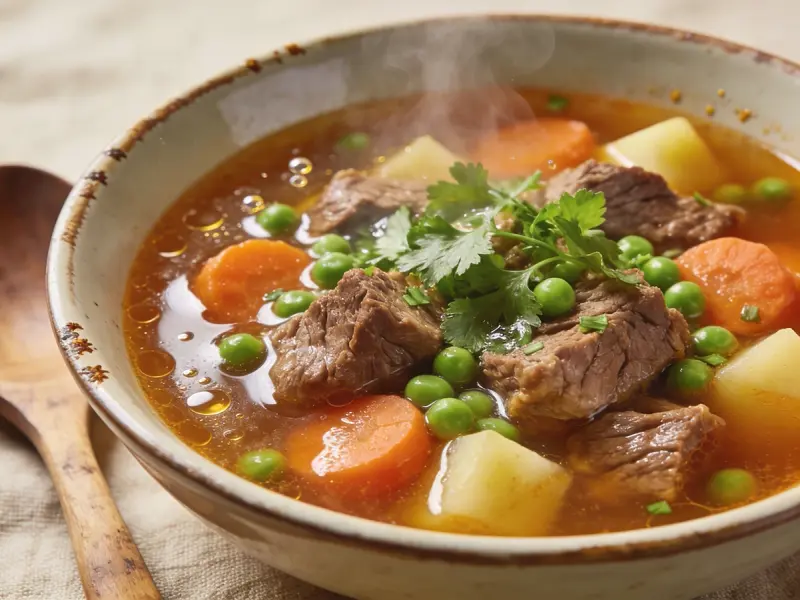
Beef and Vegetable Soup
Cheap, tough beef cuts braised low and slow in broth with root vegetables until the meat is tender enough to break with a spoon. The collagen from those cuts dissolves into the broth over time and makes it thick and glossy. Expensive steaks make thin, bland soup.
Ingredients
- 800 gbeef chuck, shin, or short ribs, cut into 3 cm chunks
- 3 tbspvegetable oil
- 1 large onion
- 3 carrots, cut into 2 cm rounds
- 3 celery stalks
- 4 garlic cloves
- 2 tbsptomato paste
- 150 mlred wine or extra beef broth
- 1.5 lbeef broth, low-sodium
- 400 gcanned crushed tomatoes
- 1 tbspWorcestershire sauce
- 2 bay leaves
- 1 tspdried thyme
- 500 gpotatoes, peeled and cut into 2 cm cubes
- 150 ggreen beans or frozen peas, added last
- 1 tspsalt
- 0.5 tspblack pepper
- 3 tbspfresh parsley
Method
- Pat the beef dry with paper towels — moisture prevents browning. Season generously with salt and pepper.
- Heat 2 tablespoons of oil in a large heavy pot over high heat until just smoking. Brown the beef in batches, one layer at a time, without touching for 2–3 minutes per side. Don't crowd the pot — crowding steams instead of sears and produces gray, flavourless meat. Remove each batch to a plate.
- Reduce heat to medium. Add the remaining oil, then onion, carrot, and celery. Cook 5 minutes, stirring occasionally, until starting to soften. Add garlic and tomato paste. Cook 2 minutes, stirring, until the paste darkens slightly.
- Pour in the wine. Scrape the bottom of the pot thoroughly — all the browned bits are flavor. Let the wine bubble for 1 minute.
- Add the broth, crushed tomatoes, Worcestershire, bay leaves, and thyme. Return the browned beef and any juices that collected on the plate. Bring to a boil, then reduce to a very gentle simmer — barely a bubble.
- Cover and cook for 1 hour 15 minutes. The beef should be tender but not yet falling apart.
- Add the potato cubes. Cook uncovered for another 25–30 minutes until the potatoes are soft and the broth has thickened slightly. Add green beans or peas in the last 10 minutes.
- Remove bay leaves. Taste and adjust salt and pepper. Ladle into deep bowls and finish with fresh parsley.
FAQ
Three things cause flat beef soup. First: the meat wasn't properly browned. Work in batches over high heat until each piece has a deep brown crust — that's the Maillard reaction, which is where all the flavor comes from. If you crowd the pot, the temperature drops and the meat steams gray. Second: the tomato paste needs to cook in the pot for 2 minutes until it darkens — that concentrates the umami. Third: deglaze the pan after searing and scrape up all the browned bits from the bottom — that's pure flavor dissolved into the broth.
Chuck, shin, or short ribs are the best choices. They are heavily worked muscles loaded with connective tissue and collagen. During a long, slow simmer — 1.5 to 2 hours at a gentle bubble — the collagen dissolves into the broth and turns it thick, glossy, and rich. Steaks and tenderloin have almost no collagen, so they produce thin broth and tough meat. The cheaper the cut, the better the soup — this is one of the places where budget and quality genuinely align.
Add in order of cooking time. Onion, carrot, and celery go in first and cook alongside the meat for the full simmer — they soften and flavor the broth. Potatoes go in 25 to 30 minutes before the end — long enough to cook through without disintegrating. Green beans, peas, or corn in the last 10 minutes — just enough to heat through and stay bright. Fresh herbs and leafy greens like spinach go in the bowl at serving, not the pot.
Chuck or shin needs 1.5 to 2 hours at a very gentle simmer — barely visible bubbles, not a rolling boil. Boiling makes the meat tough and the broth cloudy. Check by pressing a piece with a fork: it should yield and separate easily without rubbery resistance. If it's still tough, give it another 20 to 30 minutes. When the meat starts to pull into thick fibres, it's perfect.
4 to 5 days in the fridge — and it tastes better on day two as the flavors settle. Freeze without the potatoes: they turn watery and grainy after thawing. Freeze the soup base for up to 3 months, then add fresh potato when reheating. Reheat over low heat with a splash of water or broth if it has thickened too much in the fridge.
Rate this
Recipes by email
One letter a week: a recipe picked for your taste, plus whatever is new on the site. Unsubscribe in one click.
Welcome gift: Sergei's cookbook (e-book).
By subscribing you agree to the privacy policy.
Tell us what you like to cook (30 seconds) →Keep browsing
More dishes from the American archive — picked by overlap with what you're cooking now.
Join the conversation
Comments (1)
This beef and vegetable soup tastes significantly better the next day. I make it in the evening and reheat gently for lunch — the flavors meld and deepen overnight in a way that same-day cooking simply cannot replicate.