
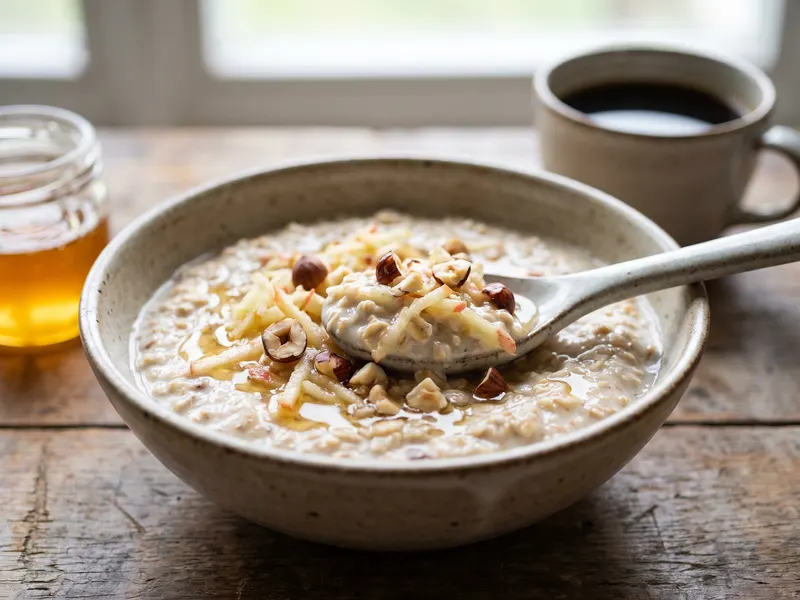
Bircher Muesli (Swiss Overnight Oats)
Bircher muesli is a cold Swiss oat dish built around grated raw apple, developed by physician Maximilian Bircher-Benner around 1900 for patients at his Zurich clinic. Rolled oats soak overnight in yogurt, milk and apple juice with the grated apple and a squeeze of lemon, then get topped in the morning with fresh fruit, nuts and a drizzle of honey. Bircher-Benner himself, like Swiss recipes today, grated the apple in just before eating; this is the make-ahead version, with the apple soaked overnight alongside the oats. Unlike modern overnight oats, which center on the oats, Bircher muesli is built around the apple: it softens into the oats overnight and carries the flavor of the whole dish.
Ingredients
- 100 gold-fashioned rolled oats
- 150 gplain full-fat yogurt or Greek yogurt
- 100 mlwhole milk
- 80 mlapple juice
- 2 medium apples
- 1 tbspfresh lemon juice
- 1 tbsphoney or maple syrup, plus extra to drizzle
- 0.5 tspground cinnamon
- 30 gmixed nuts, roughly chopped
- 20 graisins or sultanas
- 1 handfulfresh berries or seasonal fruit for topping
Method
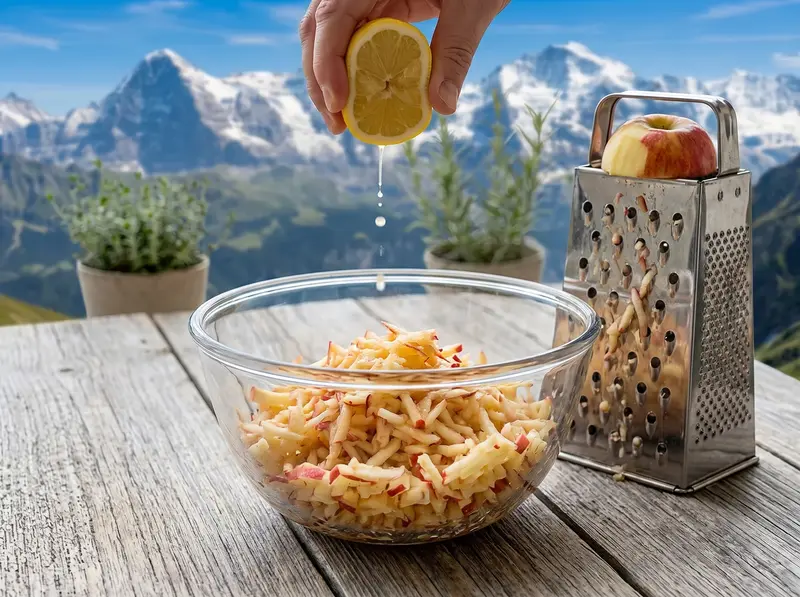
- Grate the apple. Take one of the apples and grate it coarsely — skin on. Freshly grated raw apple — not cooked, not dried, not puréed — is the heart of Bircher muesli. Grate directly into the mixing bowl. Immediately squeeze the lemon juice over the grated apple and stir — the acid prevents oxidation and browning and is essential to the flavor of the finished dish. The apple will soften overnight and blend into the oats, releasing moisture and natural sweetness.
- Combine everything and refrigerate. Add the rolled oats, yogurt, milk, apple juice, honey, and cinnamon to the bowl with the grated apple. Stir everything together until evenly combined. The mixture will look quite liquid — this is correct. The oats will absorb the liquid overnight and the texture will completely change. Stir in the raisins now if you want them softened. If you prefer them chewy and distinct, add them in the morning. Cover the bowl tightly with cling film or transfer to sealed jars or containers. Refrigerate for at least 6 hours, ideally overnight, so the oats hydrate fully.
- Check the texture in the morning. After overnight refrigeration, the Bircher muesli should be thick, creamy, and cohesive — the oats fully softened, the apple almost invisible, the whole thing a pale golden color. If it looks too thick, stir in a splash of milk or apple juice — the thickness depends on the moisture content of the apple you used. If it still seems thin, give it another hour in the fridge. The texture should be like a thick, cold porridge — soft and creamy, not crunchy, not sludgy.
- Prepare the toppings. Slice the second apple — leave the skin on, and cut into thin wedges or small cubes. Arrange the toppings: fresh apple slices, fresh berries, chopped nuts, and an extra drizzle of honey. These are assembled just before serving and not stirred in ahead of time — the contrast between the cold, creamy base and the fresh, slightly crunchy toppings is what makes Bircher muesli worth eating rather than just nutritious. The nuts in particular should go on at the last moment to stay crisp.
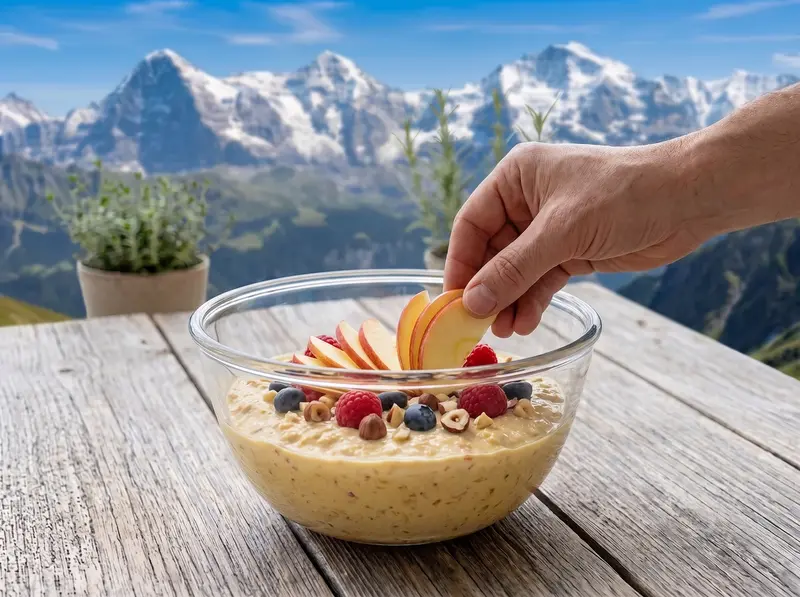
- Serve cold, directly from the fridge. Bircher muesli is always served cold. Spoon into bowls, arrange the toppings, drizzle honey over the top. The dish keeps refrigerated for up to 3 days — the base actually improves slightly on the second day as the flavors continue to meld. Do not freeze (yogurt separates on thawing). If making ahead, prepare up to 3 days' worth of the base and store it, adding fresh toppings to each portion as you serve.
FAQ
They share the same basic idea of oats soaked in liquid overnight, but Bircher muesli has a specific origin: Dr. Maximilian Bircher-Benner developed it for patients at his Zurich clinic around 1900 as an apple dish, not an oat dish; the recipe reached print in 1927, in the Wendepunkt cookbook of his sister, Berta Brupbacher-Bircher. His original version used 2–3 small apples, grated skin and core included, against just one level spoonful of oats soaked in water, plus a spoonful of condensed milk, the juice of half a lemon, and a spoonful of nuts — apple juice and yogurt are later additions that softened the tartness and made it easier to prepare at home. Overnight oats, by contrast, is a modern American reinterpretation, typically sweeter and built around a much higher ratio of oats to fruit — see our overnight oats recipe for that version.
Two reasons: the lemon juice added immediately after grating inhibits enzymatic oxidation, and the yogurt and apple juice coat the grated apple in an acidic environment that slows browning. By morning, the apple has absorbed into the oats so thoroughly that even if there were some discoloration, it would be invisible in the mixture. The important thing is to add the lemon juice straight after grating the apple — delay and the apple starts to oxidize before the acid can act.
Swiss recipes simply ask for a tart, firm apple. Braeburn and Cox fit well — a balance of sweet and tart, with a firm texture that grates well and releases good flavor overnight. Granny Smith gives a sharper, more pronounced tart result. Gala and Fuji are sweeter and softer. Avoid very soft or floury apples (some older varieties, very overripe apples) — they disintegrate rather than grating cleanly. For the topping, a firmer variety holds its shape better as slices.
Yes, and it works well. Use coconut yogurt or any plant-based yogurt in place of dairy yogurt — coconut yogurt in particular gives a very good creamy result. Use oat milk, almond milk, or coconut milk instead of dairy milk. The apple juice component is already dairy-free. The flavor and texture are slightly different from the dairy version but equally pleasant. If using unsweetened plant-based yogurt, you may want to increase the honey or maple syrup slightly.
The base mixture (oats, grated apple, yogurt, juice) keeps for 3 days refrigerated in a sealed container. The flavor actually improves on day 2 as the apple and oat flavors continue to develop. Do not add fresh toppings (apple slices, fresh berries) until serving — they will deteriorate and go soggy in the fridge. Do not freeze — the yogurt separates and the texture becomes grainy on thawing. To prep ahead, make up to 3 days' worth of base at once and top each one fresh in the morning.
Rate this
Recipes by email
One letter a week: a recipe picked for your taste, plus whatever is new on the site. Unsubscribe in one click.
Welcome gift: Sergei's cookbook (e-book).
By subscribing you agree to the privacy policy.
Tell us what you like to cook (30 seconds) →Keep browsing
More dishes from the Swiss archive — picked by overlap with what you're cooking now.
Join the conversation
Comments (1)
I soak the oats for this bircher muesli overnight in the fridge — never less than 8 hours. The oats soften completely and absorb all the apple and yogurt flavors while you sleep. Rush it with warm milk and you get a completely different, inferior texture.