
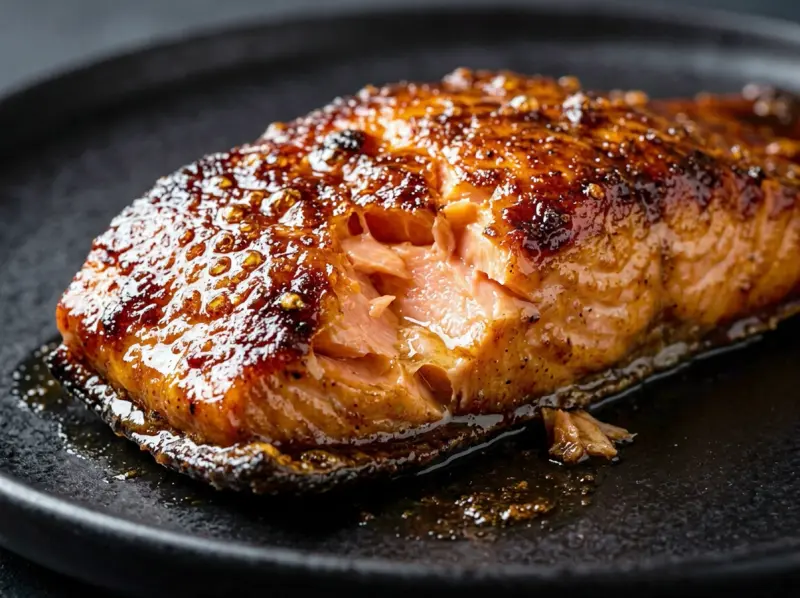
Brown Sugar Salmon
Salmon fillets baked with a brown sugar, smoked paprika and garlic rub that caramelizes in the oven into a sweet, smoky glaze. One of the easiest weeknight fish recipes — done in under 20 minutes.
Ingredients
- 4 salmon fillets
- 3 tbspbrown sugar
- 1 tspsmoked paprika
- 1 tspgarlic powder
- 0.5 tspsalt
- 0.5 tspblack pepper
- 1 tbspsoy sauce
- 1 tbspolive oil
- 1 lemon
- 2 tbspfresh parsley
Method
- Preheat oven to 200°C (400°F). Line a baking sheet with foil.
- Pat the salmon fillets completely dry with paper towels. Moisture on the surface prevents the glaze from adhering and caramelizing.
- In a small bowl mix the brown sugar, smoked paprika, garlic powder, salt and pepper. Drizzle the soy sauce and olive oil over the salmon, then press the spice rub firmly onto the flesh side of each fillet.
- Place the salmon skin-side down on the prepared baking sheet. Bake for 10–12 minutes, depending on thickness.
- Switch the oven to broil (upper grill). Broil for 2–3 minutes until the glaze bubbles and turns deep amber. Watch it constantly — brown sugar goes from caramel to burnt in under a minute.
- Rest 2 minutes before serving. Serve with lemon wedges and fresh parsley.
FAQ
Too high a temperature or too long under the broiler. Brown sugar caramelizes fast — 2 to 3 minutes under the broiler is all it needs. The correct method: bake the salmon at 200°C for 10 to 12 minutes first, then switch to broil with the rub on top. Stay at the oven — the difference between caramel and carbon is about 30 seconds.
The ideal internal temperature is 52 to 55°C for medium (slightly translucent center) or 60°C for fully cooked. Without a thermometer: press the thickest part with a finger — it should spring back with gentle resistance. The flesh separates easily along its natural lines when tested with a fork. White droplets of fat weeping out actively means it is overcooked. A fillet 2.5 cm thick at 200°C is done in 12 to 14 minutes.
The center-cut (thicker portion) is the most forgiving choice — it stays moist when the thinner end might be drying out. If you have a whole side with the tail, tuck the thin tail end underneath to double its thickness, or shield it with a small piece of foil for the first 5 minutes. Leave the skin on during baking — it protects the bottom and peels away cleanly once cooked.
Thaw completely first — overnight in the fridge or submerged in cold water in the sealed bag for 45 minutes. Baking from frozen means the outside dries out before the center reaches temperature. After thawing, pat completely dry with paper towels: surface moisture prevents the brown sugar rub from sticking and stops it from caramelizing. Fresh salmon always produces a better result than frozen.
Choose acidic or neutral sides that cut through the sweetness. Asparagus with lemon, green beans, steamed broccoli, or rice with lemon zest all work well. Avoid sweet sides — corn, sweet potato or glazed carrots would compete with the glaze. A wedge of lemon or lime squeezed over the fish at the table is essential: the acidity breaks through the caramel and lifts the whole dish.
Keep browsing
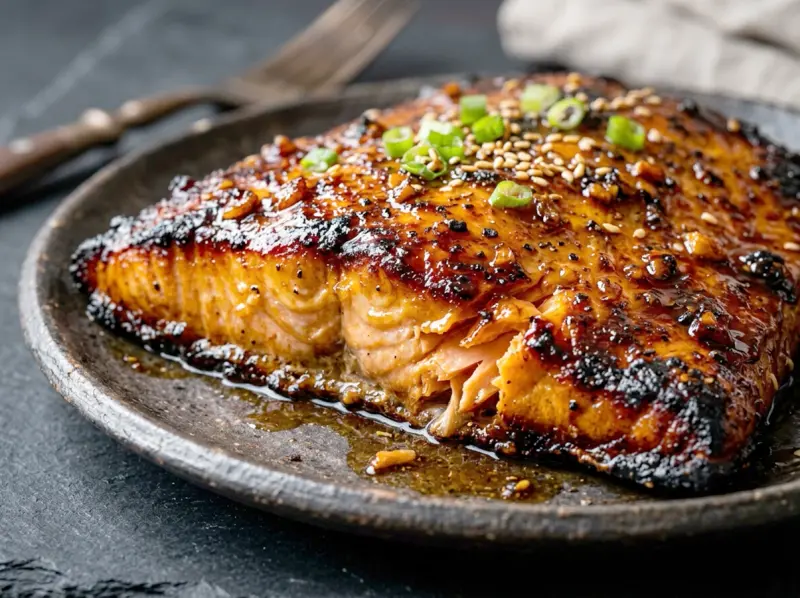
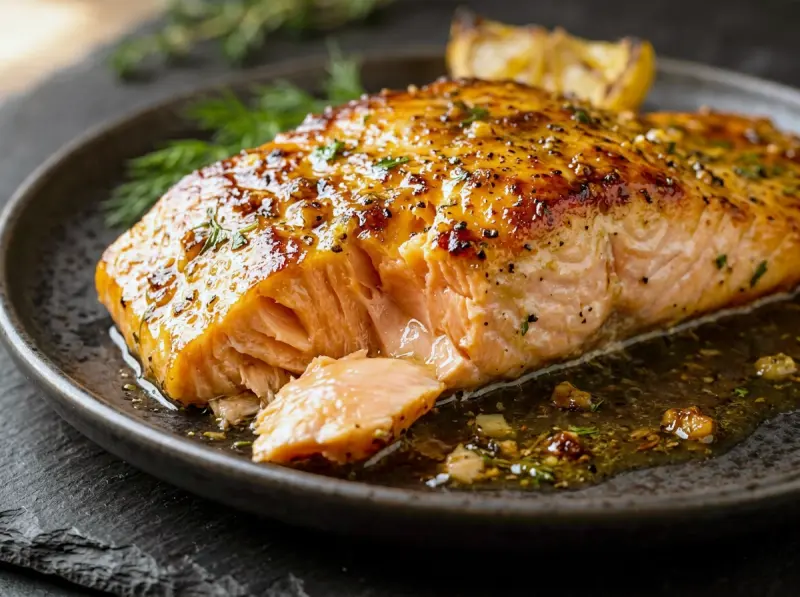
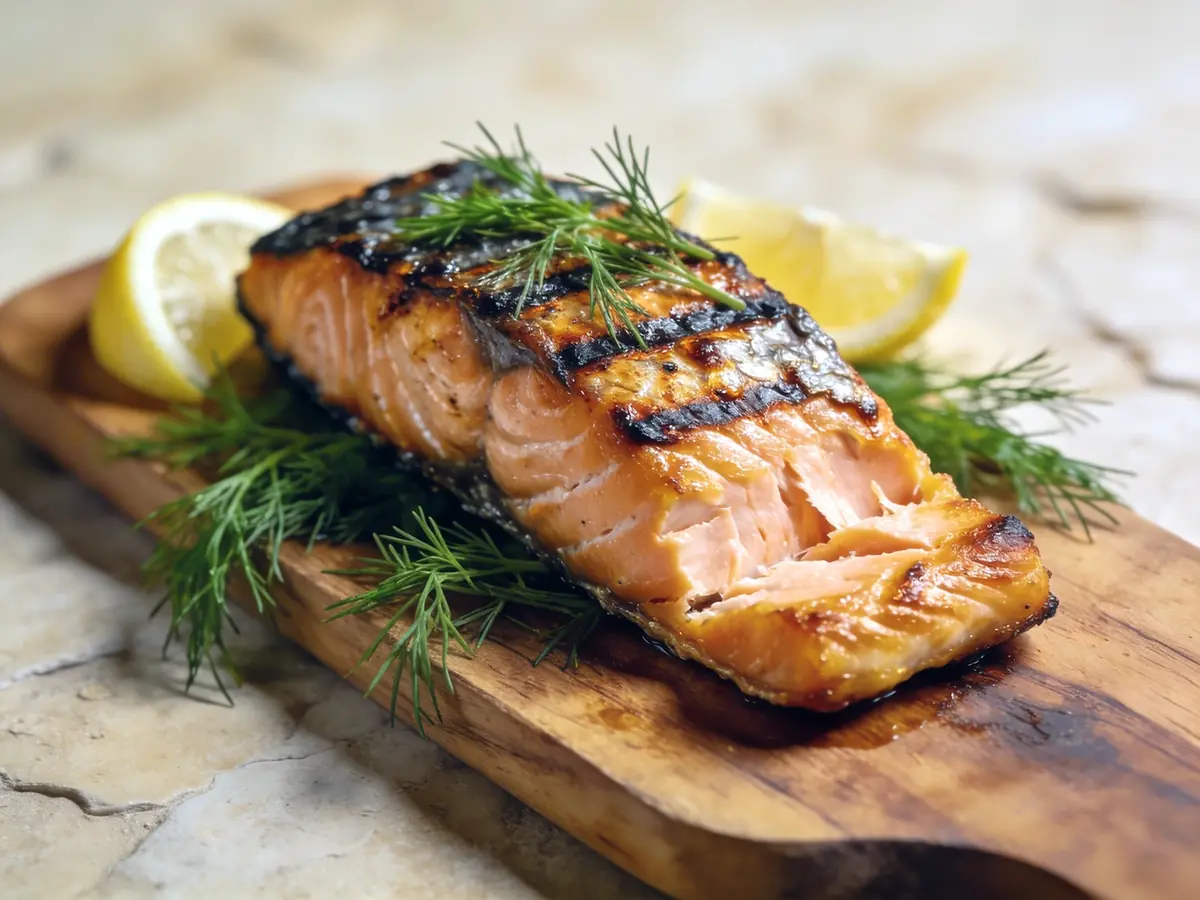
More dishes from the American archive — picked by overlap with what you're cooking now.
Recipes by email
One letter a week: a recipe picked for your taste, plus whatever is new on the site. Unsubscribe in one click.
Welcome gift: Sergei's cookbook (e-book).
By subscribing you agree to the privacy policy.
Tell us what you like to cook (30 seconds) →
Join the conversation
Comments
No comments yet — be the first!