
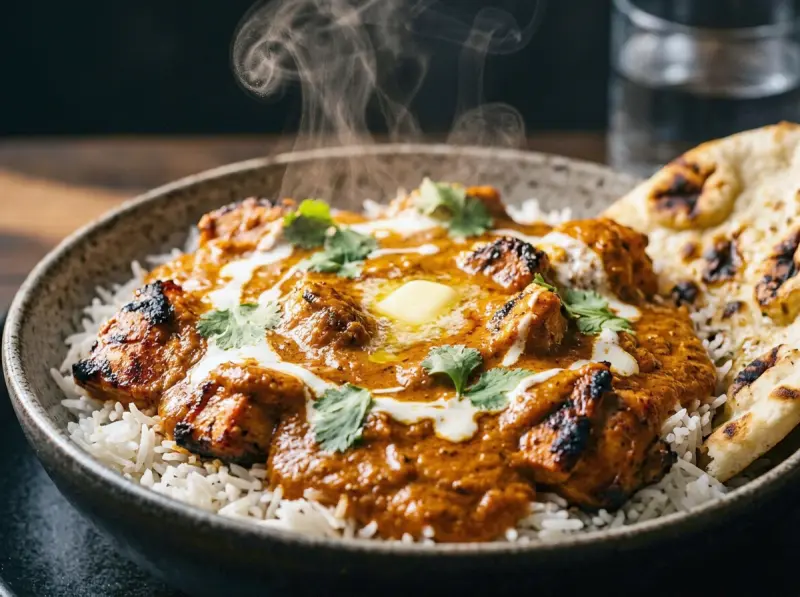
Butter Chicken
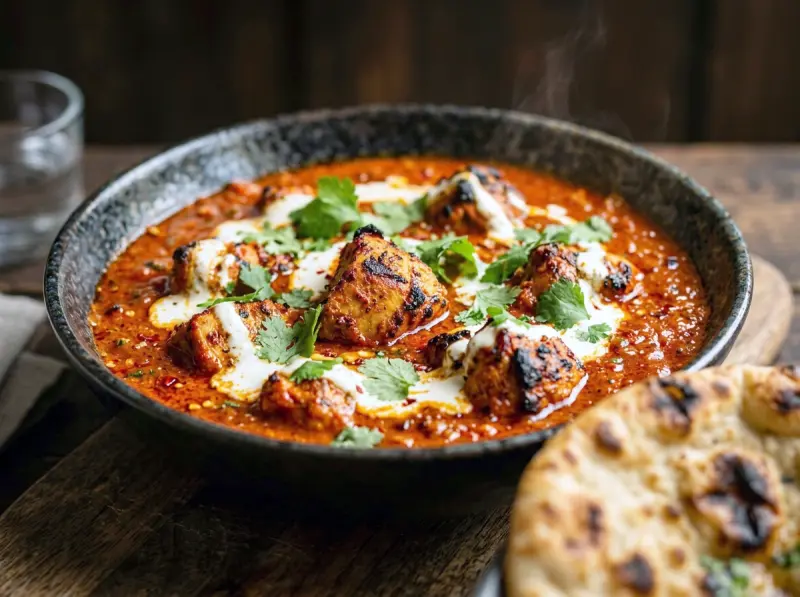
Murgh makhani — yogurt-marinated chicken thighs seared until charred at the edges, then finished in a silky tomato-and-cashew sauce with butter, cream, and kasuri methi. The dish came out of Moti Mahal restaurant in Delhi in the 1950s, apparently by accident: leftover tandoori chicken dropped into a pot of spiced tomato gravy with butter. That origin story is either true or a very good myth, but the result is real. The sauce needs to be blended smooth, the chicken needs actual char on it, and the kasuri methi at the end is not optional if you want the flavor to land.
Ingredients
- 700 gboneless chicken thighs
- 120 gfull-fat plain yogurt
- 1 tbspKashmiri chilli powder
- 1 tspground coriander
- 1 tspgaram masala
- 0.5 tspturmeric
- 1 tbspginger-garlic paste
- 1 tbsplemon juice
- 3 tbspbutter
- 400 gcanned crushed tomatoes or 4 ripe fresh tomatoes
- 30 graw cashews, soaked in hot water 20 min
- 1 tspgaram masala
- 1 tspKashmiri chilli powder
- 1 tspsugar or honey
- 80 mldouble cream
- 1 tspkasuri methi
- 1 tspfine salt
Method
- Marinate the chicken. In a large bowl, combine yogurt, Kashmiri chilli powder, ground coriander, garam masala, turmeric, ginger-garlic paste, lemon juice, and salt. Mix until smooth. Add the chicken and work the marinade into every piece — use your hands for this, it makes a real difference. Cover and refrigerate for at least 1 hour, ideally overnight. The yogurt will tenderise the meat and the spices will penetrate properly given time.

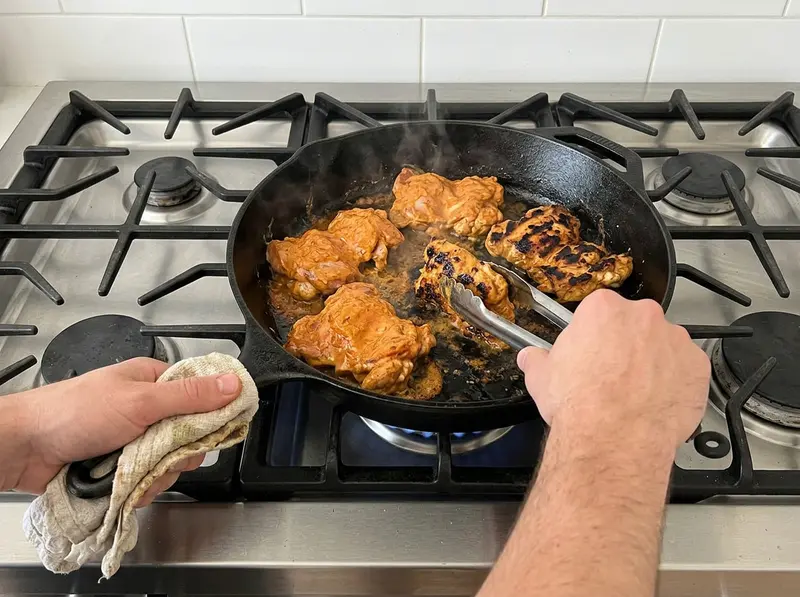
- Sear the chicken. Heat a wide heavy pan over high heat until very hot. Add 1 tablespoon of butter. Take the chicken straight from the fridge and add it in a single layer — do not discard the marinade yet. Sear without moving for 3 to 4 minutes until the bottom develops proper char marks. Turn and repeat. The chicken should look almost burnt in spots. That char is the closest thing to a tandoor you'll get at home, and it's the flavor that makes the finished dish taste like more than just a creamy tomato curry. Remove from pan and set aside.
- Make the sauce. In the same pan over medium heat, add the remaining butter. Add the crushed tomatoes and cook, stirring occasionally, for 12 to 15 minutes until the sauce reduces and the oil begins to separate at the edges — this tells you the raw tomato taste has cooked out. Add the Kashmiri chilli powder and garam masala for the sauce. Cook 2 more minutes.
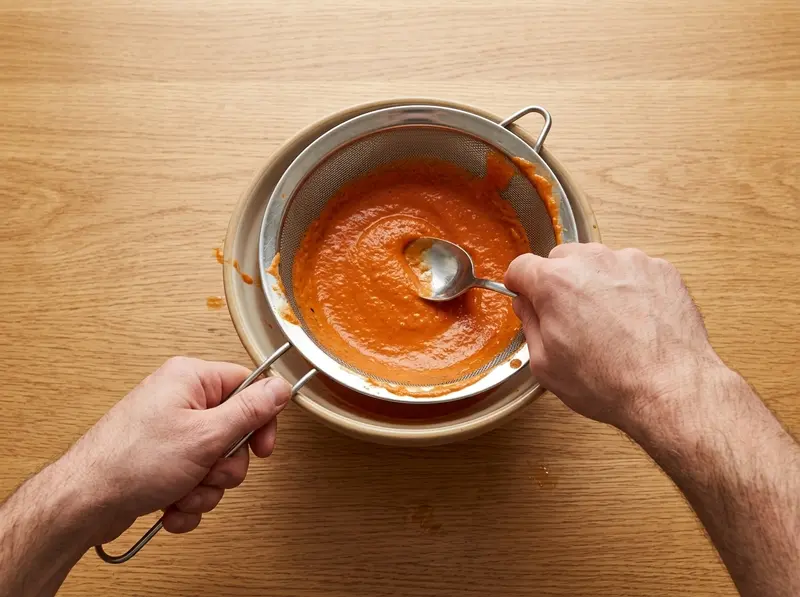
- Blend and strain. Transfer the tomato mixture and the drained soaked cashews to a blender. Blend on high for 2 full minutes until completely smooth. For a truly restaurant-quality sauce, strain through a fine-mesh sieve back into the pan — this step takes 3 minutes and makes a noticeable difference in texture.
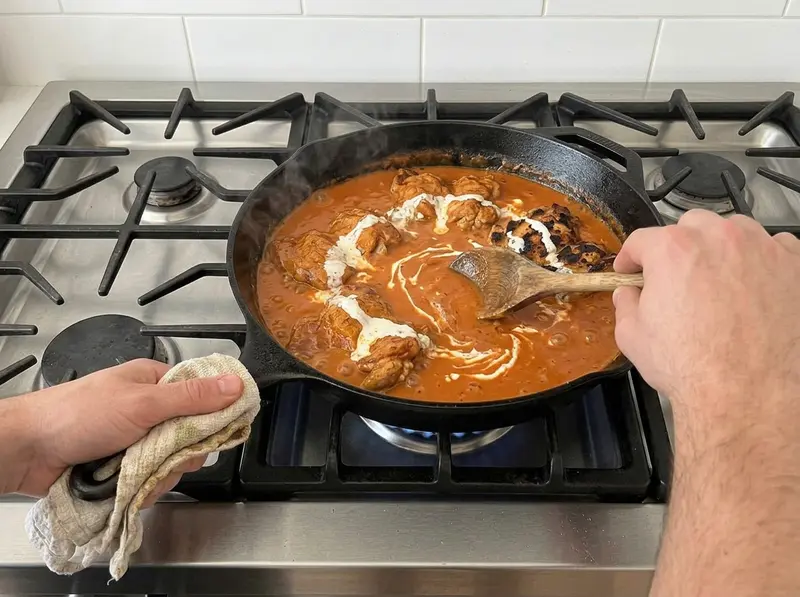
- Finish the dish. Return the sauce to medium-low heat. Add the seared chicken with any resting juices. Simmer for 8 to 10 minutes until the chicken is cooked through. Stir in the cream and sugar. Taste — adjust salt if needed. Remove from heat. Crush the kasuri methi between your palms and scatter it in — the aromatic oils release as it hits the warm sauce. Stir once and serve immediately with basmati rice and warm naan.
FAQ
They are different. Butter chicken (murgh makhani) originated at Moti Mahal restaurant in Delhi in the 1950s — no onion, milder, slightly sweet, very buttery and creamy. Tikka masala is a British invention, created to suit European palates: it contains onion, is spicier, more aggressively tomato-forward, and less creamy. Butter chicken sauce should be completely smooth after blending; tikka masala has more texture and body from the onion. Both dishes use yogurt-marinated chicken but the sauces taste meaningfully different.
The yogurt does two things: the lactic acid breaks down muscle fibres, making the meat noticeably more tender, and the thick coating helps spices penetrate the surface rather than staying on it. Minimum: 30 minutes at room temperature. Best: overnight in the fridge. Skipping it is technically possible, but the texture of the cooked chicken will be measurably tougher and drier. Score the chicken pieces lightly before marinating — this increases surface area and helps the spices get in. Kashmiri chilli powder in the marinade provides the red-orange color without making the dish fiery.
Two approaches. The most practical: sear the marinated chicken on a very high heat — the yogurt marinade should start to blacken and char at the edges. Those burnt spots are the closest you'll get to tandoor flavor from a home hob. The more dramatic method is dhungar smoking: place a small piece of lit charcoal in a metal cup in the center of the finished dish, pour a few drops of ghee over it, then cover the pan for 2 to 3 minutes. The smoke penetrates the entire sauce. Either approach is worth doing. A room-temperature-to-cold butter chicken without any char is a different, lesser dish.
Sourness comes from tomatoes that haven't cooked long enough. The sauce needs to cook uncovered until the oil visibly separates at the edges — that's when the tomato rawness has gone. If it still tastes sharp after full cooking, add 1 teaspoon of sugar or honey. Flatness is almost always the kasuri methi missing: crushed dried fenugreek leaves added in the final minutes lift and define the whole flavor. Without them, the dish tastes competent but not quite right. Cream goes in last, off the heat or on very low — it should never boil after adding.
Yes, and the flavor actually improves over 24 hours as the spices develop in the sauce. The sauce can be made 3 days ahead and refrigerated; the chicken can be seared separately and added when reheating. The finished dish keeps for 3 to 4 days in the fridge or 3 months frozen — freeze without the cream and add it when reheating. To reheat: warm over low heat with 2 to 3 tablespoons of water or stock, stirring. Add cream at the very end and do not let it boil after it goes in.
Rate this
Recipes by email
One letter a week: a recipe picked for your taste, plus whatever is new on the site. Unsubscribe in one click.
Welcome gift: Sergei's cookbook (e-book).
By subscribing you agree to the privacy policy.
Tell us what you like to cook (30 seconds) →Keep browsing
More dishes from the Indian archive — picked by overlap with what you're cooking now.

Join the conversation
Comments (1)
I tested this recipe against three different restaurant versions in London and one in Delhi. The kasuri methi — dried fenugreek leaves — is what separates a great butter chicken from a generic tomato-cream curry. Crush the leaves between your palms before adding them to release the oils. And the cashew paste blended into the sauce is doing the heavy lifting for that signature velvety texture. Do not substitute with cream cheese, it is not the same thing at all.