

Butternut Squash Soup
Roasted butternut squash blended with garlic, onion, and a touch of cream. Roasting is what separates a deep, caramelized soup from a flat one — don't skip it.
Ingredients
- 1.5 kgbutternut squash, halved and seeds removed
- 1 medium onion
- 4 garlic cloves, unpeeled
- 3 tbspolive oil
- 800 mlvegetable broth
- 100 mlheavy cream or coconut milk
- 0.5 tspground nutmeg
- 0.5 tspsmoked paprika
- 1 tspsalt
- 0.5 tspblack pepper
- 2 tbsppumpkin seeds
- 1 tbspfresh sage leaves
Method
- Preheat oven to 200°C (400°F). Place squash halves cut-side down on a lined baking sheet. Add the onion chunks and unpeeled garlic cloves alongside. Drizzle everything with olive oil.
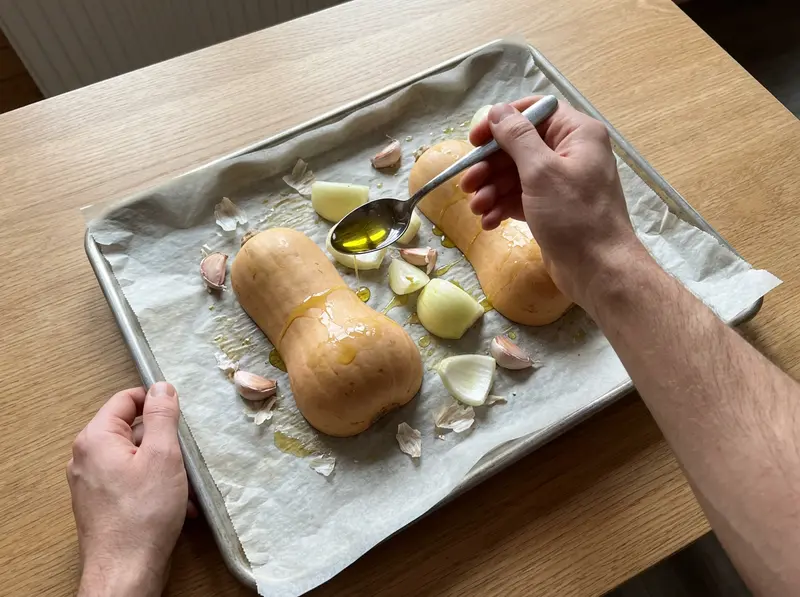
- Roast for 40–50 minutes until the squash flesh is completely tender and the cut edges have browned. The browning is flavor — don't pull it out early.
- Set aside for 10 minutes to cool slightly. Scoop the squash flesh into a blender or large pot. Squeeze the roasted garlic from its skins and add it in. Add the onion.
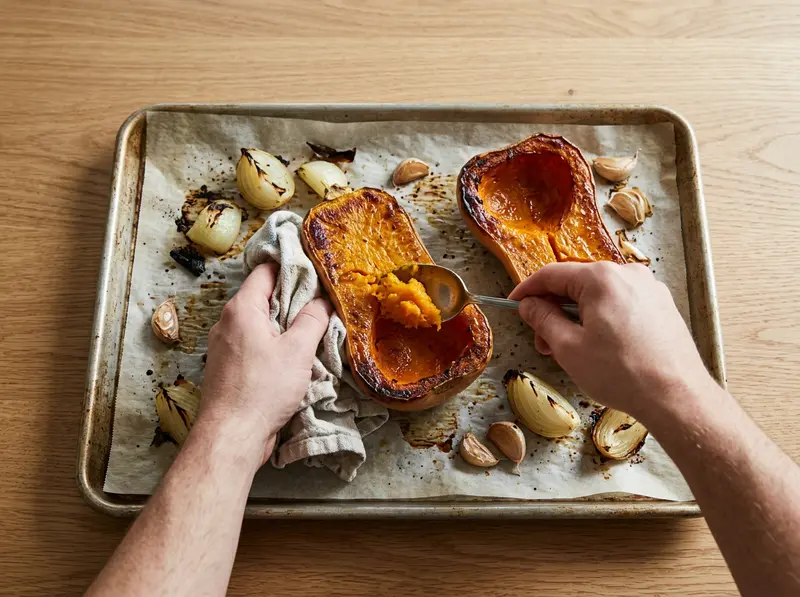
- Pour in the broth and blend until completely smooth. For the silkiest result, use a countertop blender rather than an immersion blender. Work in batches if needed and hold the lid down with a folded kitchen towel.
- Pour the blended soup into a pot over medium heat. Stir in the cream or coconut milk, nutmeg, and smoked paprika. Taste and adjust salt and pepper.
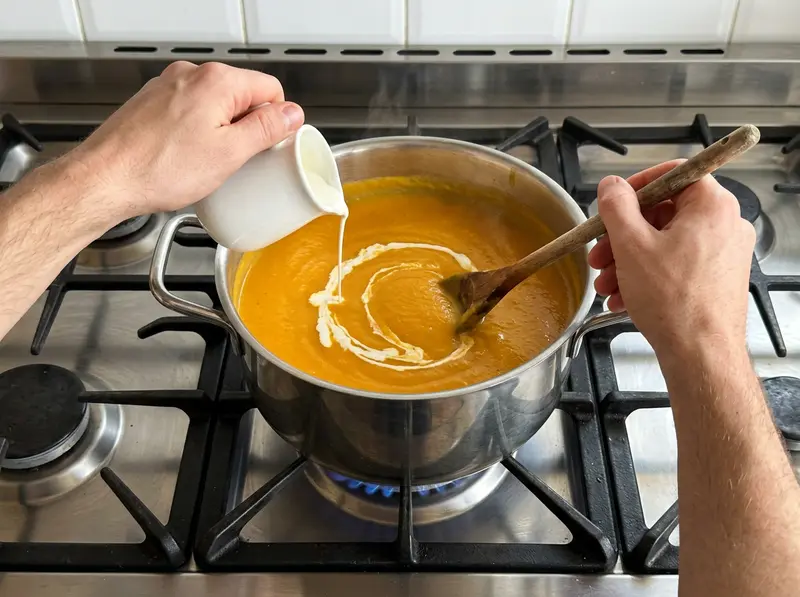
- Simmer gently for 5 minutes. Serve topped with pumpkin seeds and crispy fried sage leaves.
FAQ
Almost always because the squash wasn't roasted first. Raw squash boiled directly in broth releases water and produces a flat, slightly starchy result. Roasting at 200°C concentrates the sugars and caramelizes the edges — that's where the depth comes from. Also check your fat: without cream, coconut milk, or at least a tablespoon of butter stirred in at the end, the soup will stay thin and one-dimensional.
200°C for 40 to 50 minutes, cut-side down on a lined baking sheet. The squash is ready when a fork slides into the flesh without resistance and the underside has visibly browned. If you're cutting the squash into cubes instead, 25 to 30 minutes at the same temperature works — flip once halfway through. Don't worry about dark edges; that's exactly what you want.
Full-fat coconut milk is the best option — it gives similar creaminess and a mild sweetness that works well with squash. Oat milk produces a more neutral result. You can also skip dairy entirely; well-roasted squash blends silky enough on its own. If using Greek yogurt, stir it into individual bowls rather than the pot — it will split if heated.
Both work. A countertop blender produces a noticeably silkier texture because it creates more friction and breaks down the fibres more completely. If using an immersion blender, blend for at least 2 minutes and run a finger test — some positions leave small fibres behind. If using a countertop blender with hot soup, fill it no more than halfway and hold the lid down firmly with a folded kitchen towel. Hot liquid under pressure can blow the lid off.
4 to 5 days in a sealed container in the fridge. The flavor actually improves on day two as everything settles together. It freezes well for up to 3 months — use freezer-safe containers and leave some space at the top. Thaw overnight in the fridge and reheat slowly on the stovetop, stirring in a splash of broth or water if the soup has thickened during freezing.
Rate this
Recipes by email
One letter a week: a recipe picked for your taste, plus whatever is new on the site. Unsubscribe in one click.
Welcome gift: Sergei's cookbook (e-book).
By subscribing you agree to the privacy policy.
Tell us what you like to cook (30 seconds) →Keep browsing
More dishes from the American archive — picked by overlap with what you're cooking now.
Join the conversation
Comments (1)
Bring this butternut squash soup to a full boil first, then drop it to the gentlest simmer your stove can manage. Aggressive boiling turns the butternut squash mushy and makes the broth cloudy. Patience here means clarity and texture.