
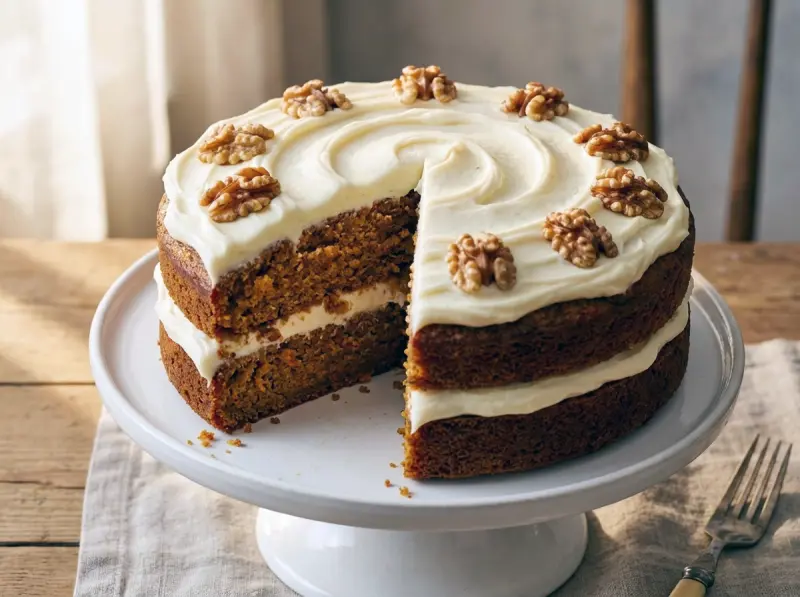
Carrot Cake with Cream Cheese Frosting
Carrot cake is one of the very few cakes where the vegetable in the name is not a compromise — it genuinely makes the cake better. Freshly grated carrots release moisture directly into the batter and carry the spices into every crumb. The cake uses oil rather than butter, which keeps it moist even straight from the fridge. Brown sugar adds molasses depth that plain white sugar doesn't. The cream cheese frosting is the best part: tangy, rich, and not too sweet when you use a measured hand with the icing sugar. This is a two-layer cake assembled with frosting between the layers and swirled over the top and sides.
Ingredients
- 280 gall-purpose flour
- 2 tspbaking powder
- 1 tspbaking soda
- 2 tspground cinnamon
- 1 tspground ginger
- 0.5 tspground nutmeg
- 0.25 tspground allspice
- 0.5 tspfine salt
- 200 mlneutral oil
- 200 glight brown sugar
- 100 gcaster sugar
- 4 large eggs
- 2 tspvanilla extract
- 300 gcarrots
- 100 gwalnuts or pecans
- 450 gfull-fat block cream cheese
- 115 gunsalted butter
- 400 gicing sugar
- 1 tspvanilla extract
- 1 pinchfine salt
Method
- Prepare and mix the batter. Preheat the oven to 180°C (350°F). Grease two 20 cm (8-inch) round cake tins, line the bottoms with parchment paper, and grease the parchment. In a large bowl, whisk together the flour, baking powder, baking soda, cinnamon, ginger, nutmeg, allspice, and salt. In a separate large bowl, whisk the oil, brown sugar, and caster sugar together until the sugar begins to dissolve. Add the eggs one at a time, whisking well after each. Add the vanilla. Pour the dry ingredients into the wet and fold with a rubber spatula until just combined — a few streaks of flour are fine. Add the grated carrots and fold through until evenly distributed. If using nuts, fold them in now. Do not overmix.
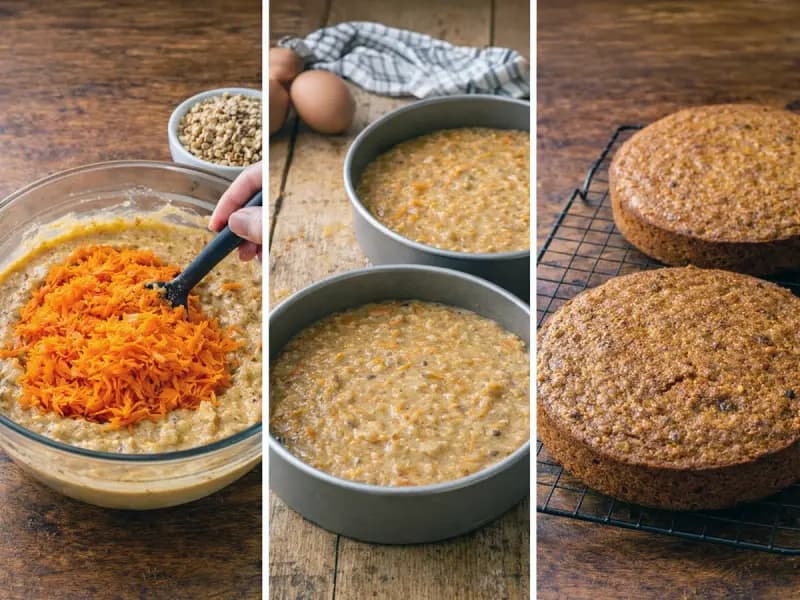
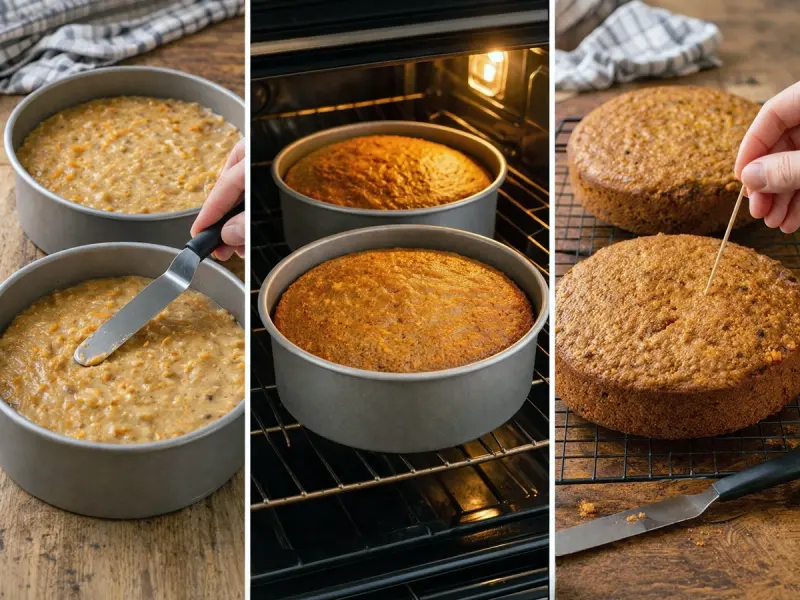
- Bake the cake layers. Divide the batter evenly between the two prepared tins — weigh the batter if you can for even layers. Smooth the tops with the back of a spoon. Bake on the middle rack for 28 to 35 minutes, until a skewer inserted in the center comes out clean or with a few dry crumbs. The tops should spring back lightly when pressed. Do not open the oven in the first 20 minutes or the layers may sink in the center. Leave the cakes in the tins for 10 minutes, then run a knife around the edge and turn out onto wire racks to cool completely. The layers must be fully cold before frosting — warm cake will melt the cream cheese frosting on contact.
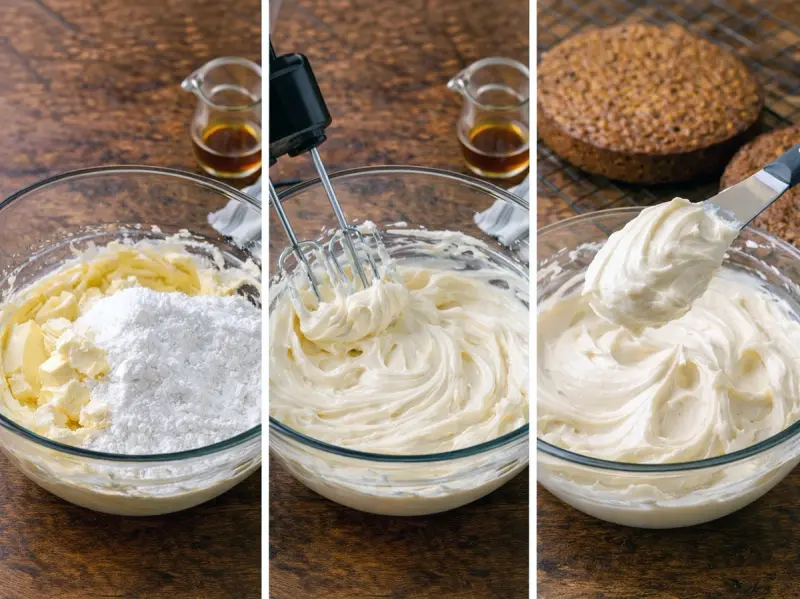
- Make the cream cheese frosting. Beat the cold cream cheese and room-temperature butter together in a large bowl with an electric mixer on medium-low speed until smooth and fully combined — about 2 minutes. The cream cheese should be cold and the butter soft, not both at the same temperature, because cold cream cheese keeps the frosting from becoming runny. Add the sifted icing sugar in two or three additions, mixing on low until incorporated after each, then increase to medium and beat until smooth and fluffy, about 1 minute. Add the vanilla and salt. Taste: if it's too sweet, another pinch of salt; if too thick, a teaspoon of cold milk; if too loose, more icing sugar. The frosting should be spreadable but hold its shape when you drag a spoon through it.
- Assemble the cake. Place one cooled cake layer on a cake board or serving plate. Spread roughly a third of the frosting over the top in an even layer that reaches to the edges. Place the second layer on top. Use the remaining frosting to cover the top and sides of the cake. For a rustic look, use a palette knife or the back of a large spoon to create swirls on the top and drag it in one direction around the sides. For a cleaner finish, use a bench scraper to smooth the sides. The frosted cake should be refrigerated for at least 1 hour before serving so the frosting sets.
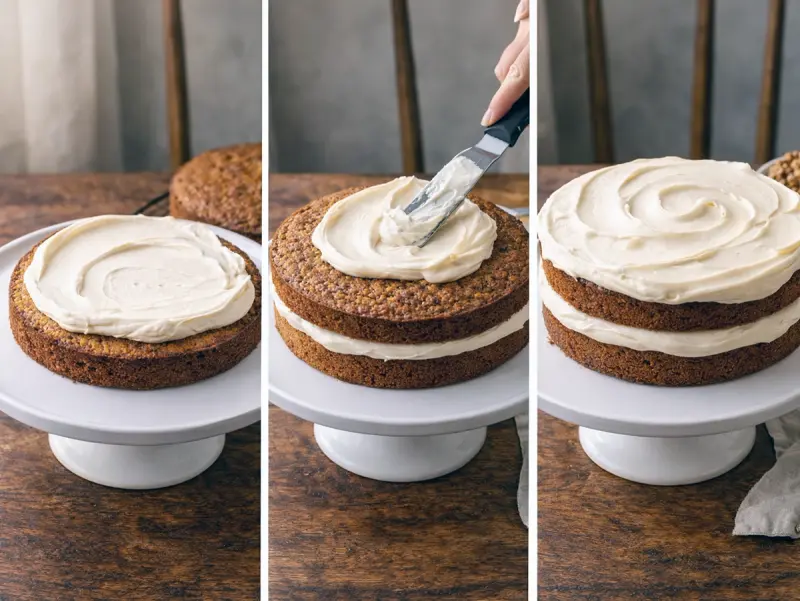
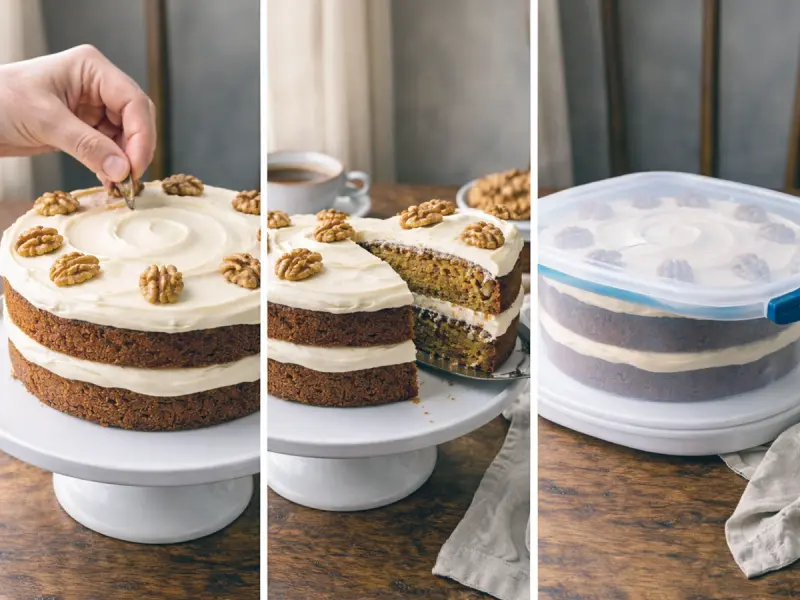
- Serve and store. Remove the cake from the fridge 20 to 30 minutes before serving — carrot cake eaten straight from the cold refrigerator is denser and less flavourful than at room temperature. Garnish with extra toasted walnuts or pecans scattered over the top, or thin carrot curls made by peeling a raw carrot with a vegetable peeler. The cake keeps refrigerated for up to 4 days, covered loosely with cling film. The flavor actually improves after the first day as the spices mellow and the frosting soaks slightly into the layers.
FAQ
Butter is solid at refrigerator temperature; oil is liquid. Carrot cake with cream cheese frosting must be stored in the fridge because of the dairy in the frosting. A butter-based cake pulled from the fridge will be dense and dry because the saturated fat in the butter has solidified. An oil-based cake stays soft and moist even when cold. Additionally, liquid fat coats the flour proteins differently than solid butter, producing a more tender crumb. The trade-off is that oil has no flavor of its own — but in carrot cake, you have brown sugar, cinnamon, ginger, nutmeg, and carrots doing all the flavor work, so the neutral oil is an advantage.
Medium holes of a box grater produce the best result — coarser than the small holes, which turn carrots into mush, and finer than the large holes, which leave obvious chunks and strings in the baked cake. The ideal grated carrot looks like fine, slightly damp shreds, similar to shredded mozzarella in size. At this texture, the carrots soften and almost disappear into the crumb during baking, contributing moisture and natural sweetness without being identifiable as distinct pieces. Some recipes call for pulsing the grated carrots briefly in a food processor after grating, which produces an even more homogeneous result.
Three reasons cause runny cream cheese frosting. First: the cream cheese was at room temperature before mixing. Cold cream cheese keeps its structure when beaten; room-temperature cream cheese loses it. The cream cheese must come straight from the fridge. Second: not enough icing sugar was added — icing sugar provides structure, not just sweetness. Third: over-mixing, which warms the frosting through friction and causes it to thin. If your frosting is already runny, add more sifted icing sugar and refrigerate for 30 minutes to firm up before using. Do not try to fix it with more beating — that will make it worse.
Yes, and it actually benefits from resting. The baked layers can be made 2 days ahead, wrapped in cling film, and refrigerated — or frozen for up to 3 months. The assembled and frosted cake keeps in the fridge for 4 days. The flavor genuinely improves after the first 24 hours: the spices mellow and deepen, the frosting soaks slightly into the layers, and the crumb becomes more cohesive. Make it the day before for a party and you'll get a better result than baking day-of.
The base batter is very flexible. Crushed pineapple (about 120 g, well drained) adds moisture and a subtle tropical sweetness — this is a common American addition. Raisins or sultanas (about 75 g) add pockets of sweetness. Desiccated coconut (about 60 g) adds texture and a slight coconut note. Crystallised or fresh ginger adds heat alongside the dried ginger. Applesauce (60 to 80 g) replaces some of the oil and adds moisture. Orange zest adds brightness and pairs particularly well with the cinnamon and nutmeg. Keep total add-ins to about 200 g so the batter doesn't become overloaded and the cake loses its structure.
Rate this
Recipes by email
One letter a week: a recipe picked for your taste, plus whatever is new on the site. Unsubscribe in one click.
Welcome gift: Sergei's cookbook (e-book).
By subscribing you agree to the privacy policy.
Tell us what you like to cook (30 seconds) →Keep browsing
More dishes from the American archive — picked by overlap with what you're cooking now.

Join the conversation
Comments (2)
Очень вкусно 👍
Three things separate a great carrot cake from a mediocre one: grating the carrots on the large holes (not fine), using oil instead of butter for moisture, and making the frosting with cold cream cheese straight from the fridge — warm cream cheese makes runny frosting every time. Don't skip the cinnamon, it's doing more work than you think.